
[论文解读] Measurement of the pion form factor with CMD-3 detector and its implication to the hadronic contribution to muon (g-2)
本文利用VEPP-2000 e⁺e⁻对撞机上的CMD-3探测器,对π介子形式因子进行了高精度测量,系统不确定度为0.2%。结果得到的μ子反常磁矩的主导阶强子贡献为 $ a_{\mu}^{had;LO}(2\pi,\mathrm{CMD3}) = 5260(42)\times 10^{-11} $,解决了与先前数据的不一致,并改善了与实验测量值 $ a_\mu $ 的一致性,从而降低了标准模型预测中的张力。
The cross section of the process $e^+e^- oπ^+π^-$ has been measured in the center-of-mass energy range from 0.32 to 1.2 GeV with the CMD-3 detector at the electron-positron collider VEPP-2000. The measurement is based on an integrated luminosity of about 88 pb$^{-1}$, of which 62 pb$^{-1}$ represent a complete dataset collected by CMD-3 at center-of-mass energies below 1 GeV. In the dominant region near the $ρ$ resonance a systematic uncertainty of 0.7% was achieved. The implications of the presented results for the evaluation of the hadronic contribution to the anomalous magnetic moment of the muon are discussed.
研究动机与目标
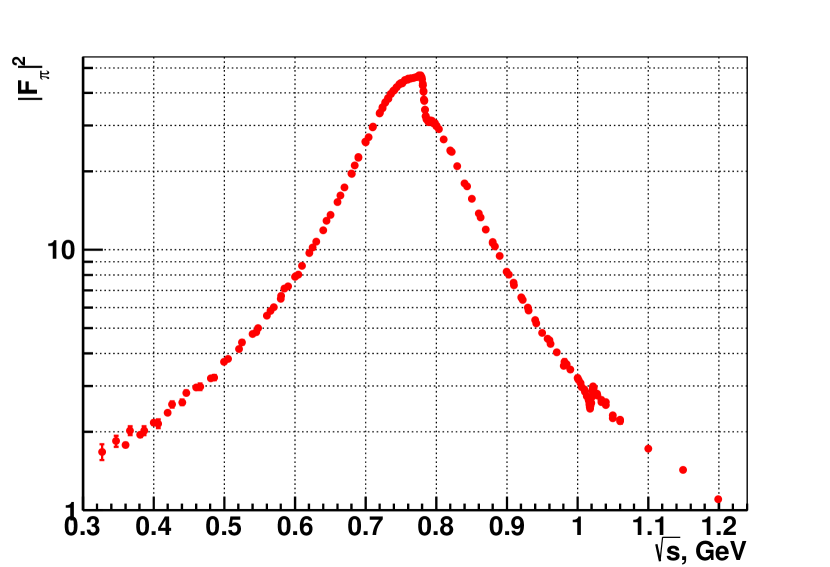
- 利用VEPP-2000上的CMD-3探测器,在 $ \sqrt{s} = 0.327\text{--}1.2 $ GeV 能量范围内,高精度测量π介子形式因子 $ |F_\pi|^2 $。
- 降低μ子反常磁矩的主导阶强子贡献 $ a_\mu^{had;LO} $ 的不确定性,该不确定性是理论不确定性的主要来源。
- 解决以往对 $ e^+e^- \to \pi^+\pi^- $ 的实验测量结果之间在 $ \rho $-介子区域的不一致。
- 通过独立交叉检验,包括 $ e^+e^- \to \mu^+\mu^- $ 和矢量介子主导模型预测,验证探测器标定与分析流程的可靠性。
- 为未来格点QCD和MUonE实验的比较提供基准数据集。
提出的方法
- 数据在VEPP-2000 e⁺e⁻对撞机上,使用CMD-3探测器在 $ \sqrt{s} = 0.327\text{--}1.2 $ GeV 能量范围内采集。
- 通过辐射修正和探测器响应模拟,从测量的 $ e^+e^- \to \pi^+\pi^- $ 截面中提取π介子形式因子。
- 通过多种独立检验评估系统不确定度,包括 $ e^+e^- \to \mu^+\mu^- $ 截面测量以及与广义矢量介子主导(GVMD)模型的比较。
- 采用动量依赖的追踪方法分离μ子与π介子,从而验证重建与修正流程的正确性。
- 对CMD-3数据进行拟合以提取形式因子,系统误差通过完整的协方差矩阵方法传播。
- 利用CMD-3数据在 $ \pi^+\pi^- $ 通道中计算 $ a_\mu^{had;LO} $ 的强子贡献,测量范围外使用外部数据。
实验结果
研究问题
- RQ1在 $ \rho $-介子区域,π介子形式因子 $ |F_\pi|^2 $ 的精确值是多少?与以往测量相比有何差异?
- RQ2新CMD-3数据在多大程度上降低了μ子反常磁矩主导阶强子贡献的不确定性?
- RQ3测量的 $ e^+e^- \to \pi^+\pi^- $ 截面与广义矢量介子主导(GVMD)模型预测的一致性如何?
- RQ4通过 $ e^+e^- \to \mu^+\mu^- $ 测量验证的探测器重建与辐射修正流程的一致性如何?
- RQ5新数据是否解决了不同实验对 $ a_\mu^{had;LO} $ 确定结果之间长期存在的差异?
主要发现
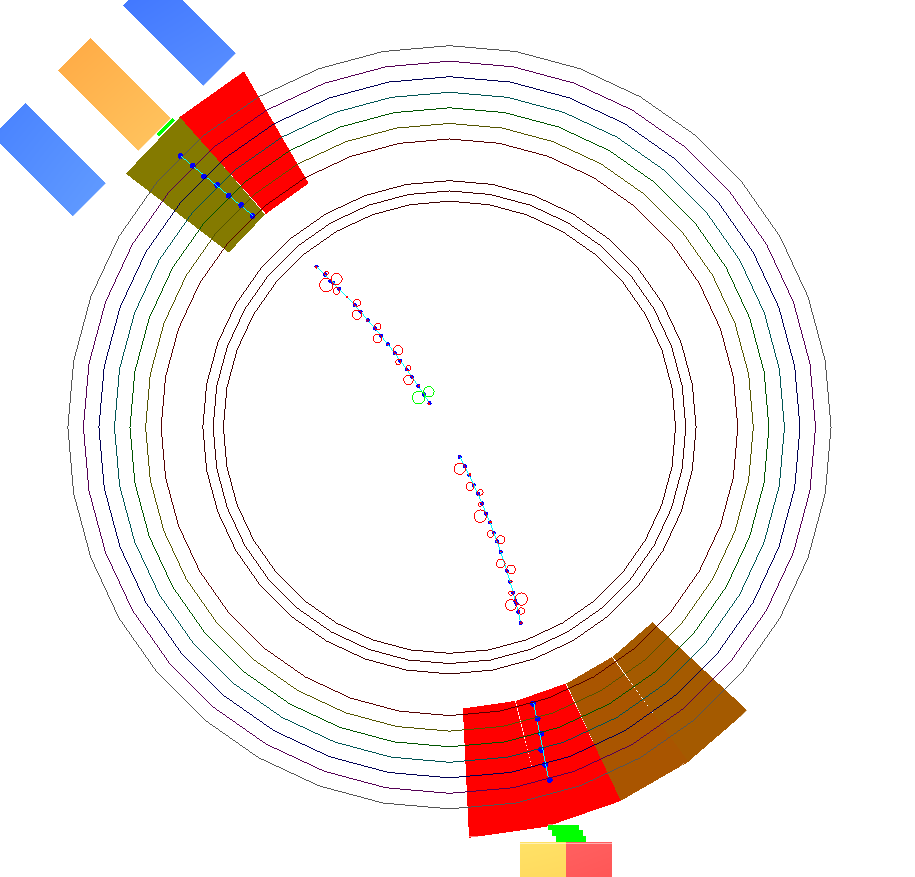
- 测量的π介子形式因子在 $ \rho $-介子区域($ \sqrt{s} = 0.6\text{--}0.75 $ GeV)比以往能量扫描实验(CMD-2、SND)的结果高出约5%。
- μ子反常磁矩的主导阶强子贡献确定为 $ a_{\mu}^{had;LO}(2\pi,\mathrm{CMD3}) = 5260(42)\times 10^{-11} $,不确定性主要由系统效应主导。
- 该结果改善了与实验测量值 $ a_\mu $ 的一致性,差异为 $ 49(55)\times 10^{-11} $,在0.9个标准差范围内。
- 通过 $ e^+e^- \to \mu^+\mu^- $ 截面测量验证了分析的一致性,测得比值为 $ 1.0017 \pm 0.0016 $,与QED预测一致。
- 广义矢量介子主导(GVMD)模型预测与数据的一致性为 $ \delta A = (-2.9 \pm 2.3) \times 10^{-4} $,表明与探测器响应和分析链一致。
- 在 $ a_\mu^{had;LO} $ 确定中,$ 42\times 10^{-11} $ 的系统不确定度完全归因于π介子形式因子测量中的系统效应。
更好的研究,从现在开始
从阅读论文到最终审阅,大幅缩短您的研究时间。
无需绑定信用卡
本解读由 AI 生成,并经人工编辑审核。