
[论文解读] Med42 -- Evaluating Fine-Tuning Strategies for Medical LLMs: Full-Parameter vs. Parameter-Efficient Approaches
这篇论文比较基于 Llama-2 构建的医疗领域大语言模型的全参数微调与参数高效微调(尤指 LoRA),报告 Med42 在 USMLE 上达到 72% 的准确率,并详细描述了去污染与模型开放性。
This study presents a comprehensive analysis and comparison of two predominant fine-tuning methodologies - full-parameter fine-tuning and parameter-efficient tuning - within the context of medical Large Language Models (LLMs). We developed and refined a series of LLMs, based on the Llama-2 architecture, specifically designed to enhance medical knowledge retrieval, reasoning, and question-answering capabilities. Our experiments systematically evaluate the effectiveness of these tuning strategies across various well-known medical benchmarks. Notably, our medical LLM Med42 showed an accuracy level of 72% on the US Medical Licensing Examination (USMLE) datasets, setting a new standard in performance for openly available medical LLMs. Through this comparative analysis, we aim to identify the most effective and efficient method for fine-tuning LLMs in the medical domain, thereby contributing significantly to the advancement of AI-driven healthcare applications.
研究动机与目标
- 推动在医疗领域需要进行领域特定微调以提升检索、推理与问答能力。
- 基于 Llama-2,使用全参数微调与 LoRA 式微调开发并评估医疗领域的 LLM(Med42)
- 在既定医疗基准上评估性能,并分析训练效率与污染风险。
- 提供最佳模型的开放获取部署,以推动医疗保健领域的 AI 发展。
提出的方法
- 从 Stack Exchange 医学论坛和选定的通用领域医学内容构建医疗指令微调数据集。
- 对 7B 和 70B 的 Llama-2 模型进行全参数微调和基于 LoRA 的参数高效微调。
- 通过串联系统/提示/助手样本应用掩码损失,并自回归地仅训练响应标记。
- 使用 AdamW,带余弦学习率计划、热身和标准正则化;为 FP-FT 和 LoRA 指定 epoch 数和学习率。
- 使用 Eleuther AI 的评估框架在多样化的医疗基准上进行零-shot 性能评估,并进行污染样本的去污染。
- 在 HuggingFace 上公开发布 Med42(70B),以便可重复性研究与开放研究。
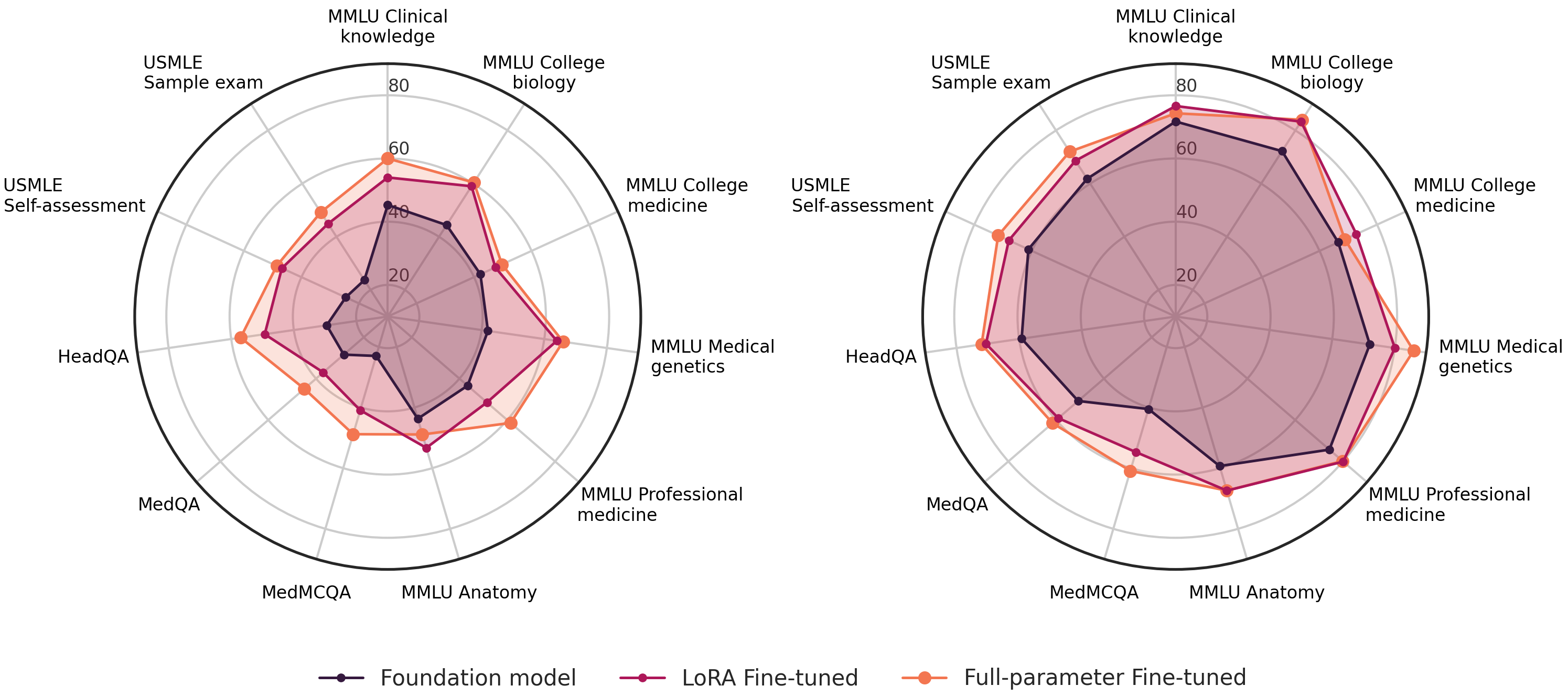
实验结果
研究问题
- RQ1全参数微调与基于 LoRA 的参数高效微调在医疗问答与推理任务中的比较如何?
- RQ2模型规模(7B vs 70B)是否会影响全参数微调与 LoRA 微调在医疗领域的相对收益?
- RQ3数据集去污染对基准性能的影响如何?
- RQ4Med42 与其他开放医疗大模型在常见基准和 USMLE 风格问题上的表现如何?
主要发现
- 微调后的模型在医疗基准上普遍优于其基线模型。
- 在大多数数据集上,全参数微调通常优于 LoRA。
- LoRA 的性能接近全参数微调,提供一个可行的资源高效替代方案。
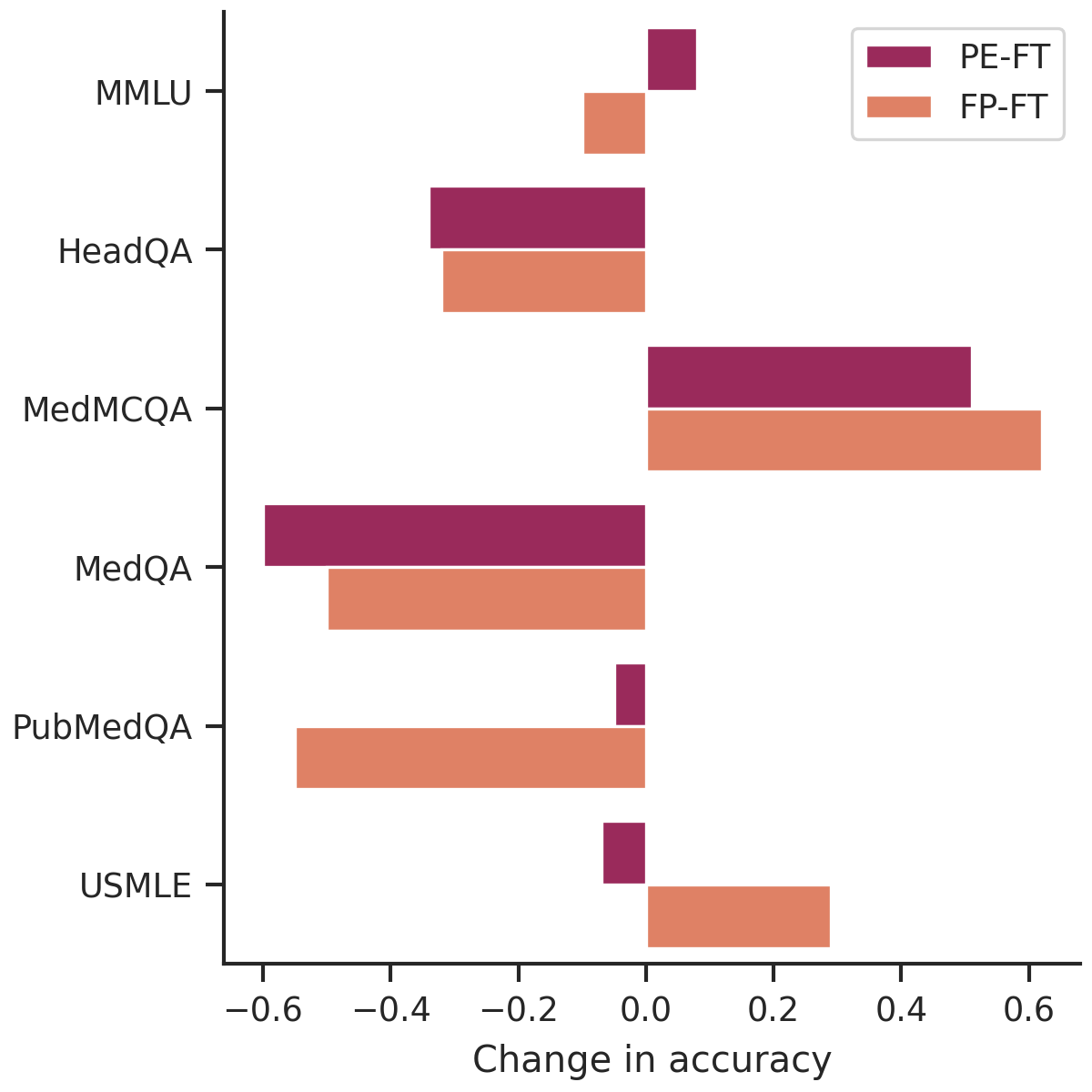
- 去污染对较大规模微调模型的准确率影响仅为较小幅度,表明结果具有鲁棒性。
- Med42-70B 在与 USMLE 相关任务的零-shot 表现强劲,在与若干开放医疗大模型的对比中表现优越。
- 本研究强调开放许可和可重复性,发布 Med42 及评估框架。
更好的研究,从现在开始
从阅读论文到最终审阅,大幅缩短您的研究时间。
无需绑定信用卡
本解读由 AI 生成,并经人工编辑审核。