
[论文解读] Microlensing of strongly lensed quasars
本综述综合了类星体微引力透镜技术的理论基础、当前方法及关键科学洞见,该技术利用透镜星系中致密天体的引力透镜效应,在亚微角秒量级上绘制类星体结构。综述强调了在探测吸积盘和宽线区尺寸、质量函数及宇宙学参数方面的进展,同时指出了系统性偏差的挑战,并展望了下一代巡天和机器学习技术在未来研究中的潜力。
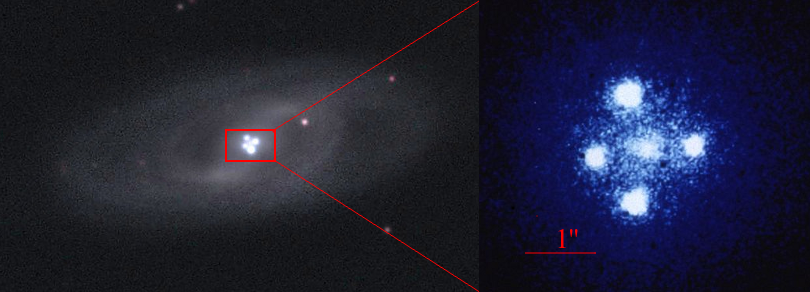
Strong gravitational lensing of quasars has the potential to unlock the poorly understood physics of these fascinating objects, as well as serve as a probe of the lensing mass distribution and of cosmological parameters. In particular, gravitational microlensing by compact bodies in the lensing galaxy can enable mapping of quasar structure to $\lt 10^{-6}$ arcsec scales. Some of this potential has been realized over the past few decades, however the upcoming era of large sky surveys promises to bring this to full fruition. Here we review the theoretical framework of this field, describe the prominent current methods for parameter inference from quasar microlensing data across different observing modalities, and discuss the constraints so far derived on the geometry and physics of quasar inner structure. We also review the application of strong lensing and microlensing to constraining the granularity of the lens potential, i.e. the contribution of the baryonic and dark matter components, and the local mass distribution in the lens, i.e. the stellar mass function. Finally, we discuss the future of the field, including the new possibilities that will be opened by the next generation of large surveys and by new analysis methods now being developed.
研究动机与目标
- 综合类星体微引力透镜在小于10−6角秒尺度上探测类星体内区结构的理论与观测现状。
- 回顾不同观测模式下从微引力透镜光曲线进行参数推断的当前方法。
- 评估由微引力透镜获得的类星体吸积盘和宽线区几何与物理特性的约束。
- 考察微引力透镜在探测透镜势的不连续性及局域质量分布(包括恒星质量函数)中的作用。
- 概述未来方向,包括大规模巡天和新兴分析技术(如机器学习)的影响。
提出的方法
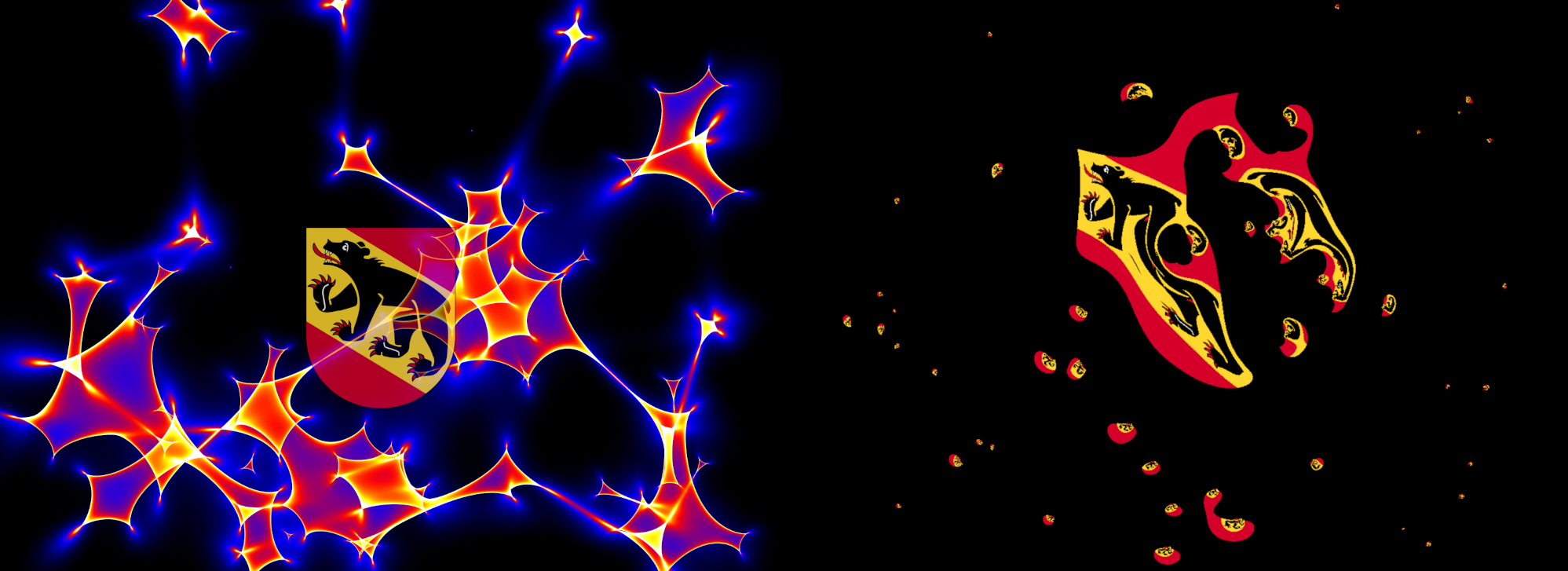
- 使用射线射击模拟和光线追踪技术,对微引力透镜放大模式进行理论建模,以模拟致密质量引起的光线偏转。
- 采用贝叶斯推断与马尔可夫链蒙特卡洛(MCMC)采样,从观测光曲线中估计源大小、结构及透镜参数。
- 利用高分辨率微引力透镜图,建模吸积盘和宽线区对微引力透镜放大的响应。
- 应用机器学习技术,实现放大图的快速生成与直接参数推断,减少对计算成本高昂的似然评估的依赖。
- 整合多历元测光与光谱数据,约束微引力透镜类星体中的时间延迟与回声信号。
- 开发鲁棒的高放大事件(HME)触发器与预测器,以优化未来巡天(如LSST)的数据采集。
实验结果
研究问题
- RQ1如何利用微引力透镜在亚微角秒分辨率下绘制类星体吸积盘和宽线区的结构?
- RQ2微引力透镜观测对类星体辐射区的尺寸与几何形态施加了何种约束?
- RQ3微引力透镜在多大程度上可探测透镜星系中恒星质量函数与暗物质分布?
- RQ4建模中的系统性偏差(例如宽线区与吸积盘拟合中的偏差)如何影响推断源尺寸的准确性?
- RQ5机器学习与新型数据分析技术在克服微引力透镜中计算与建模挑战方面发挥何种作用?
主要发现
- 微引力透镜技术可实现对类星体结构在低于10−6角秒尺度的映射,揭示吸积盘与宽线区的亚结构。
- 当前对宽线区(BLR)与吸积盘的联合建模限制了可行模型的范围,仅有极少数模型实现(数以百万计中仅数十个)能成功再现观测光曲线。
- 宽线区建模中的系统性不确定性显著,尤其源于对高分辨率、大范围微引力透镜图的需求,以及宽波段流量中宽线区与吸积盘辐射的混合。
- 尽管计算成本高昂,仅有极少数模型实现(数以百万计中仅数十个)能成功再现数据,提示可能需要更复杂的模型或改进的噪声建模。
- 机器学习在加速放大图生成与直接参数推断方面展现出潜力,可能减少对缓慢贝叶斯采样的依赖。
- 随着LSST等大规模巡天的出现,将需要新的可扩展分析方法与鲁棒的HME触发机制,以充分释放微引力透镜在宇宙学与天体物理学发现中的潜力。
更好的研究,从现在开始
从阅读论文到最终审阅,大幅缩短您的研究时间。
无需绑定信用卡
本解读由 AI 生成,并经人工编辑审核。