
[论文解读] Modeling Interpersonal Linguistic Coordination in Conversations using Word Mover's Distance
本文提出了一种基于Word Mover's Distance(WMD)与word2vec嵌入的新型人际语言协调度量方法,联合捕捉词汇、语义和句法协调。该方法通过全局归一化处理局部协调距离,以考虑个体差异,并在临床心理学场景中进行评估,结果显示其与动机性访谈中的治疗师共情以及伴侣治疗中的情感行为的相关性高于以往方法。
Linguistic coordination is a well-established phenomenon in spoken conversations and often associated with positive social behaviors and outcomes. While there have been many attempts to measure lexical coordination or entrainment in literature, only a few have explored coordination in syntactic or semantic space. In this work, we attempt to combine these different aspects of coordination into a single measure by leveraging distances in a neural word representation space. In particular, we adopt the recently proposed Word Mover's Distance with word2vec embeddings and extend it to measure the dissimilarity in language used in multiple consecutive speaker turns. To validate our approach, we apply this measure for two case studies in the clinical psychology domain. We find that our proposed measure is correlated with the therapist's empathy towards their patient in Motivational Interviewing and with affective behaviors in Couples Therapy. In both case studies, our proposed metric exhibits higher correlation than previously proposed measures. When applied to the couples with relationship improvement, we also notice a significant decrease in the proposed measure over the course of therapy, indicating higher linguistic coordination.
研究动机与目标
- 开发一种统一的言语协调度量方法,整合双人对话中的词汇、语义和句法对齐。
- 通过利用密集词嵌入捕捉语义和上下文相似性,解决以往方法仅关注词汇相似性或同义词的局限性。
- 在临床心理学领域验证所提度量方法,特别是与治疗师共情及治疗结果的关系。
- 通过全局归一化处理局部协调距离,以考虑个体说话者倾向,提升对人际协调的敏感性。
- 证明WMD与word2vec在捕捉治疗会话中人际行为动态方面的实用性。
提出的方法
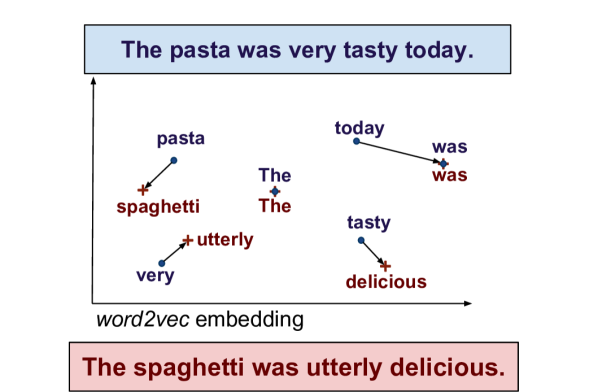
- 在word2vec嵌入上应用Word Mover's Distance(WMD)计算对话中连续说话者话语之间的不相似性。
- 在WMD计算中包含停用词,以捕捉高频词和风格词中的词汇同化模式。
- 针对每对说话者,在k个连续话语的滑动窗口内计算局部协调距离。
- 通过说话者全局平均距离对局部协调距离进行归一化,以考虑其个体协调倾向。
- 将归一化度量(nCLiD)和未归一化度量(uCLiD)作为主要评估指标。
- 将该方法应用于动机性访谈和伴侣治疗的临床转录文本,进行对比分析。
实验结果
研究问题
- RQ1基于WMD并利用word2vec嵌入的度量方法,能否有效捕捉双人对话中的多维语言协调(词汇、语义、句法)?
- RQ2所提出的协调度量方法与动机性访谈中治疗师共情的相关性如何?
- RQ3所提方法测得的语言协调程度,在伴侣治疗中与积极和消极情感行为的相关性有多大?
- RQ4在临床改善的伴侣中,语言协调程度是否随时间推移而下降?
- RQ5所提度量方法是否在捕捉治疗中人际协调方面优于现有基线方法,如TF-IDF、基于WordNet的相似性以及全局WMD?
主要发现
- 在动机性访谈中,归一化协调度量(nCLiD)与治疗师共情的Spearman等级相关系数为-0.2639,具有统计显著性(p = 0.0026),且高于所有基线方法。
- 在伴侣治疗中,nCLiD与积极情感的相关系数为-0.3068,与消极情感的相关系数为0.3371,两者均高度显著(p < 10^-7),优于所有基线方法。
- 未归一化度量(uCLiD)也与共情表现出强相关性(ρ = -0.2283,p = 0.0103),证实了该方法的稳健性。
- 对于完全康复的伴侣(结果评分4),配对Wilcoxon符号秩检验显示协调距离显著下降(uCLiD的p = 0.0125,nCLiD的p = 0.0181),表明治疗后语言协调性提高。
- 归一化度量(nCLiD)在两项案例研究中均持续优于所有基线方法,证明了全局归一化在考虑个体差异方面的重要性。
- 结果验证了WMD结合word2vec嵌入能够有效捕捉超越词汇相似性的跨人际协调,包括语义和上下文对齐。
更好的研究,从现在开始
从阅读论文到最终审阅,大幅缩短您的研究时间。
无需绑定信用卡
本解读由 AI 生成,并经人工编辑审核。