
[论文解读] Network Estimation and Packet Delivery Prediction for Control over Wireless Mesh Networks
本文提出一种基于图的无线网状网络模型与两状态马氏链的网络估计器,用于预测丢包多跳网络中的分组交付序列。通过提供未来分组丢失的联合概率预测,该方法使有限时域LQG控制器能够补偿预测到的中断,显著提升仿真中标准控制器的控制性能。
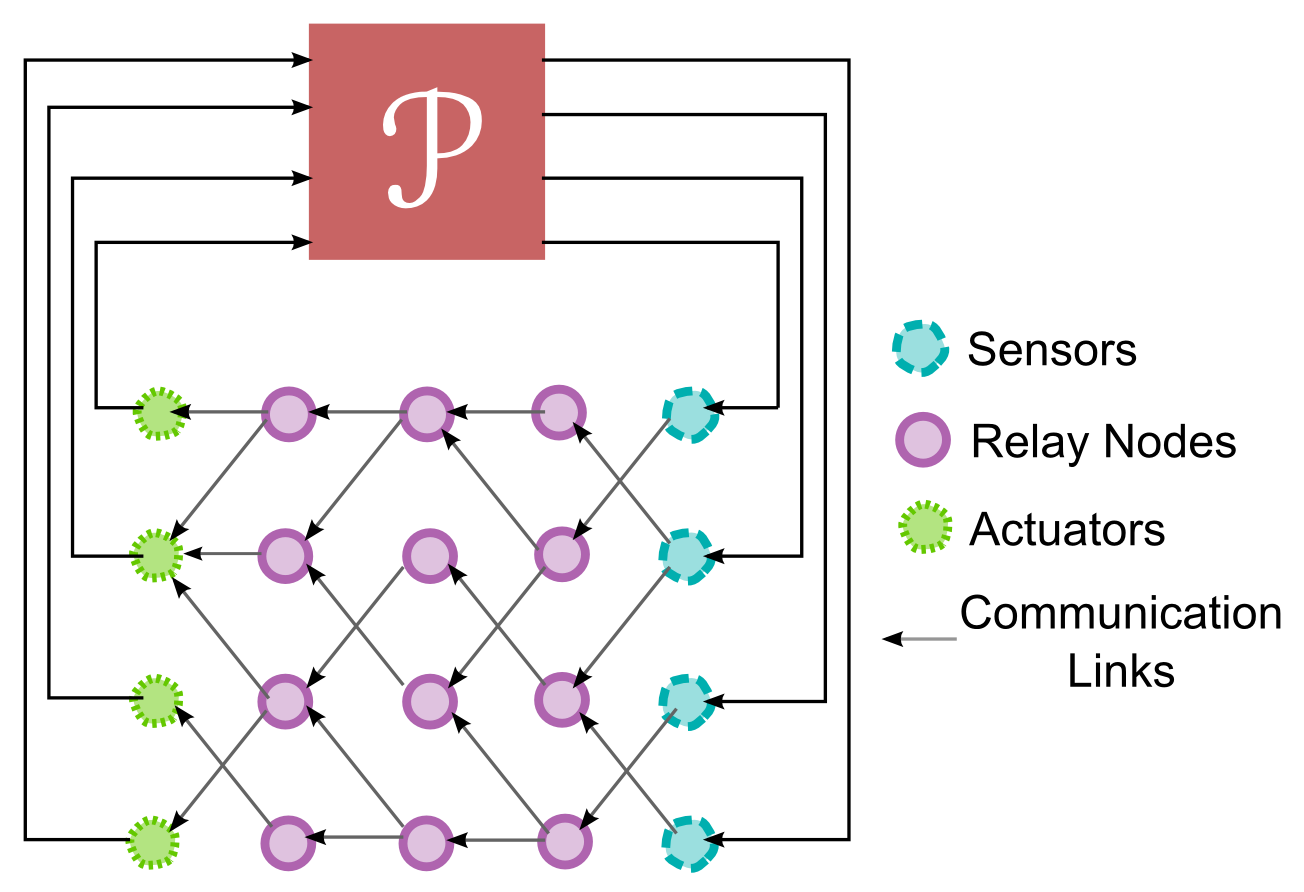
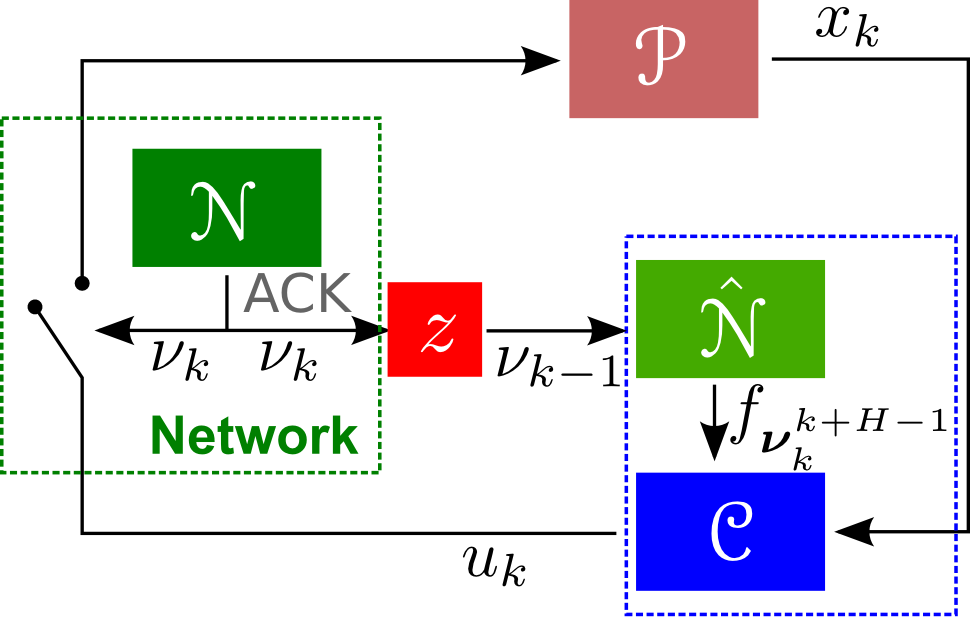
Much of the current theory of networked control systems uses simple point-to-point communication models as an abstraction of the underlying network. As a result, the controller has very limited information on the network conditions and performs suboptimally. This work models the underlying wireless multihop mesh network as a graph of links with transmission success probabilities, and uses a recursive Bayesian estimator to provide packet delivery predictions to the controller. The predictions are a joint probability distribution on future packet delivery sequences, and thus capture correlations between successive packet deliveries. We look at finite horizon LQG control over a lossy actuation channel and a perfect sensing channel, both without delay, to study how the controller can compensate for predicted network outages.
研究动机与目标
- 通过为丢包无线网状网络提供准确的分组交付预测,提升网络化控制系统的控制性能。
- 解决现有NCS模型将网络视为简单点对点或星型拓扑且具有固定分组丢失概率的局限性。
- 开发一种网络估计器,通过将链路建模为马氏调制过程,捕捉分组交付中的时间与空间相关性。
- 通过未来分组交付优化(FPD)LQG控制器,使控制器能够对预测到的网络中断做出响应。
- 通过交换比平均丢失概率更丰富的网络状态信息,弥合网络层与控制层之间的鸿沟。
提出的方法
- 将无线网状网络建模为有向图,其中每条链路的传输成功概率由两状态马氏链(吉尔伯特-埃利奥特模型)控制。
- 使用递归贝叶斯估计器,基于当前和历史网络状态,计算未来分组交付序列的联合概率分布。
- 将网络估计器与有限时域LQG控制器集成,利用预测的交付序列优化控制动作。
- 采用全局TDMA传输调度和固定路由拓扑,以定义网络结构与时间约束。
- 推导所有可能链路状态组合(2^E种状态)的网络状态概率分布,尽管模型假设链路之间统计独立。
- 通过与i.i.d.控制器(i.i.d.分组丢失)和ON控制器(无网络知识)的仿真对比,评估控制器性能。
实验结果
研究问题
- RQ1是否能够通过建模具有相关性丢包的多跳网状网络的网络估计器,相比传统模型提升控制性能?
- RQ2分组交付预测的准确性在丢包执行通道中,对有限时域LQG控制器性能有何影响?
- RQ3链路独立性与马氏链行为假设在真实网状网络中对分组交付预测保真度的影响程度如何?
- RQ4是否能够通过使用预测网络中断(通过FPD)的控制器,优于假设i.i.d.或无网络知识的控制器?
- RQ5在NCS的网络估计中,模型复杂度(如完整状态空间)与预测精度之间的权衡是什么?
主要发现
- FPD控制器的控制成本为681.68,显著低于i.i.d.控制器(1,008.2)和ON控制器(1,158.9),证明了利用预测网络状态信息的优势。
- 所提出的网络估计器通过联合概率分布成功捕捉了分组交付序列的相关性,使控制器决策优于假设独立或i.i.d.丢包的模型。
- 尽管简化,GEIHS网络模型仍能提供足够准确的预测以提升控制性能,表明其作为NCS设计的有效抽象是可行的。
- 研究发现,网络预测不准确会降低FPD控制器的性能,凸显了在基于预测的控制策略中鲁棒性的重要性。
- 结果表明,网络模型选择至关重要:过于复杂的模型未必提升预测精度,而过于简化的模型可能遗漏关键动态。
- 该框架实现了网络层与控制层之间更紧密的交互,使得网络参数(如链路状态转移概率)可用于调节控制器行为。
更好的研究,从现在开始
从阅读论文到最终审阅,大幅缩短您的研究时间。
无需绑定信用卡
本解读由 AI 生成,并经人工编辑审核。