
[论文解读] Observational signature of Lorentz violation in Kalb-Ramond field model and Bumblebee model: A comprehensive comparative study
本研究通过吸积、准正规模(QNMs)、霍金辐射和弱引力透镜效应等观测特征,比较了卡勃-拉蒙德(KR)与蜜蜂鸟(BM)模型中的洛伦兹对称性破坏黑洞。结果表明,与BM和施瓦西黑洞相比,KR黑洞表现出更高频、更快衰减的引力波、更明亮的光子环、增强的霍金辐射以及减弱的透镜偏转角,从而可通过天文数据清晰地区分这两种模型。
This article is devoted to the comparative study of the effects of the Lorentz symmetry violation (LV) arising in Kalb-Ramond (KR) and Bumblebee (BM) field models. We study optical appearance with accretion, Quasinormal modes, ringdown waveforms, Hawking radiation, and weak gravitational lensing. The horizon radius, photon radius, and the critical impact parameter for KR BHs decrease with the LV parameter $\a$. In contrast, they remain independent of the BM parameter $\b$ and have values the same as those for \s BH. We find that a KR BH is brighter than a \s or BM BH for static and infalling accretion. The BM BH, on the other hand, is brighter than a \s BH when the accretion is static but becomes darker for an infalling accretion. Our investigation into quasinormal modes (QNMs) and ringdown waveforms provides deeper insight into the difference in observational imprints of LV parameters. It reveals that GWs emitted by KR BHs have larger frequencies and decay faster than those emitted by \s or BM BHs for scalar and electromagnetic perturbations. We then study the greybody factor (GF) and power emitted for both BHs. The Hawking temperature is higher for a KR BM and lower for a BM BH than a \s BH. It also reveals that the transmission probability decreases with $\a$ and $\b$. A comparison of GFs for KR and BM BHs reveals that the transmission probability is higher for BM BH. We also study the effect of LV on the power emitted in the form of Hawking radiation. Power received by an asymptotic observer is larger for a KR BH. We obtain higher-order corrections in the deflection angle and graphically illustrate the impact of $\a$ and $\b$. We observe that a light ray gets deflected most from its path when passing by a \s BH, and the deflection is least when it passes by a KR BH. Our study conclusively shows that we can differentiate between KR and BM BHs based on astrophysical observations.
研究动机与目标
- 研究并比较卡勃-拉蒙德(KR)与蜜蜂鸟(BM)黑洞模型中洛伦兹对称性破坏(LV)的观测印记。
- 确定LV参数α(KR)与β(BM)如何影响关键天体物理可观测量,如阴影大小、吸积亮度、准正规模、霍金辐射和弱引力透镜效应。
- 建立天体物理观测是否能基于可测量特征区分KR与BM黑洞。
- 分析LV对引力波辐射、灰色体因子及霍金辐射能量通量的影响。
提出的方法
- 采用六阶帕德平均WKB方法,计算KR与BM黑洞在标量和电磁扰动下的准正规模(QNMs)。
- 将克莱因-高斯方程与麦克斯韦方程约化为具有有效势的薛定谔形式,以提取QNMs的频率与衰减速率。
- 利用透射概率计算灰色体因子(GFs)与霍金辐射的功率谱,考虑红移与势垒效应。
- 应用高斯-博内特定理,计算KR与BM黑洞弱引力透镜偏转角的高阶修正。
- 通过静态与下落吸积流模拟光学外观,分析强度分布与光子环亮度随碰撞参数的变化。
- 结合解析与数值方法,比较KR、BM与施瓦西黑洞在阴影半径、临界碰撞参数与偏转角方面的差异。
实验结果
研究问题
- RQ1卡勃-拉蒙德模型中的洛伦兹对称性破坏参数α如何影响黑洞的阴影大小、光子环强度与临界碰撞参数?
- RQ2蜜蜂鸟模型中的洛伦兹对称性破坏参数β如何影响吸积光度、准正规模频率与引力透镜偏转角,相较于施瓦西与KR黑洞?
- RQ3在标量与电磁扰动下,KR、BM与施瓦西黑洞的引力波辐射在频率与衰减速率方面有何差异?
- RQ4洛伦兹对称性破坏如何影响KR与BM黑洞的霍金温度、灰色体因子与霍金辐射总功率?
- RQ5基于偏转角修正,弱引力透镜观测能否区分KR与BM黑洞?
主要发现
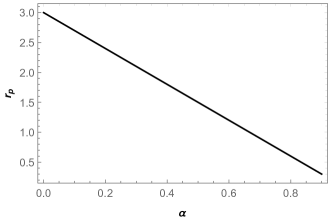
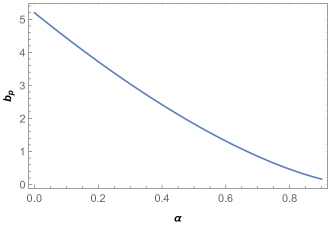
- 卡勃-拉蒙德黑洞的视界半径、光子球半径与临界碰撞参数随洛伦兹对称性破坏参数α的增加而减小,而蜜蜂鸟黑洞的这些参数与施瓦西黑洞相比保持不变。
- 在静态与下落吸积条件下,观测强度峰值出现在临界碰撞参数处;此时KR黑洞的亮度高于施瓦西与BM黑洞。
- 在标量与电磁扰动下,KR黑洞发出的引力波具有更高频率且衰减更快,相较于施瓦西或BM黑洞。
- 对于蜜蜂鸟黑洞,标量扰动下的引力波频率较低、衰减较慢,而电磁扰动下则具有更高频率,相较于施瓦西黑洞。
- 霍金温度随α(KR)增加而上升,随β(BM)增加而下降;霍金辐射的辐射功率在KR黑洞中高于BM或施瓦西黑洞。
- 在弱引力透镜中,KR黑洞的偏转角最小,施瓦西黑洞最大,BM黑洞居中,从而可通过观测实现模型间的区分。
更好的研究,从现在开始
从阅读论文到最终审阅,大幅缩短您的研究时间。
无需绑定信用卡
本解读由 AI 生成,并经人工编辑审核。