
[论文解读] On the correlation between dark matter, intracluster light and globular cluster distribution in SMACS0723
本研究基于JWST数据,构建了SMACS0723的自由形式引力透镜模型,以探究暗物质、星系团内光(ICL)和球状星团分布之间的关联。研究发现,尽管ICL与球状星团具有相似且陡峭的径向分布,但主导的总质量(主要由暗物质构成)则显著平缓,二者在对数尺度上相差1个数量级,与冷暗物质模拟结果一致,表明在中心大星系(BCG)影响范围之外,可见物质与暗物质成分存在解耦。
We present a free-form model of SMACS0723, the first cluster observed with JWST. This model makes no strong assumptions about the distribution of mass (mostly dark matter) in the cluster and we use it to study the possible correlation between dark matter with the intracluster light and distribution of globular clusters. To explore the uncertainty in mass modelling, we derive three lens models based on spectroscopically confirmed systems and new candidate systems with redshifts predicted by the lens model derived from the spectroscopic systems. We find that beyond the radius of influence of the BCG, the total mass does not trace the ICL, implying the need for a dark component (dark matter). Two loop-like structures observed in the intracluster light do not have an obvious correspondence with the total mass (mostly dark matter) distribution. The radial profiles of the ICL and the distribution of globular clusters are similar to each other, but steeper than the profile of the lens model. More specifically, we find that the total mass is shallower by 1 dex in log scale than both ICL and globular cluster profiles. This is in excellent agreement with N-body simulations of cold dark matter.
研究动机与目标
- 利用JWST数据,研究SMACS0723中暗物质、星系团内光(ICL)与球状星团分布之间的空间相关性。
- 检验观测到的ICL结构(如环状特征与空洞)是否与总质量分布(主要由暗物质构成)一致。
- 评估ICL与球状星团的径向分布与冷暗物质(CDM)模拟预测的一致性。
- 探讨分布差异对ICL与球状星团起源的启示,特别是其是否源于被剥离的星系核心。
- 通过整合JWST数据中新的光谱红移与透镜星系候选体,提升透镜建模的空间分辨率。
提出的方法
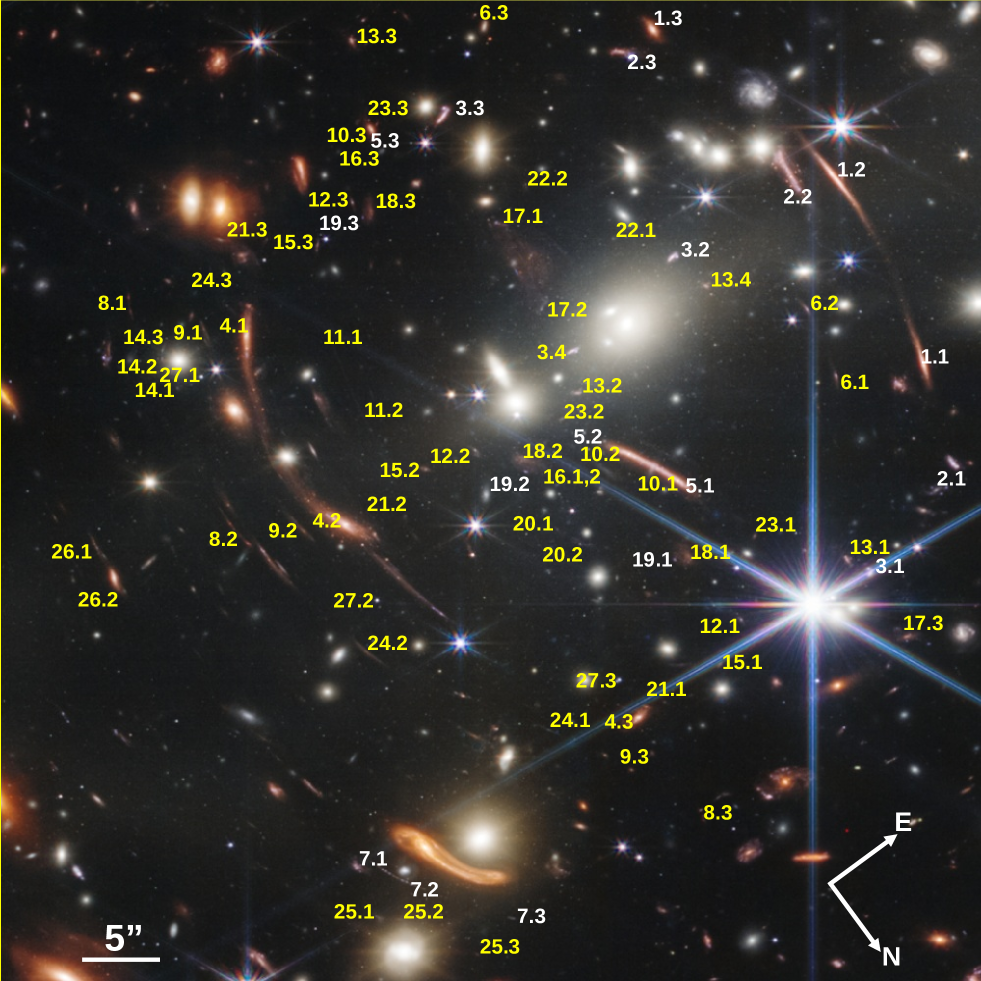
- 针对SMACS0723构建自由形式的透镜模型,不施加关于质量分布的强假设,利用JWST与HST数据提供的多重引力透镜约束。
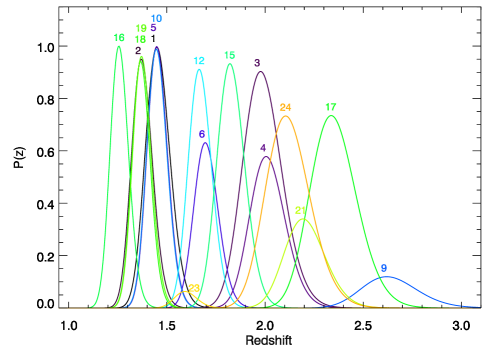
- 推导出三种不同的透镜模型:一种基于光谱确认的系统,另两种基于新候选系统预测的红移。
- 从三个模型中提取并比较径向质量、ICL与球状星团数密度分布,以评估结果的稳健性。
- 通过幂律拟合量化斜率差异,例如ICL与球状星团为R⁻¹.³,总质量为R⁻⁰.³。
- 模型包含西区空洞区域约4–5个透镜星系的约束,但该区域数据密度仍较低。
- 结合模拟与理论比较,解释在潮汐剥离与CDM晕形成背景下,分布差异的物理意义。
实验结果
研究问题
- RQ1在中心大星系(BCG)的影响范围之外,总质量分布(主要由暗物质主导)是否与星系团内光(ICL)相一致?
- RQ2环状ICL结构及其相关空洞是否与总质量分布存在空间相关性?
- RQ3SMACS0723中ICL与球状星团的径向分布与总质量分布相比如何?
- RQ4观测到的ICL与球状星团分布的陡峭程度是否与冷暗物质(CDM)模拟的预测一致?
- RQ5ICL与球状星团分布能否通过卫星星系的潮汐剥离来解释,且球状星团是否代表了幸存的星系核心?
主要发现
- 在中心大星系(BCG)影响范围之外,总质量分布显著比ICL与球状星团分布更平缓,二者在对数尺度上相差1个数量级。
- ICL与球状星团的径向分布形状相似且比总质量分布更陡峭,近似遵循R⁻¹.³的幂律,而质量分布则遵循R⁻⁰.³的幂律。
- 环状ICL结构及其相关空洞与总质量(暗物质)分布无明显对应关系,提示其形成机制可能不同。
- 观测到的分布差异与冷暗物质N体模拟结果高度一致,支持CDM理论框架。
- ICL与球状星团分布的相似性暗示可能存在物理关联,可能表明ICL由被剥离星系核心的外层物质构成,而球状星团则是幸存的核心部分。
- 西区空洞区域透镜约束数量较少(约4个星系),限制了建模空间分辨率,凸显了未来需获取更多光谱红移数据以优化质量建模的必要性。
更好的研究,从现在开始
从阅读论文到最终审阅,大幅缩短您的研究时间。
无需绑定信用卡
本解读由 AI 生成,并经人工编辑审核。