
[论文解读] On the Prospects of Incorporating Large Language Models (LLMs) in Automated Planning and Scheduling (APS)
本立场论文对在 APS 中使用 LLM 的 126项研究进行了八个类别的综述,并倡导与传统规划器的神经符号整合。
Automated Planning and Scheduling is among the growing areas in Artificial Intelligence (AI) where mention of LLMs has gained popularity. Based on a comprehensive review of 126 papers, this paper investigates eight categories based on the unique applications of LLMs in addressing various aspects of planning problems: language translation, plan generation, model construction, multi-agent planning, interactive planning, heuristics optimization, tool integration, and brain-inspired planning. For each category, we articulate the issues considered and existing gaps. A critical insight resulting from our review is that the true potential of LLMs unfolds when they are integrated with traditional symbolic planners, pointing towards a promising neuro-symbolic approach. This approach effectively combines the generative aspects of LLMs with the precision of classical planning methods. By synthesizing insights from existing literature, we underline the potential of this integration to address complex planning challenges. Our goal is to encourage the ICAPS community to recognize the complementary strengths of LLMs and symbolic planners, advocating for a direction in automated planning that leverages these synergistic capabilities to develop more advanced and intelligent planning systems.
研究动机与目标
- 促使将 LLMs 与经典 APS 融合,以解决灵活性和上下文适应性方面的差距。
- 将 APS 中的 LLM 应用分为八个不同领域,以获得结构化的洞见。
- 识别当前基于 LLM 的 APS 方法中的差距和局限性,为未来研究指明方向。
- 倡导神经符号 AI 范式作为提升 APS 能力的核心方向。
提出的方法
- 对 126 篇关于 LLMs 在 APS 中的论文进行全面文献综述。
- 将论文分为八个类别:Language Translation, Plan Generation, Model Construction, Multi-agent Planning, Interactive Planning, Heuristics Optimization, Tool Integration, Brain-Inspired Planning.
- 提供每个类别的优势、差距和未来机会的定性综合。
- 提取并综合洞见以倡导与符号规划器的神经符号整合。
- 采用手动分类过程并进行跨作者评审,以确保一致的分类法和覆盖范围。
实验结果
研究问题
- RQ1APS 中 LLM 应用的八个类别是什么?每个类别有哪些问题/差距?
- RQ2在这些类别中,LLMs 在多大程度上补充或替代传统符号规划器?
- RQ3作为改进规划系统途径的神经符号整合有哪些证据?
主要发现
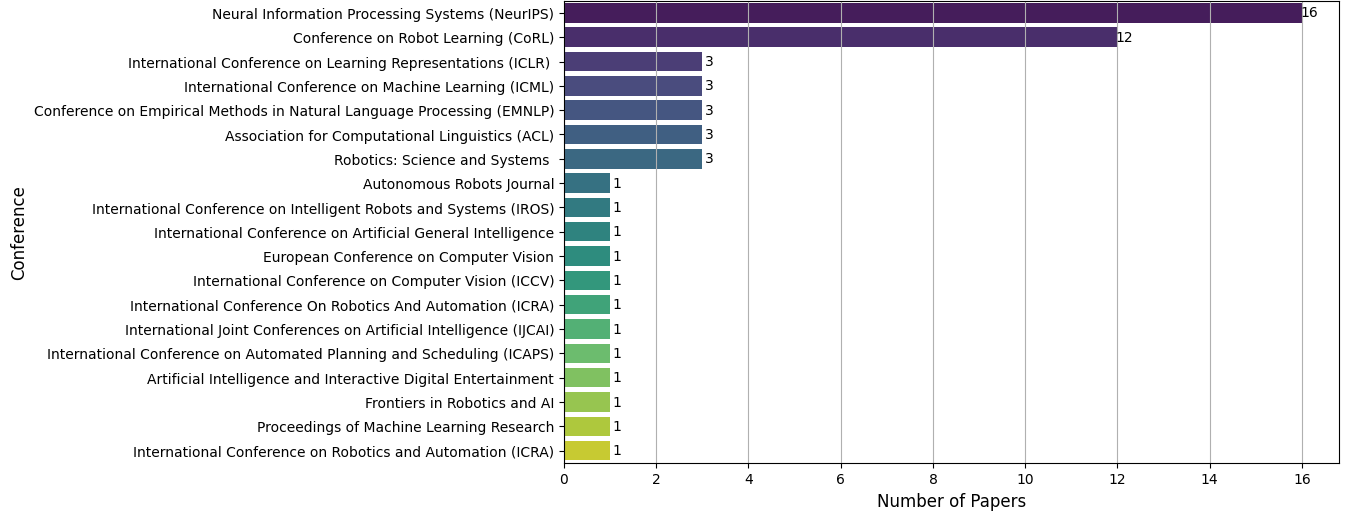
- 已建立用于 APS 的 LLM 八类别分类法,Plan Generation 是研究最广的领域(53 篇论文),Brain-Inspired Planning 的代表性最少(5 篇论文)。
- LLMs 在 Language Translation 方面表现出色,但在 Plan Generation 的计划最优性、完备性和泛化能力方面存在局限。
- 神经符号方法被确认为将 LLM 的语言能力与符号规划器的精确性结合起来的有前景方向。
- Interactive Planning 和 Tool Integration 展现出在适应性和跨系统协调方面的强大潜力,尽管存在如过度依赖工具与对 grounding 的挑战等问题。
- 差距包括对 grounding、affordances 的 grounding、跨代理通信标准化,以及需要世界模型以改善低层推理。
- 该研究主张将 LLM 与符号规划器整合,以实现动态、情境感知和可扩展的 APS。
更好的研究,从现在开始
从阅读论文到最终审阅,大幅缩短您的研究时间。
无需绑定信用卡
本解读由 AI 生成,并经人工编辑审核。