
[论文解读] One Relation for All Wavelengths: The Far-Ultraviolet to Mid-Infrared Milky Way Spectroscopic R(V) Dependent Dust Extinction Relationship
本论文首次基于光谱测量,为银河系从912 Å到32 µm的波长范围建立了统一的、与R(V)相关的尘埃消光定律,采用四个波段区域中A(λ)/A(V)对R(V)⁻¹的线性拟合。研究发现,2175 Å处的吸收特征和光学波段特征依赖于颗粒大小(R(V)),而10和20 µm的硅酸盐特征则不依赖,同时在dust_extinction Python软件包中提供了G23模型,用于全波段消光校正。
Dust extinction is one of the fundamental measurements of dust grain sizes, compositions, and shapes. Most of the wavelength dependent variations seen in Milky Way extinction are strongly correlated with the single parameter R(V)=A(V)/E(B-V). Existing R(V) dependent extinction relationships use a mixture of spectroscopic and photometry observations, hence do not fully capture all the important dust features nor continuum variations. Using four existing samples of spectroscopically measured dust extinction curves, we consistently measure the R(V) dependent extinction relationship spectroscopically from the far-ultraviolet to mid-infrared for the first time. Linear fits of A(lambda)/A(V) dependent on R(V) are done using a method that fully accounts for their significant and correlated uncertainties. These linear parameters are fit with analytic wavelength dependent functions to determine the smooth R(V) (2.3-5.6) and wavelength (912 A-32 micron) dependent extinction relationship. This relationship shows that the far-UV rise, 2175 A bump, and the three broad optical features are dependent on R(V), but the 10 and 20 micron features are not. Existing literature relationships show significant deviations compared to this relationship especially in the far-ultraviolet and infrared. Extinction curves that clearly deviate from this relationship illustrate that this relationship only describes the average behavior versus R(V). We find tentative evidence that the relationship may not be linear with 1/R(V) especially in the ultraviolet. For the first time, this relationship provides measurements of dust extinction that spectroscopically resolve the continuum and features in the ultraviolet, optical, and infrared as a function of R(V) enabling detailed studies of dust grains properties and full spectroscopic accounting for the effects of dust extinction on astrophysical objects.
研究动机与目标
- 建立一个从远紫外到中红外波段的单一、连续的R(V)-依赖尘埃消光关系,仅基于光谱测量数据。
- 解决现有消光定律中混合使用光谱与测光数据或遗漏关键波段区域的问题。
- 确定尘埃特征(如2175 Å吸收特征及10/20 µm硅酸盐特征)如何随R(V)变化,而R(V)是颗粒大小的代理指标。
- 提供一个平滑、由实测数据约束的消光模型,考虑相关误差,并支持多波段天体物理学研究中的精确消光校正。
提出的方法
- 作者使用四组代表性样本的光谱测量消光曲线,覆盖912 Å至32 µm波段,涵盖远紫外、紫外、光学、近红外和中红外区域。
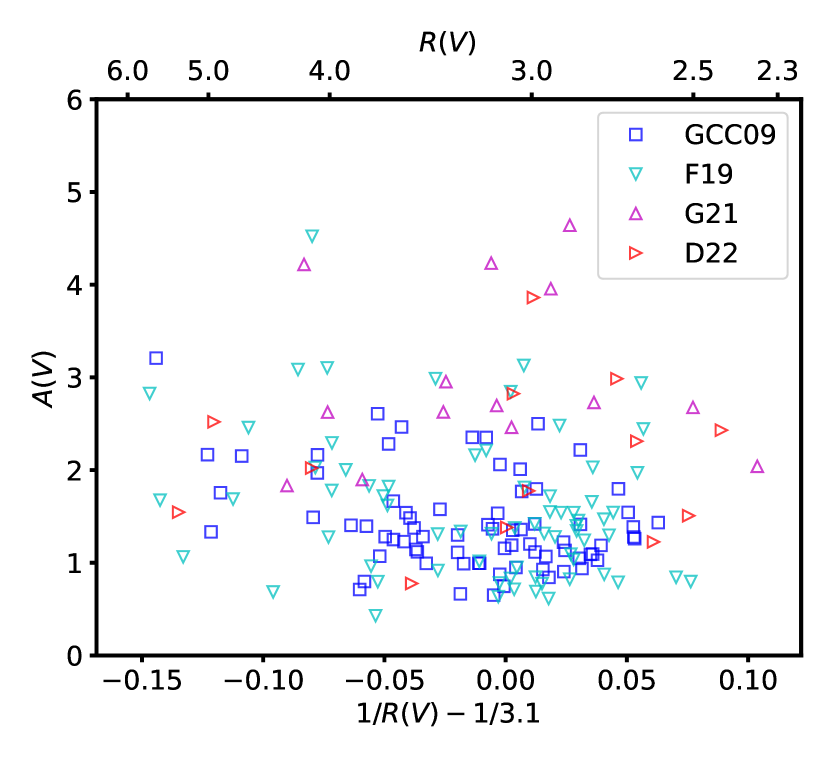
- 在每个波段区域对A(λ)/A(V)与R(V)⁻¹ − 3.1⁻¹进行线性拟合,以建模R(V)的依赖关系。
- 将所得拟合系数进一步拟合为解析函数,从而在所有波长范围内构建连续且平滑的消光定律。
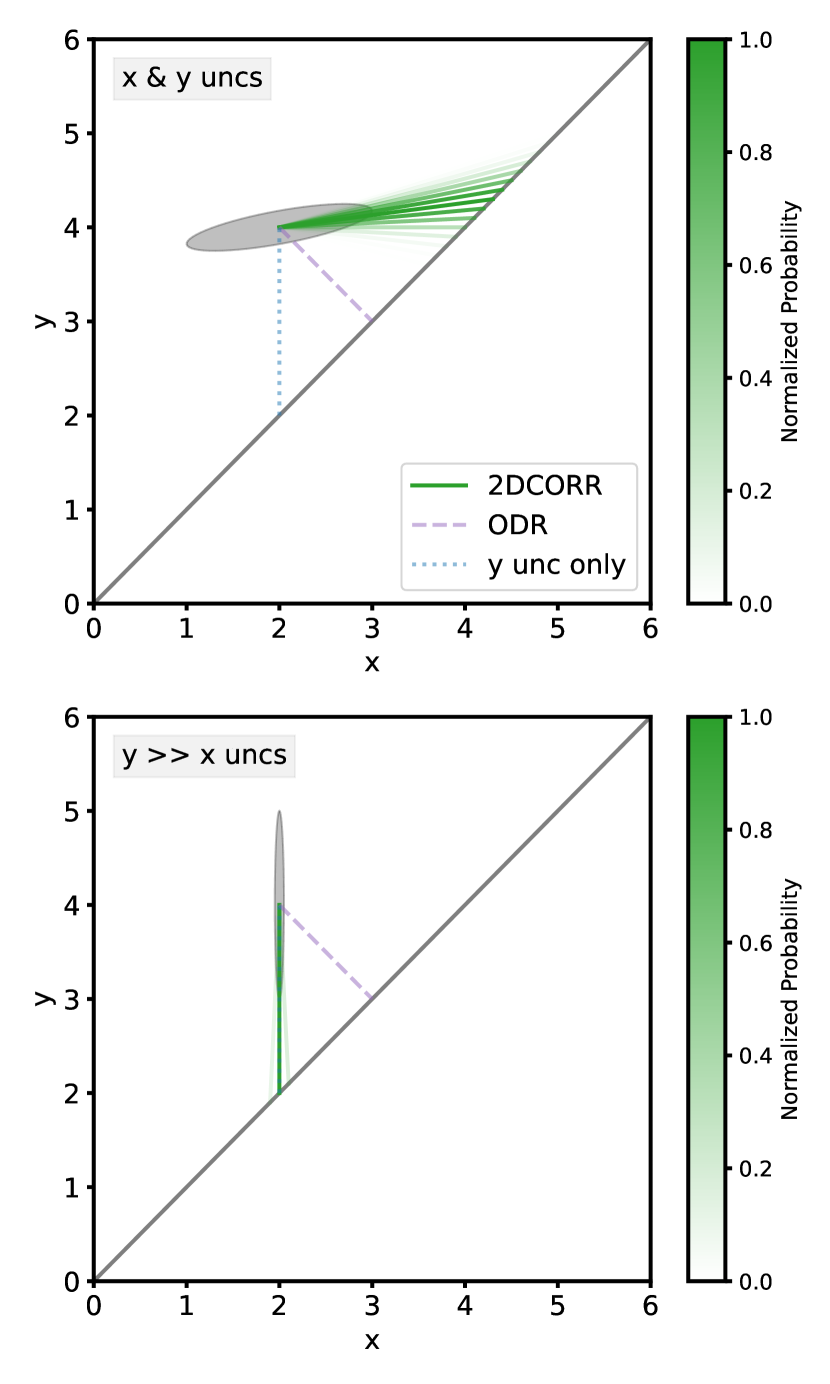
- 在拟合过程中,通过稳健的统计方法全面考虑消光测量中的相关误差。
- 最终将模型在不同波段区域之间合并,并作为G23模型集成至dust_extinction Python软件包中。
- 通过比较不同样本在重叠波段区域的结果对模型进行验证,偏差归因于已知的定标或测量问题。
实验结果
研究问题
- RQ1尘埃消光曲线在912 Å至32 µm全波段范围内如何随R(V)变化?是否能用单一连续关系描述?
- RQ2哪些尘埃特征(如2175 Å吸收特征、光学特征或10和20 µm的硅酸盐特征)依赖于R(V),哪些不依赖?
- RQ3现有R(V)-依赖消光定律在多大程度上偏离新获得的光谱衍生关系,特别是在远紫外和红外波段?
- RQ4消光的R(V)依赖性是否在R(V)⁻¹上呈线性?在紫外波段是否存在非线性的证据?
- RQ5该新消光模型能否在全光谱范围内准确校正多波段天体物理学研究中的尘埃消光?
主要发现
- G23模型首次提供了从912 Å到32 µm的、基于光谱测量的、连续的、与R(V)相关的消光定律,并实现了完整的不确定性传播。
- 2175 Å处的吸收特征及三个宽光学特征强烈依赖于R(V),表明其起源于较小颗粒。
- 10和20 µm的硅酸盐特征与R(V)无关,表明其对平均颗粒大小不敏感。
- 现有文献中的消光关系存在显著偏差,特别是在远紫外和红外波段,原因在于数据类型混杂和波段覆盖不全。
- 初步证据表明,在短波长区域(尤其是紫外波段)R(V)依赖性可能存在非线性,挑战了R(V)⁻¹线性假设。
- G23模型现已作为dust_extinction Python软件包中的G23模型发布,可广泛用于天体物理数据分析。
更好的研究,从现在开始
从阅读论文到最终审阅,大幅缩短您的研究时间。
无需绑定信用卡
本解读由 AI 生成,并经人工编辑审核。