
[论文解读] OralBBNet: Spatially Guided Dental Segmentation of Panoramic X-Rays with Bounding Box Priors
本文提出 OralBBNet,一种新颖的两阶段深度学习框架,结合 YOLOv8 进行边界框检测与改进的 U-Net(BB-UNet)实现全景牙片中的牙齿实例分割。通过利用 YOLOv8 预测的空间先验,该方法在标准 U-Net 基础上将 Dice 系数提升 10–15%,牙齿分类的 mAP 提升 3%,在磨牙和前磨牙等复杂牙科结构中表现出更优性能。
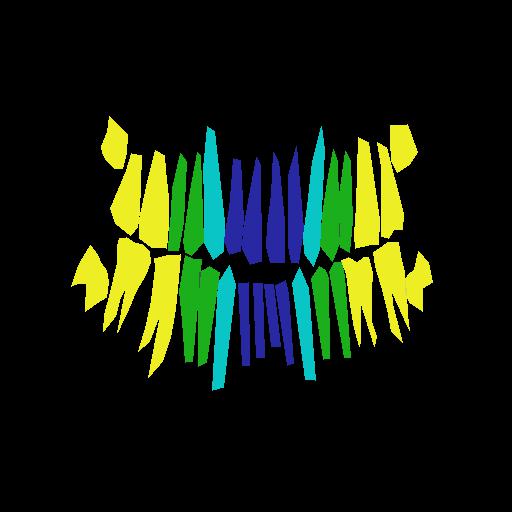
Teeth segmentation and recognition play a vital role in a variety of dental applications and diagnostic procedures. The integration of deep learning models has facilitated the development of precise and automated segmentation methods. Although prior research has explored teeth segmentation, not many methods have successfully performed tooth segmentation and detection simultaneously. This study presents UFBA-425, a dental dataset derived from the UFBA-UESC dataset, featuring bounding box and polygon annotations for 425 panoramic dental X-rays. In addition, this paper presents the OralBBNet architecture, which is based on the best segmentation and detection qualities of architectures such as U-Net and YOLOv8, respectively. OralBBNet is designed to improve the accuracy and robustness of tooth classification and segmentation on panoramic X-rays by leveraging the complementary strengths of U-Net and YOLOv8. Our approach achieved a 1-3% improvement in mean average precision (mAP) for tooth detection compared to existing techniques and a 15-20% improvement in the dice score for teeth segmentation over state-of-the-art (SOTA) solutions for various tooth categories and 2-4% improvement in the dice score compared to other SOTA segmentation architectures. The results of this study establish a foundation for the wider implementation of object detection models in dental diagnostics.
研究动机与目标
- 解决全景牙片中准确、同步进行牙齿实例分割与分类的挑战,这些图像通常对比度低且噪声多。
- 克服先前方法将所有牙齿视为单一类别或在复杂解剖变异下泛化能力不足的局限性。
- 利用空间先验知识(边界框)提升 U-Net 的分割精度,尤其在密集或退化区域表现更优。
- 通过结合 YOLOv8 的快速推理与 BB-UNet 的精确分割,构建适用于临床部署的鲁棒、高效流水线。
- 创建一个新的标注牙科数据集,包含多边形与边界框标注,以支持高级实例分割与分类任务。
提出的方法
- 使用 YOLOv8 作为单阶段目标检测器,预测全景牙片中单个牙齿的边界框,提供空间先验。
- 将 YOLOv8 预测的边界框集成到 U-Net 架构的跳跃连接中,以引导特征学习并提升定位精度。
- 使用交叉熵损失与 Dice 损失端到端训练 BB-UNet 模型,以优化像素级分割性能。
- 应用数据增强与类别平衡技术,提升泛化能力,尤其针对种植体或严重退化牙齿等稀有类别。
- 采用迁移学习与微调初始化主干网络,提升在有限牙科数据上的收敛速度与性能。
- 在新创建的 425 幅全景牙片数据集上评估该流水线,该数据集同时包含边界框与多边形标注,以实现精确评估。

实验结果
研究问题
- RQ1将 YOLOv8 的边界框先验集成到 U-Net 中,是否能显著提升全景牙科 X 光片中基于 U-Net 的实例分割精度?
- RQ2BB-UNet 在不同牙齿类型上的分割性能与标准 U-Net 及其他 SOTA 模型(如 Mask R-CNN 与 PANet)相比如何?
- RQ3YOLOv8 的边界框预测质量在多大程度上影响 BB-UNet 的最终分割性能?
- RQ4该方法在具有填充物、种植体或严重退化等挑战性病例中是否仍能保持高性能?
- RQ5轻量级单阶段检测模型 YOLOv8 是否能在保持高分割精度的同时实现更快的推理速度,适用于临床牙科影像?
主要发现
- BB-UNet 在所有牙齿类别中相较标准 U-Net 的 Dice 系数提升 10–15%,其中磨牙与前磨牙的增益最为显著。
- 与现有方法相比,该模型在牙齿分类任务中 mAP 提升 3%,展现出更优的分类性能。
- YOLOv8 在 mAP(72.9%)上优于 Mask R-CNN、HTC 与 ResNeSt,并在 AP50(94.6%)上达到或超过它们,尤其在复杂多样的测试集上表现突出。
- BB-UNet 的性能高度依赖于 YOLOv8 的准确预测;当边界框缺失时,性能退化至 U-Net 水平,证实其对空间先验的依赖性。
- 该模型在分割性能上可与 Mask R-CNN 及 U-Net + Mask R-CNN 相媲美,但推理速度更快,更适合实时临床应用。
- 新创建的 425 幅全景牙片数据集,同时包含边界框与多边形标注,为牙科实例分割的更精确评估与未来基准测试提供了支持。
更好的研究,从现在开始
从阅读论文到最终审阅,大幅缩短您的研究时间。
无需绑定信用卡
本解读由 AI 生成,并经人工编辑审核。