
[论文解读] Peduncle Gripping and Cutting Force for Strawberry Harvesting Robotic End-effector Design
本研究通过实验确定了用于机器人草莓采摘末端执行器的关键机械参数,确定了在花梗上安全夹持力为10 N,以及在30°刀片倾角、16.6°楔角下所需的切割力为15 N。这些数值可确保在50 m/s²加速度下对50 g重的草莓实现可靠夹持与切割,且不会造成损伤。
Robotic harvesting of strawberries has gained much interest in the recent past. Although there are many innovations, they haven't yet reached a level that is comparable to an expert human picker. The end effector unit plays a major role in defining the efficiency of such a robotic harvesting system. Even though there are reports on various end effectors for strawberry harvesting, but there they lack a picture of certain parameters that the researchers can rely upon to develop new end effectors. These parameters include the limit of gripping force that can be applied on the peduncle for effective gripping, the force required to cut the strawberry peduncle, etc. These estimations would be helpful in the design cycle of the end effectors that target to grip and cut the strawberry peduncle during the harvesting action. This paper studies the estimation and analysis of these parameters experimentally. It has been estimated that the peduncle gripping force can be limited to 10 N. This enables an end effector to grip a strawberry of mass up to 50 grams with a manipulation acceleration of 50 m/s$^2$ without squeezing the peduncle. The study on peduncle cutting force reveals that a force of 15 N is sufficient to cut a strawberry peduncle using a blade with a wedge angle of 16.6 degrees at a 30-degree orientation.
研究动机与目标
- 确定在不造成结构损伤或压碎的情况下,可施加于草莓花梗上的最大安全夹持力。
- 量化使用具有特定楔角和方向的刀片切断草莓花梗所需的最小切割力。
- 通过提供夹持与切割动作的力极限实证数据,支持设计坚固且对果实安全的末端执行器。
- 评估刀片方向与花梗直径对切割力需求的影响,针对两种草莓品种(Katrina 和 Zara)进行研究。
提出的方法
- 在受控条件下,对两种草莓品种(Katrina 和 Zara)的花梗进行实验性力测量。
- 施加逐步增加的夹持力,最高达10 N,以评估结构完整性,并防止在机器人操作过程中发生压碎。
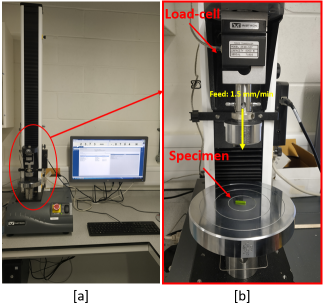
- 使用具有16.6°楔角的刀片,在多个方向(0°、10°、20°、30°)进行切割试验,以测量峰值切割力。
- 记录并分析切割过程中的力曲线,识别峰值力(F_P1、F_P2),并检测刀片与花梗支撑结构接触的时刻。
- 计算在不同直径和方向下,各样本的平均切割力(F_PM),并应用2倍安全系数,推导出适用于设计的数值。
- 使用统计分析比较不同刀片方向与草莓品种之间的切割力趋势。
![Figure 1: Strawberry harvesting end effectors: [a]. Parallel jaw mechanism for simultaneous attachment and detachment [ 9 ] , [b].Suction head for attachment and blade action for detachment [ 2 ] , [c]. Suction head and two jaw fingers for attachment and bending action of end effector for detachment](https://ar5iv.labs.arxiv.org/html/2207.12552/assets/x1.jpg)
实验结果
研究问题
- RQ1在不造成结构损伤或压碎的情况下,可安全施加于草莓花梗上的最大夹持力是多少?
- RQ2使用16.6°楔角刀片在不同方向下,切断草莓花梗所需的最小切割力是多少?
- RQ3刀片方向(0°、10°、20°、30°)如何影响草莓花梗的切割力需求?
- RQ4花梗直径与草莓品种(Katrina 与 Zara)如何影响测量到的夹持力与切割力?
- RQ5在考虑2倍安全系数的前提下,15 N的切割力配合30°刀片方向是否能可靠地切断不同品种的花梗?
主要发现
- 10 N的夹持力在不压碎花梗的前提下,足以在高达50 m/s²加速度下安全、牢固地夹持50 g重的草莓,适用于机器人操作。
- 在30°刀片方向下,切断花梗所需的峰值切割力最低,该角度下平均值分别为4.13 N(Zara)和5.00 N(Katrina)。
- 通过应用2倍安全系数得出的15 N切割力,足以在30°方向下可靠地切断两种草莓品种的花梗。
- 在更陡的刀片角度下,切割力增加,Katrina品种在10°方向下记录到最高的平均力(7.17 N)。
- 切割过程中的力曲线显示两个明显的峰值,随后出现下降并伴随一次急剧上升,证实了刀片完全切断花梗的起始时刻。
- 本研究结果仅限于两种草莓品种(Katrina 和 Zara),其他品种的结果尚未测试,尽管可假设其趋势在相近公差范围内相似。
更好的研究,从现在开始
从阅读论文到最终审阅,大幅缩短您的研究时间。
无需绑定信用卡
本解读由 AI 生成,并经人工编辑审核。