
[论文解读] Persuasion with Large Language Models: a Survey
对跨领域使用大型语言模型进行说服的系统性综述,探讨影响说服力的因素、实验设计与伦理风险。
The rapid rise of Large Language Models (LLMs) has created new disruptive possibilities for persuasive communication, by enabling fully-automated personalized and interactive content generation at an unprecedented scale. In this paper, we survey the research field of LLM-based persuasion that has emerged as a result. We begin by exploring the different modes in which LLM Systems are used to influence human attitudes and behaviors. In areas such as politics, marketing, public health, e-commerce, and charitable giving, such LLM Systems have already achieved human-level or even super-human persuasiveness. We identify key factors influencing their effectiveness, such as the manner of personalization and whether the content is labelled as AI-generated. We also summarize the experimental designs that have been used to evaluate progress. Our survey suggests that the current and future potential of LLM-based persuasion poses profound ethical and societal risks, including the spread of misinformation, the magnification of biases, and the invasion of privacy. These risks underscore the urgent need for ethical guidelines and updated regulatory frameworks to avoid the widespread deployment of irresponsible and harmful LLM Systems.
研究动机与目标
- 在政治、公共卫生、营销、电子商务、错误信息和慈善领域绘制基于LLM的说服现状。
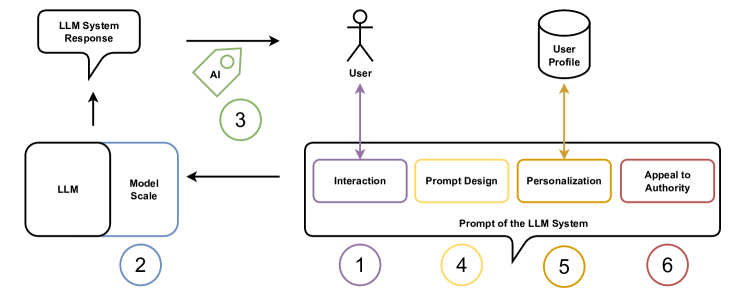
- 识别影响说服力的因素,如交互模式、模型规模、标注、个性化和权威性。
- 评审用于评估基于LLM的说服效果的实验设计并衡量有效性。
- 讨论基于LLM的说服的伦理与监管考量以及潜在的社会风险。
提出的方法
- 对2022年至2024年的同行评审文章、会议论文和行业报告的系统性综述。
- 综合应用、影响因素、方法学和成功指标。
- 提供一个按领域、研究因素和方法学对调研论文的摘要表(Table 1)。
- 对实验设计、处理结构、对照条件和成功量化进行分类。
实验结果
研究问题
- RQ1LLM系统已被应用于哪些领域的说服,以及成效如何?
- RQ2哪些因素会持续影响基于LLM的内容的说服力?
- RQ3用于评估LLM说服的实验设计有哪些,它们如何衡量成功?
- RQ4基于LLM的说服带来哪些伦理与监管挑战,以及有哪些建议的准则?
主要发现
- 在某些任务和领域,LLM系统可以达到人类水平甚至超越人类的说服力。
- 说服力显著受交互风格、模型规模、AI来源标注、提示设计、个性化以及对权威的诉求等因素影响。
- 互动对话和个性化通常增强说服力,互动程度越高通常产生更强的效果。
- 公开AI撰写身份在专家领域可能降低感知的说服力,尽管个性化可以缓解这一影响。
- 存在重大的伦理和社会风险,包括错误信息传播、偏见放大和隐私问题,强调需要制定准则和更新监管。
更好的研究,从现在开始
从论文设计到论文写作,大幅缩短您的研究时间。
无需绑定信用卡
本解读由 AI 生成,并经人工编辑审核。