
[论文解读] Predicting Tuberculosis from Real-World Cough Audio Recordings and Metadata
本研究开发并评估了基于移动应用在低资源地区收集的咳嗽音频记录和临床元数据的机器学习模型,用于预测结核病(TB)。当结合咳嗽声音与人口统计学及临床数据时,模型AUC达到0.81±0.05,表明基于移动设备的音频与症状分析可显著提升结核病病例发现效率。
Tuberculosis (TB) is an infectious disease caused by the bacterium Mycobacterium tuberculosis and primarily affects the lungs, as well as other body parts. TB is spread through the air when an infected person coughs, sneezes, or talks. Medical doctors diagnose TB in patients via clinical examinations and specialized tests. However, coughing is a common symptom of respiratory diseases such as TB. Literature suggests that cough sounds coming from different respiratory diseases can be distinguished by both medical doctors and computer algorithms. Therefore, cough recordings associated with patients with and without TB seems to be a reasonable avenue of investigation. In this work, we utilize a very large dataset of TB and non-TB cough audio recordings obtained from the south-east of Africa, India, and the south-east of Asia using a fully automated phone-based application (Hyfe), without manual annotation. We fit statistical classifiers based on spectral and time domain features with and without clinical metadata. A stratified grouped cross-validation approach shows that an average Area Under Curve (AUC) of approximately 0.70 $\pm$ 0.05 both for a cough-level and a participant-level classification can be achieved using cough sounds alone. The addition of demographic and clinical factors increases performance, resulting in an average AUC of approximately 0.81 $\pm$ 0.05. Our results suggest mobile phone-based applications that integrate clinical symptoms and cough sound analysis could help community health workers and, most importantly, health service programs to improve TB case-finding efforts while reducing costs, which could substantially improve public health.
研究动机与目标
- 开发基于真实世界、社区环境下的咳嗽音频记录和临床元数据的机器学习模型,以预测结核病状态。
- 评估传统机器学习与深度学习模型在使用基于手机的自动化数据采集方法下,区分结核病与非结核病咳嗽表现的性能。
- 评估整合临床与人口统计学元数据是否能提升仅依赖咳嗽音频的结核病预测准确率。
- 为未来人工智能驱动的结核病筛查研究,提供公开可获取的大规模数据集与基准测试集。
- 通过支持低成本、非侵入性的数字工具,助力公共卫生工作,实现社区层面的结核病病例发现。
提出的方法
- 通过完全自动化的基于手机的应用程序(Hyfe)在7个国家收集了大规模的咳嗽音频记录与临床元数据,且无需人工标注。
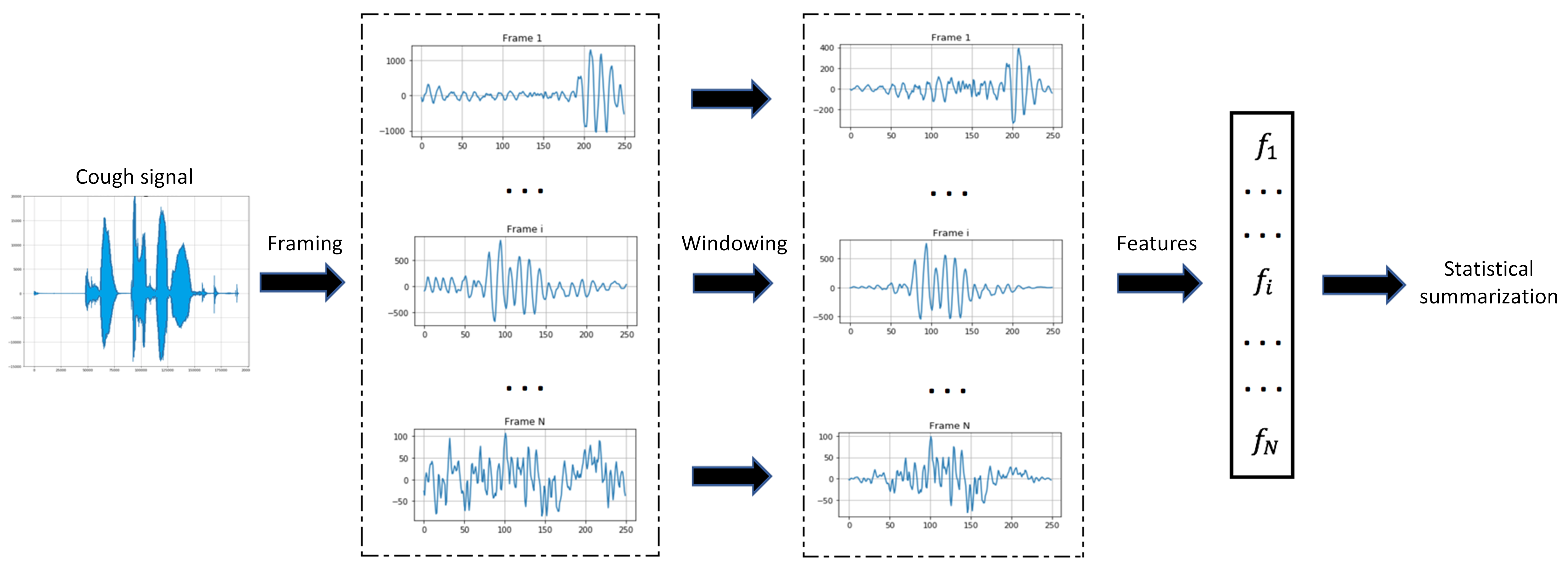
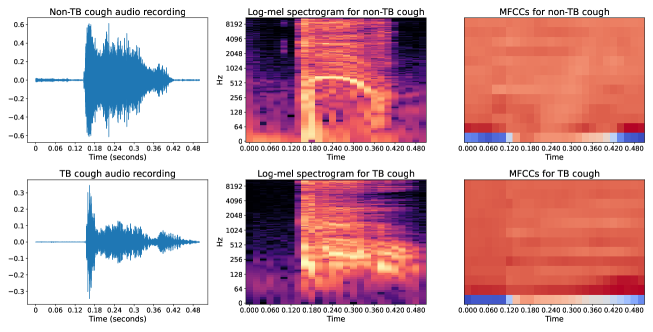
- 提取了低层次声学特征(LLDs),包括频谱、时域及时频域特征,如梅尔频率倒谱系数(MFCCs)、频谱质心、过零率以及对数梅尔倒谱图。
- 在仅音频输入与音频加元数据输入的条件下,训练了传统机器学习模型(如逻辑回归、支持向量机SVM、随机森林、AdaBoost、多层感知机MLP)。
- 通过在咳嗽声音的语谱图表示上应用二维卷积神经网络(2D-CNNs),实现深度学习,以学习分层模式。
- 采用分层分组交叉验证,以考虑参与者级别的数据结构,避免数据泄露。
- 通过加权平均法整合单个咳嗽的预测结果,以提升个体层面的分类性能。
实验结果
研究问题
- RQ1仅依靠咳嗽音频记录是否能在真实世界、社区环境中可靠预测结核病状态?
- RQ2在使用咳嗽声音进行预测时,临床与人口统计学元数据的引入如何影响模型性能?
- RQ3在分类结核病与非结核病咳嗽方面,传统机器学习与深度学习模型中哪类表现更优?
- RQ4对同一人多次咳嗽的预测结果进行聚合,是否能提升整体诊断准确率?
- RQ5基于移动设备的音频与症状分析能否作为高负担、低资源环境中可扩展、低成本的结核病病例发现工具?
主要发现
- 在仅使用咳嗽音频的实验中,表现最佳的模型(2D-CNN)在咳嗽级别分类任务中平均AUC约为0.70±0.05。
- 通过聚合咳嗽概率实现的个体层面分类性能有所提升,所有模型的AUC均高于咳嗽级别预测结果。
- 在咳嗽+元数据实验中,除MLP外的所有模型平均AUC均超过0.80,集成模型AdaBoost在咳嗽级别上的AUC达到0.82±0.05。
- 与仅使用咳嗽音频时的平均AUC约0.70相比,加入临床与人口统计学元数据后,平均AUC提升至约0.81,表明性能有显著提升。
- 逻辑回归与AdaBoost的表现优于随机森林与MLP等更复杂的模型,提示本任务中简单模型可能更具有效性。
- 对咳嗽级别预测结果进行加权平均可提升个体层面分类性能,表明集成策略可增强系统鲁棒性。
更好的研究,从现在开始
从阅读论文到最终审阅,大幅缩短您的研究时间。
无需绑定信用卡
本解读由 AI 生成,并经人工编辑审核。