
[论文解读] PubChemQC B3LYP/6-31G*//PM6 dataset: the Electronic Structures of 86 Million Molecules using B3LYP/6-31G* calculations
本文介绍了 PubChemQC B3LYP/6-31G*//PM6 数据集,这是一个包含 8590 万种分子的电子结构综合数据集,采用 DFT(B3LYP/6-31G*)和 PM6 方法计算。该数据集支持药物发现和材料科学中的高通量筛选与机器学习应用,关键结果表明在 CHON300 子集中的 HOMO-LUMO 能隙预测 R² 值达到 0.892。
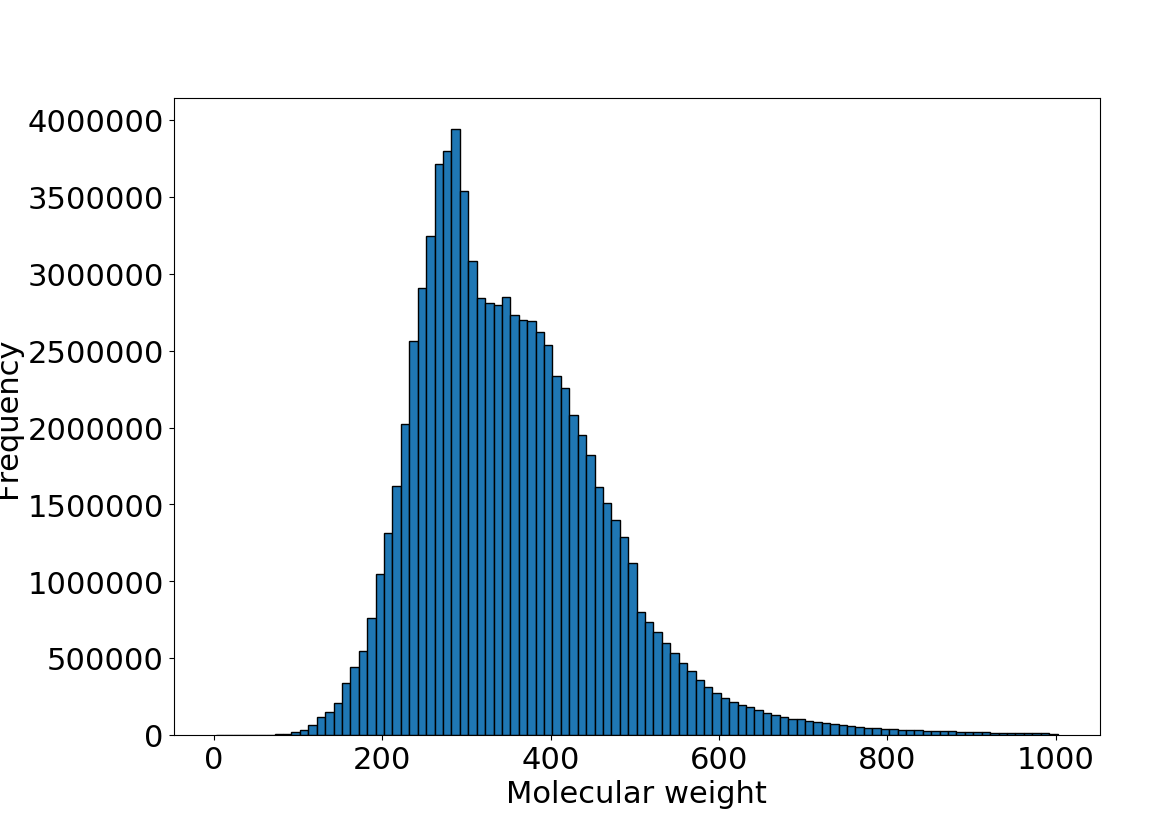
This article presents the "PubChemQC B3LYP/6-31G*//PM6" dataset, containing electronic properties of 85,938,443 molecules. It includes orbitals, orbital energies, total energies, dipole moments, and other relevant properties. The dataset encompasses a wide range of molecules, from essential compounds to biomolecules up to 1000 molecular weight, covering 94.0% of the original PubChem Compound catalog (as of August 29, 2016). The electronic properties were calculated using the B3LYP/6-31G* and PM6 methods. The dataset is available in three formats: (i) GAMESS quantum chemistry program files, (ii) selected JSON output files, and (iii) a PostgreSQL database, enabling researchers to query molecular properties. Five sub-datasets offer more specific data. The first two subsets include molecules with C, H, O, and N, under 300 and 500 molecular weight respectively. The third and fourth subsets contain C, H, N, O, P, S, F, and Cl, under 300 and 500 molecular weight respectively. The fifth subset includes C, H, N, O, P, S, F, Cl, Na, K, Mg, and Ca, under 500 molecular weight. Coefficients of determination ranged from 0.892 (CHON500) to 0.803 (whole) for the HOMO-LUMO energy gap. These findings represent extensive investigations and can be utilized for drug discovery, material science, and other applications. The datasets are available under the Creative Commons Attribution 4.0 International license at https://nakatamaho.riken.jp/pubchemqc.riken.jp/b3lyp_pm6_datasets.html.
研究动机与目标
- 生成一个大规模、公开可访问的电子性质数据集,涵盖多种有机和生物分子化合物,以支持高通量计算筛选。
- 通过扩展至 8600 万种分子、提升元素多样性与分子量范围,克服现有量子化学数据集(如 QM9 和 ANI-1)的局限性。
- 通过提供一致且高质量的电子结构数据(包括 HOMO-LUMO 能隙、偶极矩和总能量),支持药物发现与材料科学中的机器学习应用。
- 提供多种数据访问格式——JSON、PostgreSQL 和 GAMESS 输入/输出文件——以提升跨研究领域的可用性。
- 建立针对特定应用的子数据集,例如含 C、H、O、N 的类药物分子,以及含 P、S、卤素和金属的生物分子,以增强目标特定分析能力。
提出的方法
- 基于 PubChem 化合物数据库(截至 2016 年 8 月 29 日)的分子几何构型,使用 B3LYP/6-31G* 方法计算电子性质,覆盖目录中 94.0% 的化合物。
- 使用 PM6 半经验计算生成初始分子几何构型,随后将其用作 B3LYP/6-31G* 单点能量和轨道计算的输入。
- 根据元素组成和分子量阈值,将数据集划分为五个子数据集(如 CHON300nosalt、CHON500nosalt、CHONPSFCl300nosalt 等),以支持定向研究。
- 提供三种数据格式:完整的 GAMESS 输入/输出文件、结构化 JSON 提取文件,以及支持全文搜索和通过 PostgREST 进行过滤的 PostgreSQL 数据库。
- 通过计算 B3LYP/6-31G* 作为参考值时,各子数据集的 HOMO-LUMO 能隙预测 R² 值,验证了数据集的预测能力。
- 通过容器化 PostgreSQL 和 PostgREST 服务,实现程序化访问,使研究人员能够通过 SMILES、能隙、偶极矩等属性查询分子。
实验结果
研究问题
- RQ1能否使用 B3LYP/6-31G* 和 PM6 方法,为 8600 万种分子生成大规模、一致的电子性质数据集,以支持机器学习与高通量筛选?
- RQ2B3LYP/6-31G* 电子性质与参考数据的相关性如何,特别是在不同分子子集中的 HOMO-LUMO 能隙方面?
- RQ3针对特定元素组成和分子量限制的子数据集,在多大程度上能提升药物发现与材料科学中预测模型的准确性和相关性?
- RQ4使用 PostgreSQL 和 Docker 部署如此大规模的数据集(最高达 50 TB)在可扩展、可查询的格式中是否可行?
- RQ5如何将量子化学数据整合到公共数据库中,以加速新型材料(如 OLED 或高能量密度电池材料)的发现?
主要发现
- 该数据集包含 85,938,443 种分子,占截至 2016 年 8 月 29 日 PubChem 化合物目录的 94.0%,其电子性质基于 PM6 优化的几何构型,使用 B3LYP/6-31G* 方法计算。
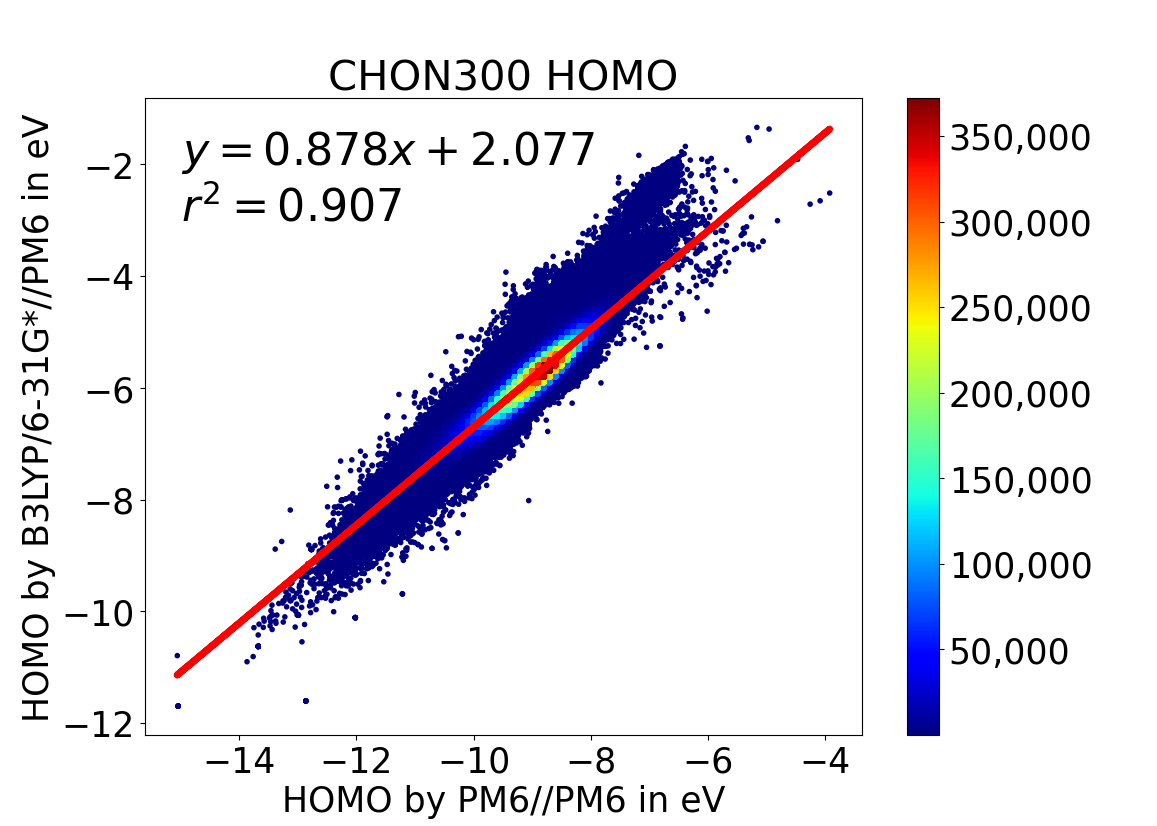
- HOMO-LUMO 能隙预测的 R² 值在 0.803(整个数据集)至 0.892(CHON300nosalt 子集)之间,表明其对电子结构趋势具有强大的预测能力。
- 创建了五个子数据集,元素多样性与分子量限制逐步增加,包括 CHON300nosalt(R² = 0.892)、CHON500nosalt(R² = 0.892)和 CHONPSFCl500nosalt(R² = 0.803),支持定向应用。
- 数据集以三种格式提供:完整的 GAMESS 输入/输出文件、结构化 JSON 文件,以及支持复杂过滤与检索的完全可查询 PostgreSQL 数据库(含 PostgREST 接口)。
- 该数据集支持对偶极矩、总能量和轨道能量等分子性质的高通量筛选,示例查询可返回如 C3H4O4(能隙 = 4.76 eV,偶极矩 = 2.38 D)等分子。
- 作者计划通过整合 CREST 优化的构象异构体以及更高水平的 DFT 方法(如 ωB97X-D/def2-SVP)来扩展数据集,以提升未来机器学习模型的准确性。
更好的研究,从现在开始
从阅读论文到最终审阅,大幅缩短您的研究时间。
无需绑定信用卡
本解读由 AI 生成,并经人工编辑审核。