
[论文解读] Q-ball-like solitons on the M2-brane with worldvolume fluxes
本论文首次在光锥规范下,通过世界体积规范场构造了在 $M_9 \times T^2$ 上紧致化的M2-膜上具有Q-球样孤立子的解析解,引入了规范场诱导的拓扑项。论文推导出各向同性和各向异性情形下的两类无色散与色散解,揭示了Q-球Noether荷与拓扑单极子荷之间的新相互作用,暗示了一类具有潜在增强稳定性的新型Q-单极子-球孤立子。
In this paper we obtain a family of analytic solutions to the nonlinear partial differential equations that describe the dynamics of the bosonic part of the mass operator of a M2-brane compactified on $M_9 imes T^2$ in the LCG with worldvolume fluxes. Those fluxes can be induced by a constant and quantized supergravity 3-form. This sector of the theory, at supersymmetric level, has the interesting property of having a discrete spectrum. We have focused on the characterization of Q-ball-like (QBL) solitons on the M2-brane with worldvolume fluxes. Two scenarios are analysed: one in which the system is isotropic and the other anisotropic. In the isotropic case, we obtain analytic families of string-like solutions to the membrane equations of motion in the presence of a non-vanishing symplectic gauge field that satisfy all constraints. We explicitly show a localised family of QBL solutions. It is demonstrated that although the solutions generally exhibit dispersion, they also allow for dispersion-free solutions. In the non-isotropic case, we obtain full-fledged membrane QBL solutions by numerical methods. We characterize some other properties of the solutions found. The dynamics of the QBL solutions are also encountered. We analyze the Lorentz boosts and Galilean transformations. Since we work in the Light Cone Gauge, the Lorentz transformed solutions are not automatically solutions, rather some extra conditions must be imposed. Only a subset of the solutions remain. We discuss some examples. The QBL solitons of the M2-brane that have been discovered contain an interaction term between the Noether charge of the Q-ball and the topological monopole charge associated with the worldvolume flux. The monopole charge increases the stability of the analytic solutions against fission...
研究动机与目标
- 在世界体积规范场存在的情况下,为M2-膜上的Q-球样孤立子构造精确的解析解。
- 研究辛规范场和规范场诱导的拓扑项在稳定孤立子构型中的作用。
- 探索在各向同性和各向异性几何设置下Q-球解的存在性与性质。
- 分析M2-膜质量谱中Noether荷(Q-球)与拓扑单极子荷(规范场诱导)之间的相互作用。
- 研究洛伦兹与伽利略变换下的动力学,识别解不变性所受的约束。
提出的方法
- 在具有紧致 $T^2$ 内部空间和恒定量子化三形式通量的光锥规范下,表述M2-膜的动力学。
- 求解非线性运动方程与约束,包括面积保持的第一类约束和规范场诱导的中心荷条件。
- 通过假设标量场的形式,将偏微分方程组约化为可解析求解的非线性常微分方程组,适用于各向同性情形。
- 采用有限差分方法对特征值问题进行离散化,并在各向同性情形下数值求解得到的非线性代数系统。
- 在非各向同性情形下,使用带有有限差分梯度近似值的打靶法,数值求解非零 $A_r$ 规范场的情形。
- 通过在变换后的解上施加一致性条件,分析洛伦兹与伽利略变换,以保持运动方程。
实验结果
研究问题
- RQ1能否在光锥规范下,于具有世界体积规范场的M2-膜上构造出解析的Q-球样孤立子?
- RQ2规范场诱导的拓扑项与辛规范场如何影响Q-球解的色散性和稳定性?
- RQ3由世界体积通量产生的Q-球Noether荷与拓扑单极子荷之间的相互作用本质为何?
- RQ4Q-球解是否在各向异性的几何中依然存在?在这些条件下能否进行数值近似?
- RQ5洛伦兹与伽利略变换如何约束该框架下有效Q-球解的集合?
主要发现
- 在各向同性情形下,推导出两类解析的Q-球样解,分别对应于非零与零辛规范场的情形,所有约束(包括规范场诱导的中心荷条件)均被满足。
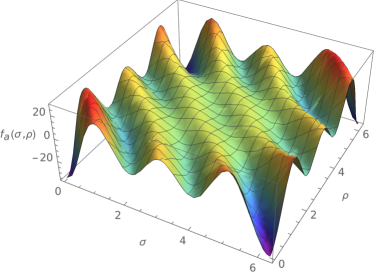
- 解表现出普遍的色散性,但在特定频率与通量条件下存在无色散解,表明存在一类受限的稳定构型。
- 仅当频率取离散且受限的集合时,解才允许线性叠加,暗示激发模式的量子化。
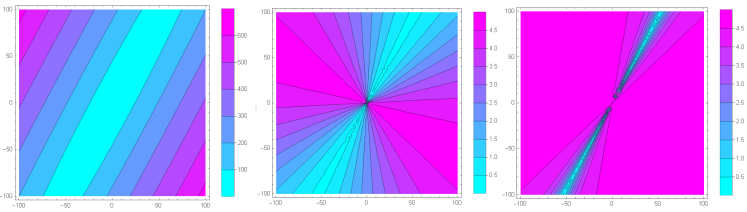
- 数值解证实了在非各向同性情形下Q-球构型的存在性,即使在简单的背景通量下,通过有限差分与打靶法实现,近似误差极低。
- M2-膜质量算符中引入了Q-球Noether荷与规范场诱导的拓扑单极子荷之间的新型相互作用项,修正了标准的 $E \sim \omega Q$ 关系。
- 洛伦兹与伽利略变换不能自动保持解的不变性;仅解的子集满足变换后的方程,且伽利略提升进一步限制了允许的解,仅保留保持Q-球形状的解(仅呼吸模式)。
更好的研究,从现在开始
从阅读论文到最终审阅,大幅缩短您的研究时间。
无需绑定信用卡
本解读由 AI 生成,并经人工编辑审核。