
[论文解读] Quantum-Assisted Support Vector Regression
该论文提出了一种使用 D-Wave 量子-经典混合求解器的量子辅助支持向量回归(SVR)模型,以提升小样本数据集上的面部关键点检测精度。通过将 SVR 训练问题表述为无约束二次二值优化(QUBO)问题,并利用量子退火求解,该方法在检测精度上略有提升,且方差显著低于经典 SVR 和最先进基线方法,证明了在监督学习中实现量子增强回归的可行性。
A popular machine-learning model for regression tasks, including stock-market prediction, weather forecasting and real-estate pricing, is the classical support vector regression (SVR). However, a practically realisable quantum SVR remains to be formulated. We devise annealing-based algorithms, namely simulated and quantum-classical hybrid, for training two SVR models and compare their empirical performances against the SVR implementation of Python's scikit-learn package for facial-landmark detection (FLD), a particular use case for SVR. Our method is to derive a quadratic-unconstrained-binary formulation for the optimisation problem used for training a SVR model and solve this problem using annealing. Using D-Wave's hybrid solver, we construct a quantum-assisted SVR model, thereby demonstrating a slight advantage over classical models regarding FLD accuracy. Furthermore, we observe that annealing-based SVR models predict landmarks with lower variances compared to the SVR models trained by gradient-based methods. Our work is a proof-of-concept example for applying quantum-assisted SVR to a supervised-learning task with a small training dataset.
研究动机与目标
- 开发一种使用量子退火的量子辅助 SVR 模型,用于训练数据有限的监督学习任务。
- 评估基于量子退火的 SVR 在面部关键点检测任务中相对于经典 SVR 和最先进 FLD 算法的性能表现。
- 探究在回归模型中,量子退火是否能实现比经典贪婪优化更低的预测方差和更高的精度。
- 展示一种适用于当前量子退火硬件实现的 SVR 训练问题的 QUBO 表述方式。
- 探索在小样本数据集上,量子辅助机器学习在现实世界计算机视觉任务中的可行性。
提出的方法
- 将 SVR 训练问题重新表述为无约束二次二值优化(QUBO)问题,以支持通过量子退火求解。
- 将多输出面部关键点检测任务分解为多个单输出回归问题,每个问题由独立的 SVR 模型进行训练。
- 同时使用经典模拟退火和 D-Wave 的量子-经典混合退火求解器求解 QUBO 表述。
- 通过平均 20 个通过退火生成的可行解的预测结果,获得最终的关键点预测,从而降低方差。
- 在包含 100 幅无约束人脸图像的小型数据集上进行模型训练与测试,性能在 LFPW 和 BioID 基准数据集上进行评估。
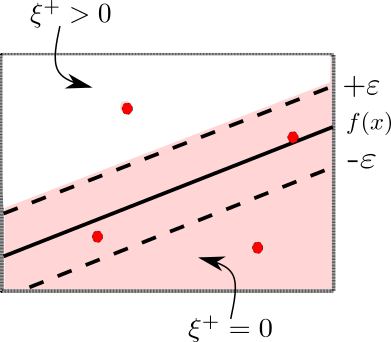
- QUBO 表述源自 ε-SVR 优化问题的拉格朗日对偶形式,可映射为 D-Wave 退火器可求解的自旋玻璃问题。
实验结果
研究问题
- RQ1量子退火能否提升小样本监督学习任务中支持向量回归的精度?
- RQ2与经典贪婪优化相比,量子辅助 SVR 是否能降低回归模型中的预测方差?
- RQ3基于量子退火的 SVR 模型在面部关键点检测任务中的性能,与经典 SVR 和最先进 FLD 算法相比如何?
- RQ4当前的量子-经典混合求解器能否有效求解 SVR 训练问题的 QUBO 表述?
- RQ5利用量子退火生成的近似最优解集合,对模型泛化能力和鲁棒性有何影响?
主要发现
- 与经典 SVR 和 BoRMaN 基线相比,量子辅助 SVR 模型在 LFPW 和 BioID 数据集上的关键点检测精度实现了轻微但可测量的提升。
- 基于退火的 SVR 模型产生的预测方差显著低于经典贪婪优化模型,这是由于拉格朗日函数的全局优化所致。
- 混合退火方法平均生成了 20 个可行解,显著降低了测试预测中平均归一化偏差误差(MNDE)的方差。
- SVR 训练问题的 QUBO 表述已成功在 D-Wave 的 Hybrid 求解器上实现并求解,验证了其在当前量子硬件上的可行性。
- 该方法证明,即使在训练数据有限的情况下,量子辅助优化也能提升回归性能,为监督学习中的量子机器学习提供了概念验证。
- 未来改进方向可能包括优化退火超参数、提高图像分割粒度,以及在更大设备上探索完全的量子退火工作流。
![Figure 2: An example image from the LFW database [ 37 ] . Using data from Ref. [ 56 ] , we show the five landmarks with manually determined positions, labels 1–5, and the face box as a red rectangle.](https://ar5iv.labs.arxiv.org/html/2111.09304/assets/figures/markedexample.jpg)
更好的研究,从现在开始
从阅读论文到最终审阅,大幅缩短您的研究时间。
无需绑定信用卡
本解读由 AI 生成,并经人工编辑审核。