
[论文解读] Quantum computing with Qiskit
论文介绍 Qiskit,即 IBM 的开源量子软件工具包,详细阐述其设计理念、架构和从问题编码到量子-经典执行的端到端工作流程,包括动态电路和硬件重新定向能力,并在凝聚态物理学中给出一个示例。
We describe Qiskit, a software development kit for quantum information science. We discuss the key design decisions that have shaped its development, and examine the software architecture and its core components. We demonstrate an end-to-end workflow for solving a problem in condensed matter physics on a quantum computer that serves to highlight some of Qiskit's capabilities, for example the representation and optimization of circuits at various abstraction levels, its scalability and retargetability to new gates, and the use of quantum-classical computations via dynamic circuits. Lastly, we discuss some of the ecosystem of tools and plugins that extend Qiskit for various tasks, and the future ahead.
研究动机与目标
- 解释 Qiskit 在量子软件栈中的设计理念与范围。
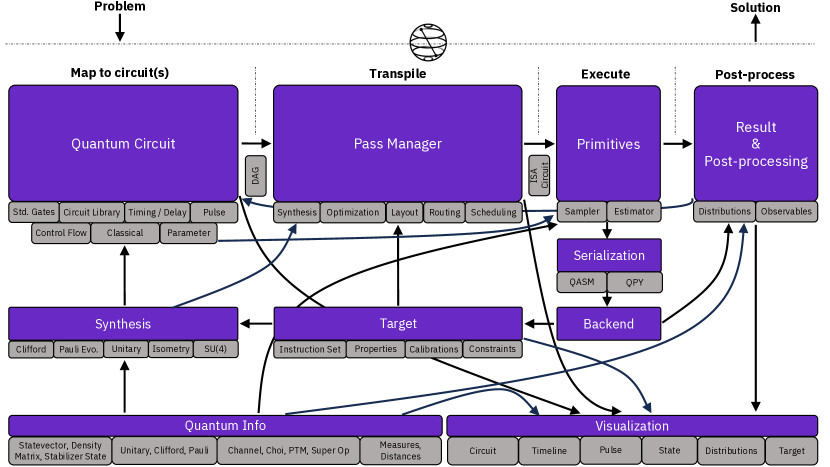
- 描述核心架构,包括电路、转译、目标与基本元件。
- 展示在量子计算机上解决凝聚态问题的端到端工作流程。
- 突出 Qiskit 生态系统及动态电路和硬件重新定向等概念。
提出的方法
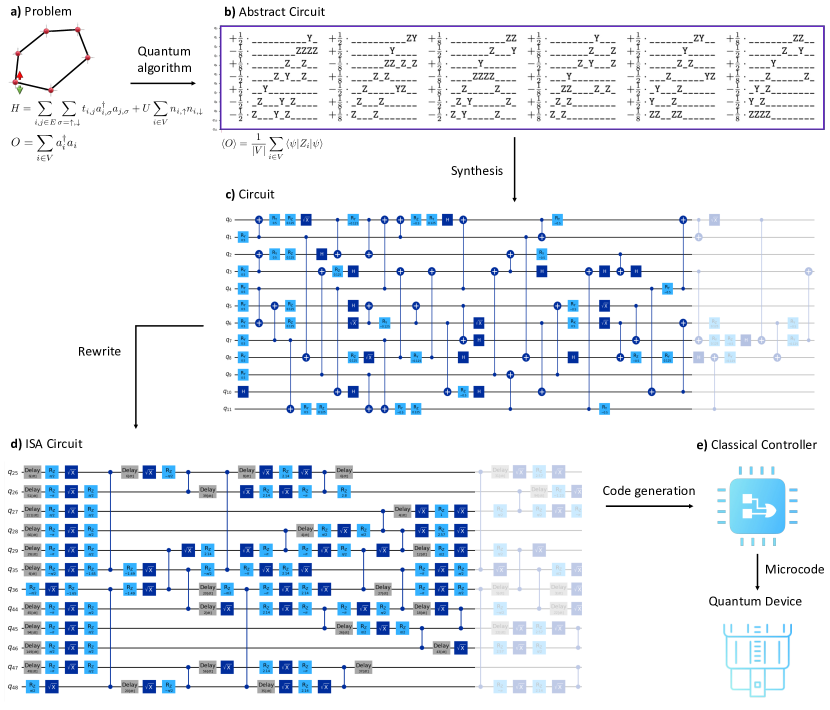
- 描述四步工作流程:问题编码、转译、通过原语执行,以及后处理。
- 通过插件接口和外部扩展解释模块化与可扩展性。
- 详细说明 Pass Manager 与 transpiler 架构,作为电路优化与翻译基础设施。
- 介绍 primitives(sampler 与 estimator)及其对量子-经典工作负载的运行时集成。
- 展示一个端到端的 Ising 模型哈密顿量模拟,用以说明在多个抽象级别上的电路表示与对硬件的重新定向能力。
- 讨论 Qiskit 使用的可视化工具与张量排序约定。
实验结果
研究问题
- RQ1Qiskit 如何在不同抽象层次将经典问题编码为量子电路?
- RQ2转译器的 Pass Manager 如何为不同硬件指令集优化并重新定向电路?
- RQ3量子-经典集成与动态电路在实际量子计算中扮演何种角色?
- RQ4Qiskit 如何支持从电路创建到测量与在真实硬件上的后处理的端到端工作流?
- RQ5论文提供了哪些证据来支持 Qiskit 的实用性与生态系统(例如性能、重新定向能力、动态电路)?
主要发现
- Qiskit 使从问题映射到硬件执行的端到端工作流成为可能,包括动态电路和对硬件的感知重新定向。
- 四步工作流程(problem→transpile→execute→post-process)是由灵活 API 支持的核心模式。
- 可重新定向的转译使引入新硬件门(如部分 ZX)和缩短电路时长成为可能。
- 动态电路与定制化调度(如 dynamical decoupling)可降低电路深度并提高可靠性。
- 论文在 IBM 硬件上演示了 Ising 模型哈密顿量模拟,展示了多级电路表示和优化技术。
- Qiskit 支持一个工具与插件生态系统,扩展其功能超出核心工具包。
更好的研究,从现在开始
从论文设计到论文写作,大幅缩短您的研究时间。
无需绑定信用卡
本解读由 AI 生成,并经人工编辑审核。