
[论文解读] Quantum Data Center Infrastructures: A Scalable Architectural Design Perspective
该论文通过使用光开关将多个量子处理单元互连,提出基于交换机的和基于服务器的拓扑、纠缠生成协议,以及具备网络感知的编排器,并给出仿真基准,用以设计可扩展的量子数据中心网络。
This paper presents the design of scalable quantum networks that utilize optical switches to interconnect multiple quantum processors, facilitating large-scale quantum computing. By leveraging these novel architectures, we aim to address the limitations of current quantum processors and explore the potential of quantum data centers. We provide an in-depth analysis of these architectures through the development of simulation tools and performance metrics, offering a detailed comparison of their advantages and trade-offs. We hope this work serves as a foundation for the development of efficient and resilient quantum networks, designed to meet the evolving demands of future quantum computing applications.
研究动机与目标
- 推动需要可扩展的、网络化的量子数据中心以克服单个QPUs的量子比特上限的动机。
- 提出受经典数据中心设计启发的可扩展网络架构(交换机为中心和服务器为中心)。
- 开发与量子数据中心兼容的物理层模型和纠缠生成协议。
- 引入网络感知的量子编排器,将电路级作业转化为光开关配置。
- 提供仿真基准以评估架构的时延和保真度。
提出的方法
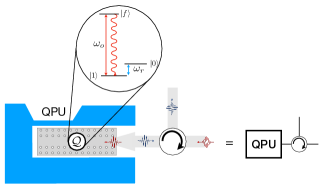
- 为纠缠生成协议(发射体-发射体、发射体-散射体、散射体-散射体)与自旋-光子接口开发物理层模型。
- 在不同编码(费克空间、偏振、时间-分组)下分析三种纠缠协议并量化保真度与生成速率。
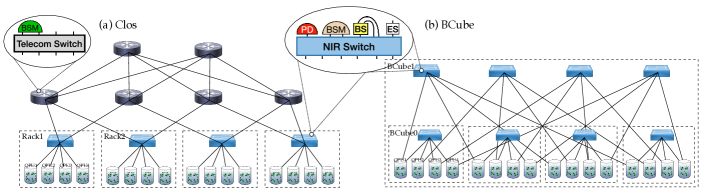
- 提出交换机中心(如 Clos)和服务器中心(如 BCube)的量子数据中心网络拓扑,并将同机架内/跨机架操作映射到近红外和通信波长。
- 引入网络感知的量子编排器,根据电路描述与拓扑对光开关与量子硬件预编译指令。
- 在 Clos 拓扑上对随机量子电路进行仿真与基准测试,以评估端到端性能。
实验结果
研究问题
- RQ1量子数据中心如何在尽量减少昂贵的量子硬件的前提下实现按需的全对全连通性?
- RQ2在大规模量子数据中心中,哪种网络架构(交换机中心 vs 服务器中心)在可扩展性、保真度和纠缠分发效率之间能达到最佳平衡?
- RQ3不同的-ebit 生成协议和编码在实际中如何影响端到端的纠缠速率和保真度?
- RQ4网络感知编排器在将量子电路转化为网络配置中扮演何种角色?
- RQ5架构选择如何影响仿真量子工作负载的端到端时延和保真度?
主要发现
- 论文提出两大架构类别——交换机中心与服务器中心——基于经典数据中心网络原理,以实现可扩展的量子数据中心互连。
- 在不同编码下分析三种纠缠生成协议(发射体-发射体、发射体-散射体、散射体-散射体),并在损耗条件下推导端到端生成速率与保真度的表达式。
- 交换机中心布局利用无阻塞的光子互连与光开关实现接近全对全连通性;服务器中心设计依赖模块化的纠缠分发与专用硬件。
- 机架内通信在近红外波段工作,机架间通信使用通信波长,必要时使用非简并纠缠源和量子频率转换。
- 引入网络感知的编排器将电路级作业及拓扑转化为对光开关和硬件的预编译控制指令,实现协同分布式量子计算。
- 在 Clos 拓扑上对随机量子电路进行性能基准测试,以评估平均网络时延和量子保真度。
更好的研究,从现在开始
从论文设计到论文写作,大幅缩短您的研究时间。
无需绑定信用卡
本解读由 AI 生成,并经人工编辑审核。