
[论文解读] Quantum machine learning for image classification
论文提出了两种混合量子-经典神经网络用于MNIST数字分类:HQNN-Parallel具有并行VQC,测试准确率达到99.21%,HQNN-Quanv具有量子量卷积层,准确率达到67%,两者的可训练参数显著少于经典对比模型。
Image classification, a pivotal task in multiple industries, faces computational challenges due to the burgeoning volume of visual data. This research addresses these challenges by introducing two quantum machine learning models that leverage the principles of quantum mechanics for effective computations. Our first model, a hybrid quantum neural network with parallel quantum circuits, enables the execution of computations even in the noisy intermediate-scale quantum era, where circuits with a large number of qubits are currently infeasible. This model demonstrated a record-breaking classification accuracy of 99.21% on the full MNIST dataset, surpassing the performance of known quantum-classical models, while having eight times fewer parameters than its classical counterpart. Also, the results of testing this hybrid model on a Medical MNIST (classification accuracy over 99%), and on CIFAR-10 (classification accuracy over 82%), can serve as evidence of the generalizability of the model and highlights the efficiency of quantum layers in distinguishing common features of input data. Our second model introduces a hybrid quantum neural network with a Quanvolutional layer, reducing image resolution via a convolution process. The model matches the performance of its classical counterpart, having four times fewer trainable parameters, and outperforms a classical model with equal weight parameters. These models represent advancements in quantum machine learning research and illuminate the path towards more accurate image classification systems.
研究动机与目标
- Motivate the use of quantum effects to enhance image classification beyond classical deep learning.
- Propose two hybrid quantum-classical models (HQNN-Parallel and HQNN-Quanv) for MNIST digit recognition.
- Evaluate and compare performance and parameter efficiency against classical CNN baselines.
提出的方法
- Use a classical convolutional front-end to extract features, followed by a quantum-dense block with parallel VQCs (HQNN-Parallel).
- Encode classical features into quantum states via angle embedding and train variational parameters using the parameter-shift rule; concatenate VQC outputs for a final classical dense layer.
- Introduce a quanvolutional layer (HQNN-Quanv) where quantum filters of size n×n act as convolutional kernels via angle embedding, variational gates, and measurement to produce output channels fed into a dense layer.
- Train all parameters end-to-end using cross-entropy loss and backpropagation for classical parts; apply PennyLane for quantum gradients (parameter-shift rule) and PyTorch for classical parts.
- Compare HQNN-Parallel to a CNN with equivalent architecture and fewer parameters; compare HQNN-Quanv to CNNs with small and large kernels, controlling for number of trainable parameters.
实验结果
研究问题
- RQ1Can hybrid quantum-classical networks improve image classification accuracy on MNIST compared to classical CNNs with similar architecture and parameter counts?
- RQ2What is the impact of parallel VQCs versus a quanvolutional quantum layer on classification performance and parameter efficiency?
- RQ3How trainable are the quantum circuit parameters, and can end-to-end training enhance learning on image data?
- RQ4How do Quantum Neural Networks perform with constrained dataset sizes and simplified architectures?
主要发现
| 模型 | 训练损失 | 测试损失 | 测试准确率 | 参数数量 |
|---|---|---|---|---|
| CNN | 0.0205 | 0.0449 | 98.71 | 372234 |
| HQNN | 0.0204 | 0.0274 | 99.21 | 45194 |
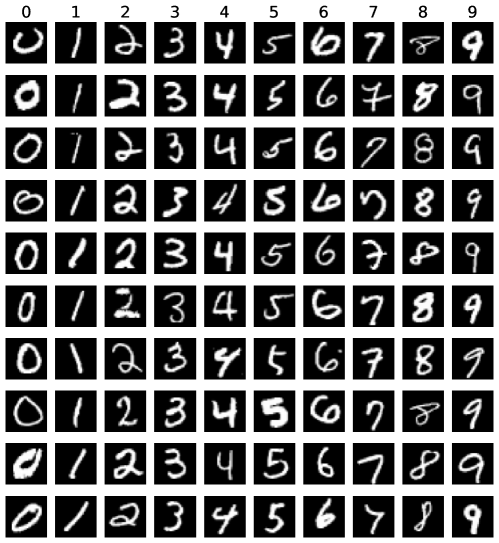
- HQNN-Parallel achieves 99.21% test accuracy on MNIST, outperforming a CNN with ~8× more parameters (98.71%).
- HQNN-Parallel uses eight times fewer parameters than the classical CNN in the comparison.
- HQNN-Quanv achieves 67% ±1% test accuracy, comparable to CNN4 (66% ±2%) but with four times fewer trainable parameters in the first layer.
- HQNN-Quanv outperforms CNN1 (53% ±2%) when matched for parameter counts in the filters.
- All parameters in both models are trainable, highlighting the potential of hybrid quantum-classical approaches for image classification.
更好的研究,从现在开始
从论文设计到论文写作,大幅缩短您的研究时间。
无需绑定信用卡
本解读由 AI 生成,并经人工编辑审核。