
QUICK REVIEW
[论文解读] Quantum Repeater with Encoding
Liang Jiang, Jacob M. Taylor|Digital Access to Scholarship at Harvard (DASH) (Harvard University)|Sep 22, 2008
Quantum Information and Cryptography被引用 15
一句话总结
该论文提出了一种基于编码的快速量子中继协议,利用Calderbank-Shor-Steane(CSS)码对逻辑量子比特进行编码,并在编码层执行纠缠连接,从而实现高 key 生成速率的远距离量子通信。通过在同时进行的纠缠交换过程中用经典纠错替代缓慢的纠缠纯化,该协议在仅使用每站30–150个物理量子比特的情况下,可在10^3–10^6 km的距离上实现超过100比特/秒的 key 生成速率,且资源消耗随距离对数级增长。
ABSTRACT
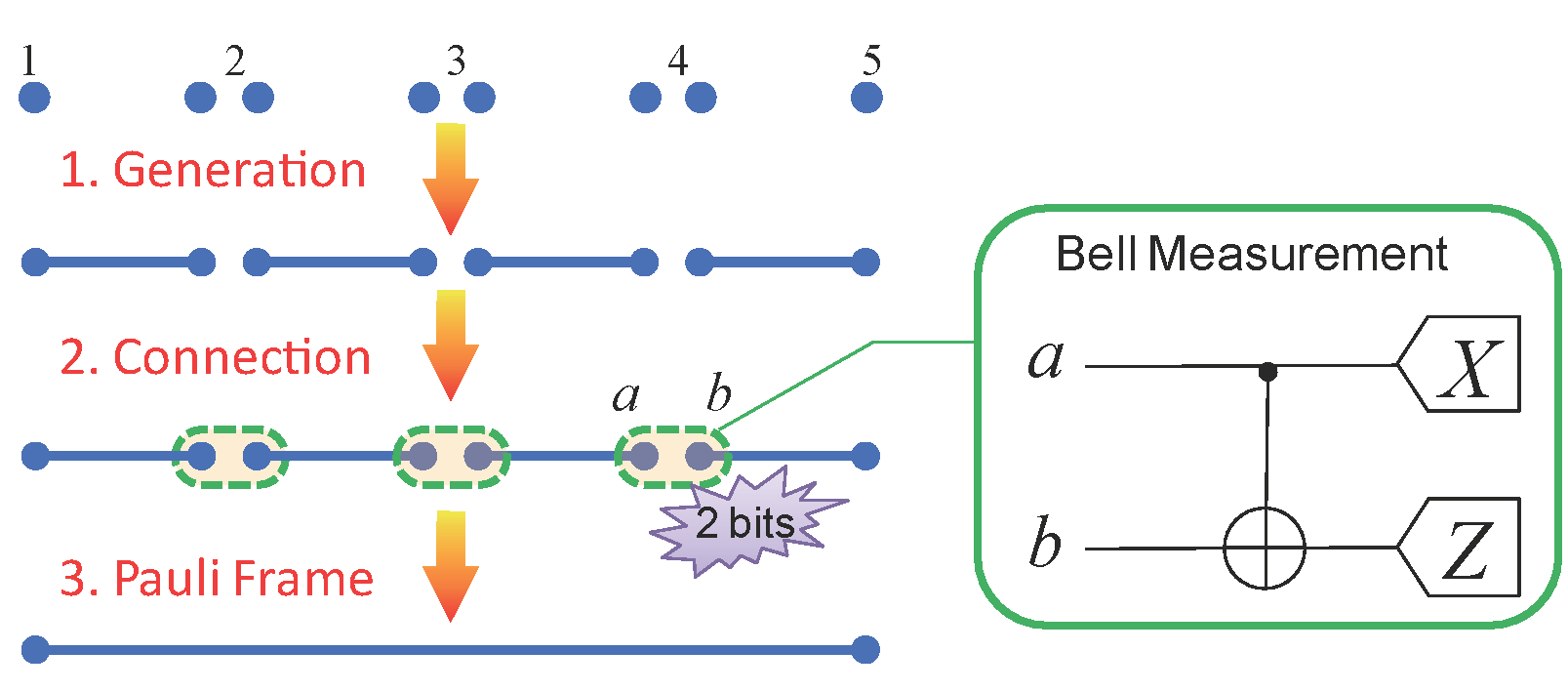
We propose a new approach to implement quantum repeaters for long distance quantum communication. Our protocol generates a backbone of encoded Bell pairs and uses the procedure of classical error correction during simultaneous entanglement connection. We illustrate that the repeater protocol with simple Calderbank-Shor-Steane (CSS) encoding can significantly extend the communication distance, while still maintaining a fast key generation rate.
研究动机与目标
- 为克服长距离量子通信中因光纤衰减导致的 key 生成速率指数衰减问题。
- 消除纠缠纯化过程中对缓慢的双向经典通信的依赖,从而避免受量子存储相干时间限制而影响性能。
- 开发一种协议,在仅使用有限且可扩展资源的前提下,实现高达10^6 km距离的高保真度和快速 key 生成。
- 证明在编码层使用经典纠错可替代量子纠错和纠缠纯化,显著提升效率。
提出的方法
- 该协议使用小型Calderbank-Shor-Steane(CSS)码对逻辑量子比特进行编码,以同时防护比特翻转和相位退相干错误。
- 纠缠连接(交换)在编码层执行,从而保持逻辑贝尔态的保真度。
- 在纠缠连接过程中应用经典纠错,以纠正由非理想操作和存储退相干引入的错误。
- 该协议采用单向通信模式,避免了传统纯化协议中使用的双向经典通信带来的时延。
- 通过基于纯化步骤成功概率和操作错误率的递归模型,计算生成足够纯化贝尔对的失败概率。
- 通过建模纠缠生成与纯化的周期时间,估算 key 生成速率,资源扩展性基于每站的量子比特数量和所需保真度。
实验结果
研究问题
- RQ1是否可设计一种基于CSS编码与经典纠错的量子中继协议,在不依赖缓慢纠缠纯化的情况下实现高保真度的远距离纠缠?
- RQ2在每站使用有限本地资源(如30–150个量子比特)的情况下,通过编码纠缠交换可实现的最大通信距离是多少?
- RQ3与传统协议相比,当使用单向经典通信和编码操作时,key 生成速率如何随距离变化?
- RQ4为实现目标失败概率(例如10^{-5})以生成足够数量的纯化对,每站所需的初始贝尔对数量是多少?
- RQ5该协议是否可在10^3–10^6 km的距离上保持超过100比特/秒的 key 生成速率,并实现对数级资源扩展?
主要发现
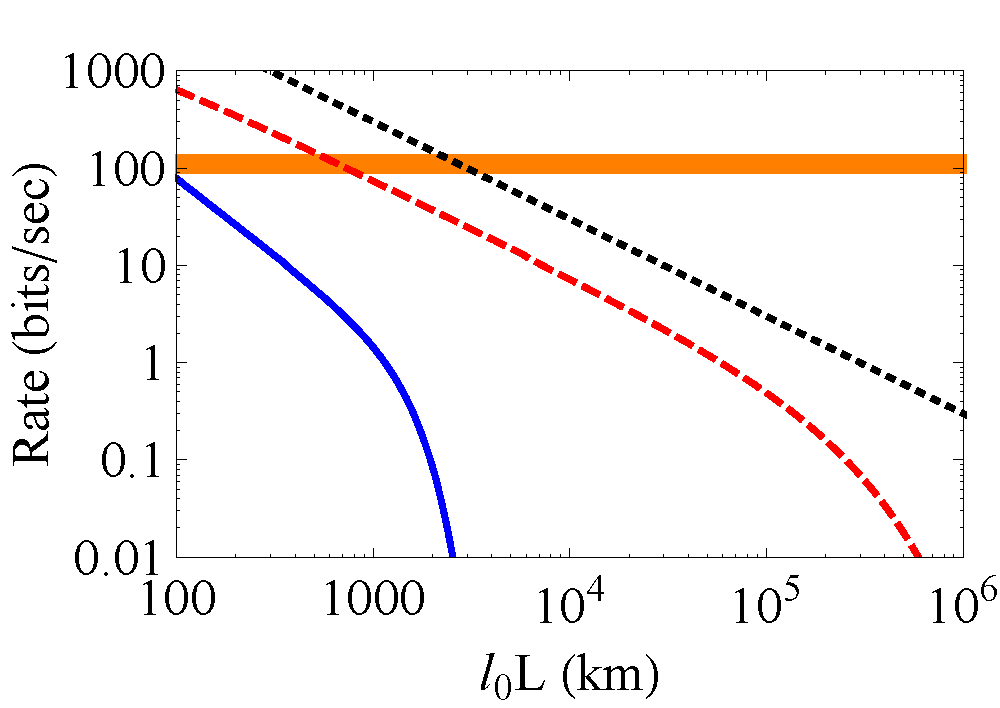
- 所提出的协议在10^3 km至10^6 km的距离范围内,key 生成速率超过100比特/秒,显著优于传统协议中因指数速率衰减而性能下降的问题。
- 在每站使用30–150个物理量子比特的条件下,协议随距离呈对数级扩展,实现了使用有限且可管理资源的远距离通信。
- 生成n个纯化贝尔对的失败概率随初始未纯化对数N₀的增加呈指数下降,且当N₀/n ≈ 15时,即可确保在广泛n范围内P_fail < 10^{-5}。
- 周期时间τ_c ≈ 7 ms 可通过每站约6n个物理量子比特实现(n ≈ 10–20),支持100比特/秒的 key 生成速率。
- 通过使用大而高效的CSS码,最终贝尔对的保真度可无限接近于1,证明了保真度的可扩展性。
- 该协议采用单向通信模式,使其 key 生成速率与距离无关,从而突破了传统协议中经典通信时间的限制,性能更优。
更好的研究,从现在开始
从阅读论文到最终审阅,大幅缩短您的研究时间。
无需绑定信用卡
本解读由 AI 生成,并经人工编辑审核。