
[论文解读] Real-time Trust Prediction in Conditionally Automated Driving Using Physiological Measures
本研究提出了一种基于生理指标和机器学习的实时信任预测系统,用于条件性自动化车辆。通过在模拟接管场景中分析皮肤电反应(GSR)、心率变异性(HRV)和眼动追踪数据,XGBoost模型在动态预测驾驶员信任方面实现了89.1%的F1得分,优于其他模型,为车载信任校准系统奠定了基础。
Trust calibration presents a main challenge during the interaction between drivers and automated vehicles (AVs). In order to calibrate trust, it is important to measure drivers' trust in real time. One possible method is through modeling its dynamic changes using machine learning models and physiological measures. In this paper, we proposed a technique based on machine learning models to predict drivers' dynamic trust in conditional AVs using physiological measurements in real time. We conducted the study in a driving simulator where participants were requested to take over control from automated driving in three conditions that included a control condition, a false alarm condition, a miss condition with eight takeover requests (TORs) in different scenarios. Drivers' physiological measures were recorded during the experiment, including galvanic skin response (GSR), heart rate (HR) indices, and eye-tracking metrics. Using five machine learning models, we found that eXtreme Gradient Boosting (XGBoost) performed the best and was able to predict drivers' trust in real time with an f1-score of 89.1%. Our findings provide good implications on how to design an in-vehicle trust monitoring system to calibrate drivers' trust to facilitate interaction between the driver and the AV in real time.
研究动机与目标
- 开发一种基于生理信号的实时方法,用于预测条件性自动化车辆中的动态信任。
- 评估机器学习模型在接管场景中基于生理和行为指标预测信任的有效性。
- 识别在自动驾驶情境中用于信任估计的最具预测性的生理特征。
- 为增强驾驶员-自动驾驶车辆交互与安全性的车载信任校准系统设计提供依据。
提出的方法
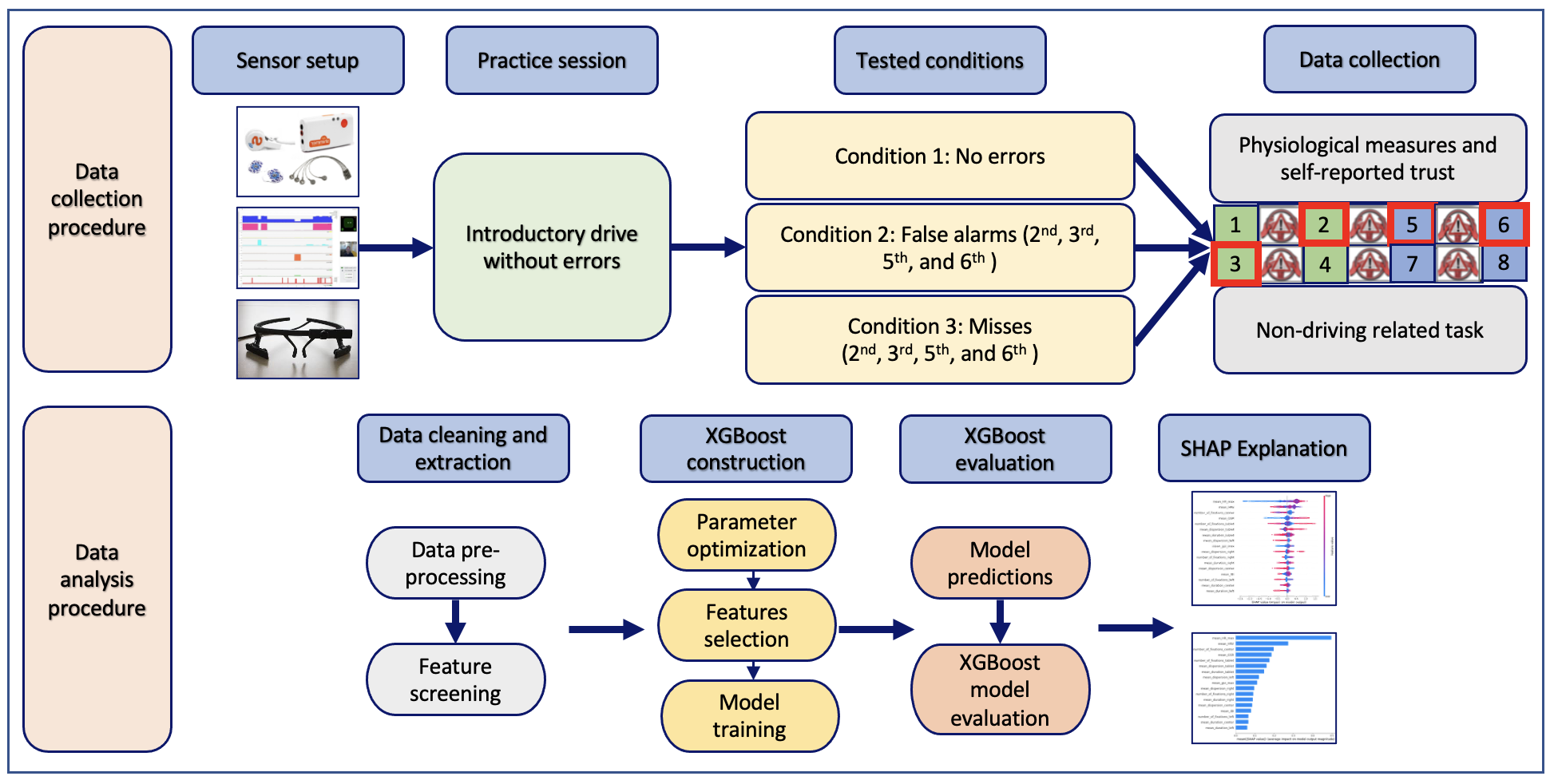
- 在驾驶模拟器中开展研究,共招募59名参与者,涵盖三种条件:对照组、误报和漏报场景,涉及八次接管请求(TORs)。
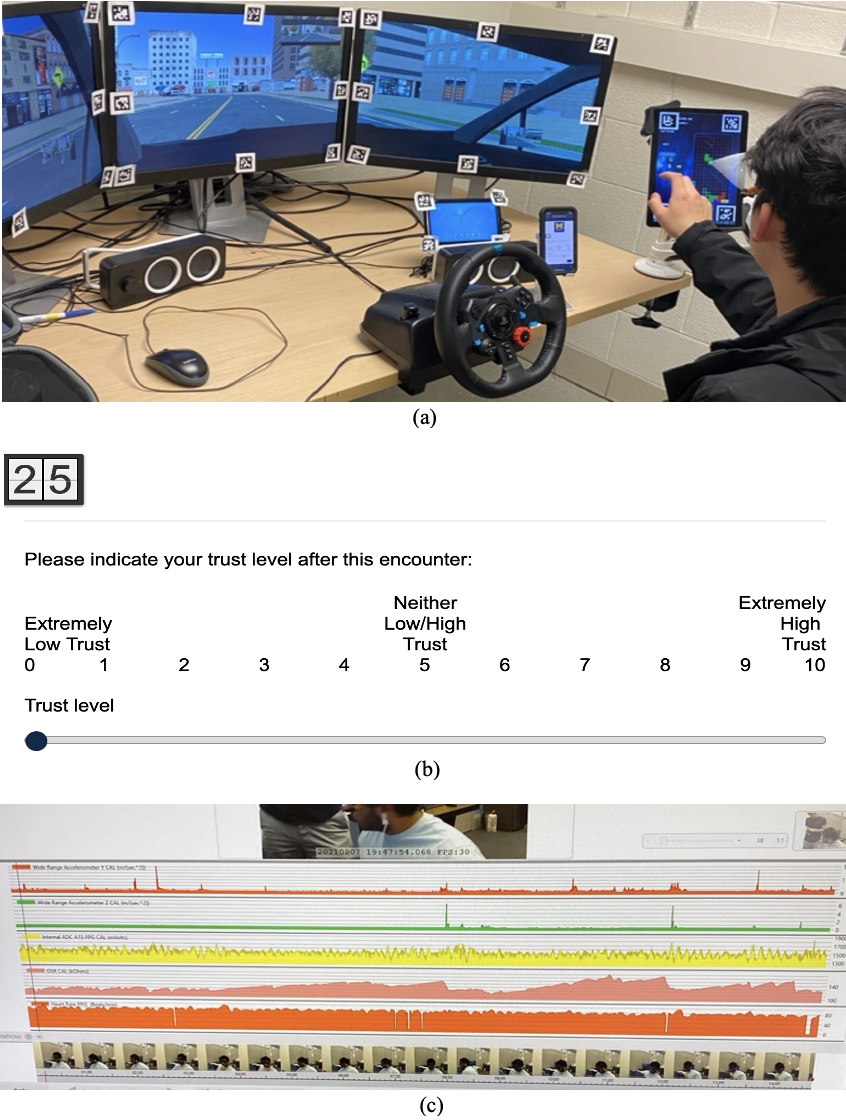
- 收集包括皮肤电反应(GSR)、心率(HR)指标以及眼动追踪指标(如中央显示屏和触控板上的注视次数与持续时间)在内的生理数据。
- 对生理和眼动追踪数据进行预处理并提取特征,包括 mean_GSR、mean_HRV、number_of_fixations_center 和 mean_duration_tablet。
- 基于从行为和生理模式中提取的标记信任状态,训练五种机器学习模型——XGBoost、随机森林、逻辑回归、支持向量机(SVM)和朴素贝叶斯。
- 采用时间窗口方法,实现在动态驾驶交互过程中实时预测信任水平。
- 基于F1得分和特征重要性分析,选择XGBoost作为最优模型。
实验结果
研究问题
- RQ1生理指标能否可靠地实现实时动态预测条件性自动驾驶中的信任?
- RQ2不同系统故障(误报与漏报)如何影响信任动态和生理反应?
- RQ3在使用实时生理数据时,哪种机器学习模型在预测信任方面表现最佳?
- RQ4哪些具体的生理和眼动追踪特征对驾驶员信任最具预测性?
主要发现
- XGBoost模型在实时信任预测中表现最佳,F1得分为89.1%,优于其他模型。
- 该模型在分类控制组、误报组和漏报组的信任状态时,准确率达到81.6%。
- 最具预测性的特征包括 mean_HR_max、mean_HRV、number_of_fixations_center、mean_GSR、number_of_fixations_tablet、mean_dispersion_tablet 和 mean_duration_tablet。
- 较高的 mean_HRV 与更高的警觉性和更好的认知准备度相关,尤其在信任度较低的场景(如漏报)中表现明显。
- 较高的 mean_GSR 与更高的信任相关,可能是因为在参与度高的控制场景中唤醒水平提升,与部分先前研究结果相矛盾。
- 眼动追踪特征(如对中央显示屏和触控板的注视次数与持续时间)是重要预测因子,表明驾驶员对系统界面的注意力投入程度。
更好的研究,从现在开始
从阅读论文到最终审阅,大幅缩短您的研究时间。
无需绑定信用卡
本解读由 AI 生成,并经人工编辑审核。