
[论文解读] RealTime Health Monitoring Using 5G Networks: A Deep Learning-Based Architecture for Remote Patient Care
提出一种实时远程患者监护系统,将混合 CNN-LSTM 深度学习模型与 5G URLLC 融合,以实现对多项生命体征的亚秒级延迟和高预测准确性,在 1000 名 ICU 病人中进行评估。
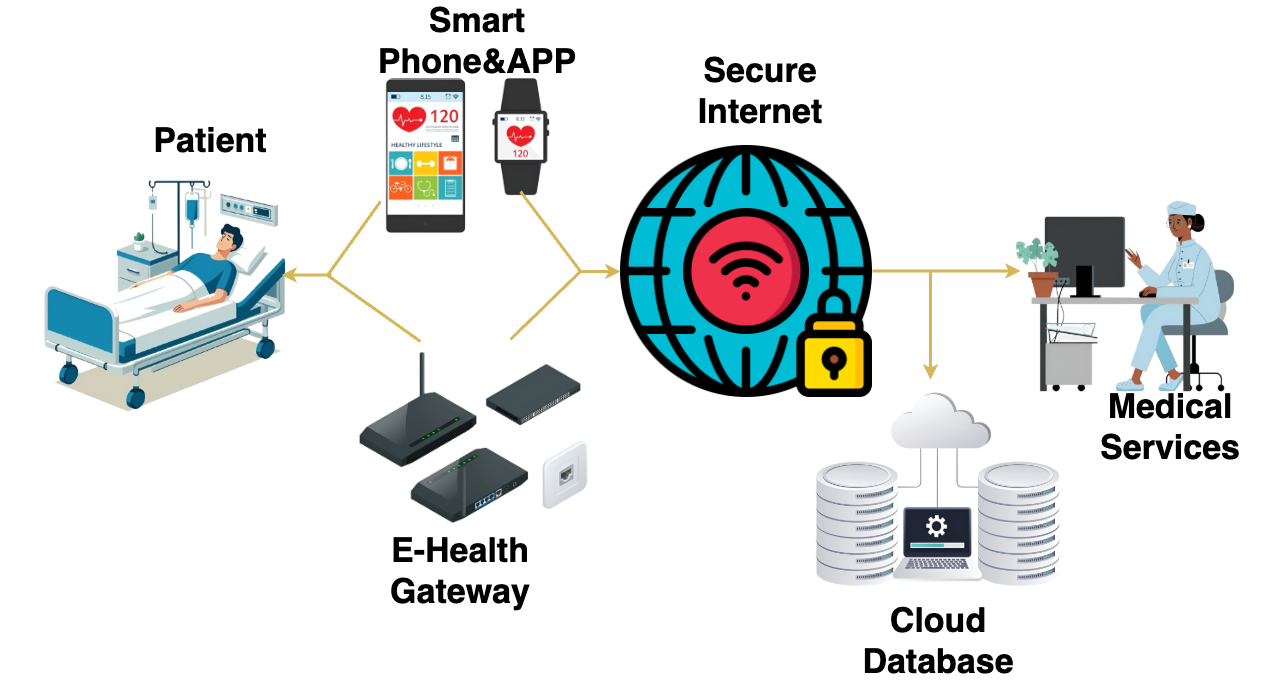
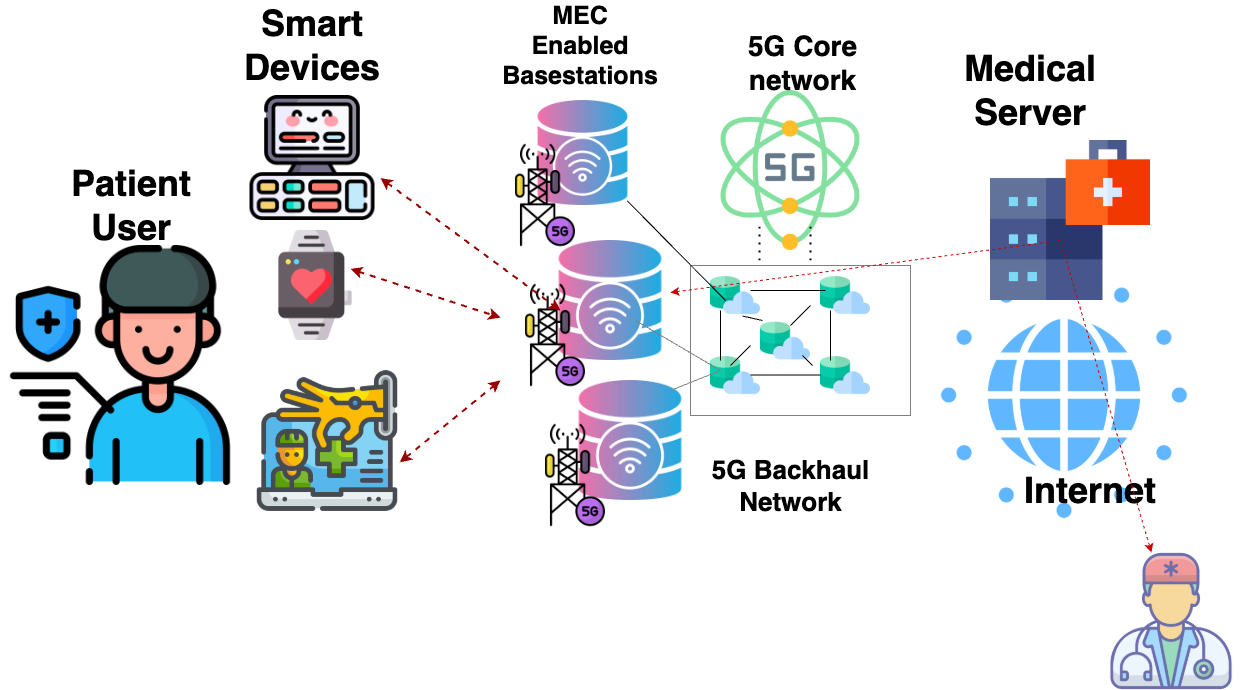
Remote patient monitoring is crucial in modern healthcare, but current systems struggle with real-time analysis and prediction of vital signs. This paper presents a novel architecture combining deep learning with 5G network capabilities to enable real-time vital sign monitoring and prediction. The proposed system utilizes a hybrid CNN-LSTM model optimized for edge deployment, paired with 5G Ultra-Reliable Low-Latency Communication (URLLC) for efficient data transmission. The architecture achieves end-to-end latency of 14.4ms while maintaining 96.5% prediction accuracy across multiple vital signs. Our system shows significant improvements over existing solutions, reducing latency by 47% and increasing prediction accuracy by 4.2% compared to current state-of-the-art systems. Performance evaluations conducted over three months with data from 1000 patients validate the system's reliability and scalability in clinical settings. The results demonstrate that integrating deep learning with 5G technology can effectively address the challenges of real-time patient monitoring, leading to early detection of deteriorating conditions and improved clinical outcomes. This research establishes a framework for reliable, real-time vital sign monitoring and prediction in digital healthcare.
研究动机与目标
- 解决现有远程患者监护(RPM)系统在实时生命体征分析与预测方面的局限性。
- 开发面向边缘部署优化的深度学习框架,以实现对多变量生命体征的实时处理。
- 利用 5G URLLC 与网络切片来最小化传输时延并提升可靠性。
- 展示端到端的实时性能,具备亚秒级延迟和对各生命体征的高预测准确性。
- 使用大规模临床数据验证方法,并评估在临床环境中的可扩展性和可实用性。
提出的方法
- 开发具有注意力机制的混合 CNN-LSTM 神经网络,用于多变量生命体征分析。
- 实现边缘部署和模型量化以满足实时约束。
- 将 5G URLLC 与网络切片结合,确保生命体征数据的 QoS 和亚毫秒级时延。
- 采用滑动窗口(500 个样本,步长 100)和自适应滤波的信号处理管线。
- 使用贝叶斯优化(Optuna)对模型进行训练与优化,并采用余弦退火学习率调度。
- 在来自 1000 名 ICU 病人的数据上进行端到端延迟与准确性评估,部署期为三个月。
实验结果
研究问题
- RQ1一个带有注意力机制的 CNN-LSTM 架构是否能提供对多项生命体征的实时准确预测?
- RQ2通过整合 5G URLLC 与边缘计算,RPM 的延迟可以降低到多少?
- RQ3在临床环境下对 1000 名病人,所提系统的端到端性能(准确性与延迟)如何?
- RQ4与现有 RPM 解决方案相比,本文提出的系统在准确性、延迟和资源效率方面有何差异?
- RQ5在现实医疗环境中扩展该解决方案需要哪些部署与数据处理策略?
主要发现
- 端到端延迟实现为 14.4 ms,分阶段处理<10 ms,峰值 18.9 ms。
- 预测 MAE:心率 1.82%,血压 2.14%,呼吸频率 1.95%。
- 总体系统准确性:重症监护 96.5%,术后 95.8%,普通病房 97.2%。
- 所提出的系统在延迟和准确性方面优于系统 A–C,相较于下一个最佳系统,延迟降低 47%,准确性提升 4.2%。
- 资源利用率在 10 Mbps 的分配下保持高效:CPU ~45%,GPU ~38%,内存 ~52%,网络 ~6.2 Mbps。
- 端到端延迟分解显示网络传输为亚毫秒级,边缘处理更具影响力。
更好的研究,从现在开始
从论文设计到论文写作,大幅缩短您的研究时间。
无需绑定信用卡
本解读由 AI 生成,并经人工编辑审核。