
[论文解读] Relaxing Hardware Requirements for Surface Code Circuits using Time-dynamics
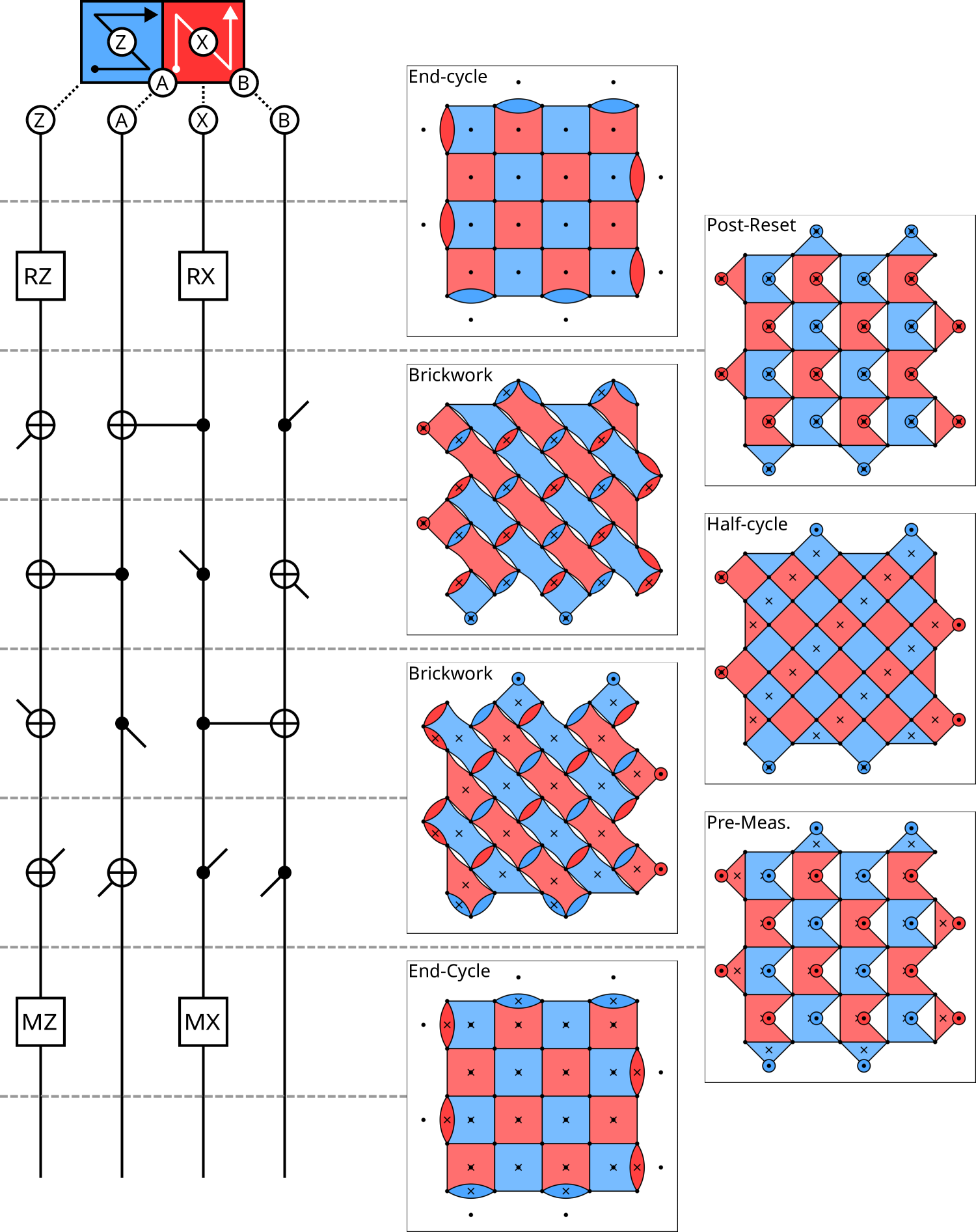
本文提出了一种面向表面码量子错误纠正的时间动态电路设计方法,该方法在不牺牲逻辑性能的前提下放宽了硬件约束。通过将稳定算符重新构想为随时间演化的‘探测区域’,作者构建了改进的表面码电路,其每个量子比特仅需三种耦合,使用 ISWAP 门替代 CNOT/CZ 门,并支持动态拼patch移动,同时保持四层纠缠门深度和在标准表面码25%以内的 teraquop 占位面积。
The typical time-independent view of quantum error correction (QEC) codes hides significant freedom in the decomposition into circuits that are executable on hardware. Using the concept of detecting regions, we design time-dynamic QEC circuits directly instead of designing static QEC codes to decompose into circuits. In particular, we improve on the standard circuit constructions for the surface code, presenting new circuits that can embed on a hexagonal grid instead of a square grid, that can use ISWAP gates instead of CNOT or CZ gates, that can exchange qubit data and measure roles, and that move logical patches around the physical qubit grid while executing. All these constructions use no additional entangling gate layers and display essentially the same logical performance, having teraquop footprints within 25% of the standard surface code circuit. We expect these circuits to be of great interest to quantum hardware engineers, because they achieve essentially the same logical performance as standard surface code circuits while relaxing demands on hardware.
研究动机与目标
- 弥合静态量子错误纠正(QEC)码与物理量子硬件时间动态现实之间的差距。
- 克服硬件限制,如受限连通性、非本征门集(例如 CNOT/CZ)以及表面码实现中的泄漏敏感性。
- 开发一种以电路为中心的QEC框架,优先考虑时间动态而非静态码结构,以实现更灵活和实用的硬件集成。
- 证明通过直接电路设计,可在显著放宽物理硬件要求的同时保持逻辑性能。
提出的方法
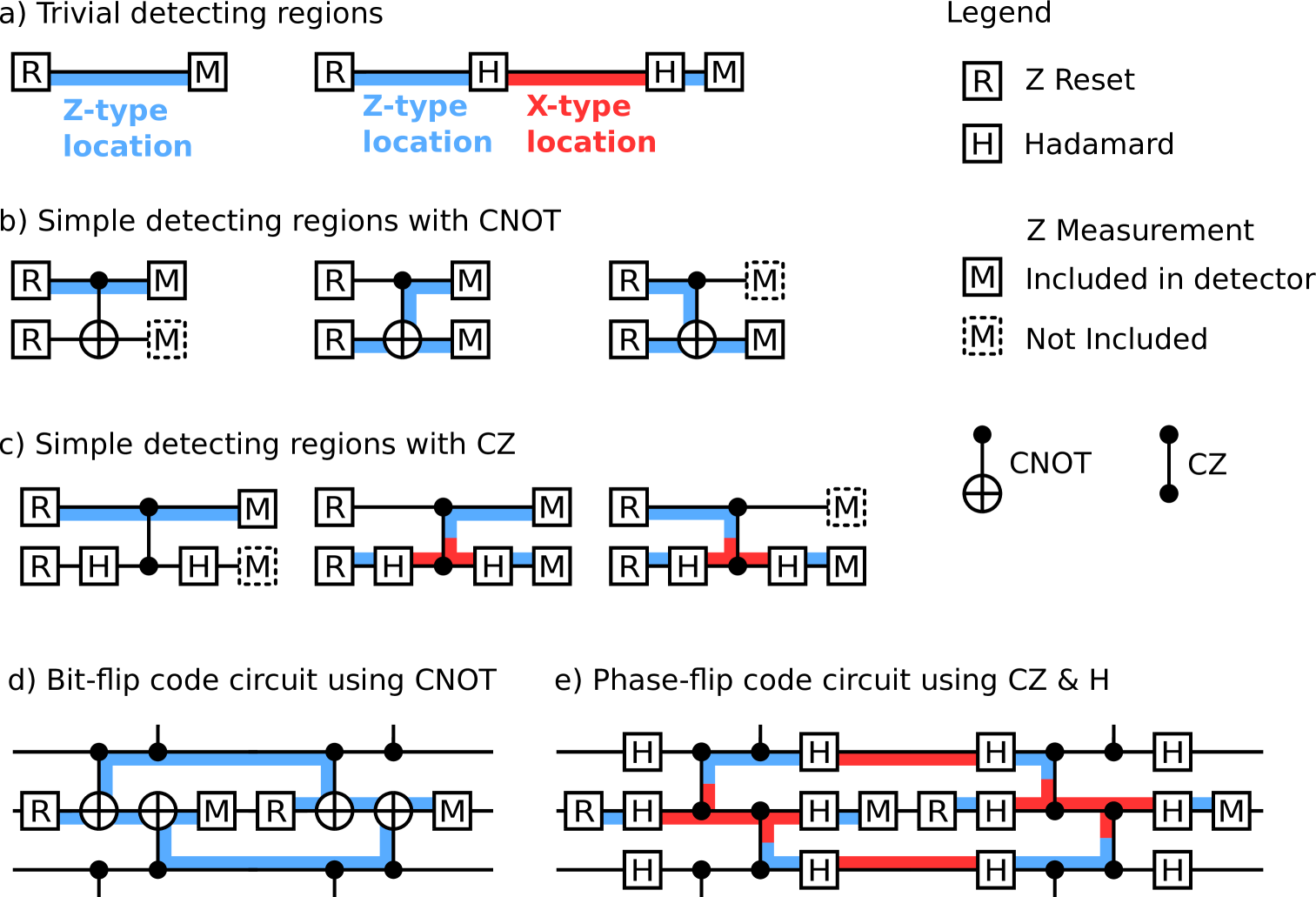
- 引入‘探测区域’的概念,作为将稳定算符推广至时间动态电路的一般化方法,以实现对时间维度上错误检测的分析。
- 采用基于电路的、时空统一的QEC图像,其中在电路设计过程中显式建模和操作探测器演化。
- 通过重新组织探测器在时间和空间上的布局,设计新型表面码电路,从而支持替代物理布局(如六边形网格)和门集(如 ISWAP)。
- 将探测区域框架应用于重新配置逻辑拼patch的移动以及执行期间的量子比特角色交换(数据与测量)。
- 利用 Stim 等软件工具及自定义可视化库,在真实噪声模型下探索、验证和基准化电路设计。
- 确保所有构造仅保持四层纠缠门,从而保留电路深度和逻辑性能。
实验结果
研究问题
- RQ1是否可以基于时间动态而非静态码结构直接设计量子错误纠正电路?
- RQ2在不降低逻辑性能的前提下,硬件约束(如连通性、门集和量子比特角色限制)能在多大程度上被放宽?
- RQ3探测区域的概念如何被系统性地用于改进表面码电路设计?
- RQ4是否可以在不增加电路深度或误码率的前提下,在表面码电路中实现动态拼patch移动和量子比特角色交换?
- RQ5时间动态电路设计对近期量子硬件架构具有哪些实际影响?
主要发现
- 所提出的电路在标准表面码的25%以内实现了 teraquop 占位面积,表明其具有基本等同的逻辑性能。
- 六边形网格结构将每个量子比特所需的耦合数从四个减少到三个,使其适用于连通性更低的硬件。
- 基于 ISWAP 的电路在保持相同四层纠缠门深度和逻辑误码率的同时,替代了 CNOT/CZ 门。
- 这些电路支持在执行过程中动态移动逻辑拼patch,从而实现新的硬件利用策略。
- 所有构造均保持完整的错误检测能力,并与高效的匹配解码兼容,确保实际容错性。
- 该框架通过在所有物理量子比特上引入测量,增强了对泄漏的鲁棒性,且未增加额外的门层。
更好的研究,从现在开始
从阅读论文到最终审阅,大幅缩短您的研究时间。
无需绑定信用卡
本解读由 AI 生成,并经人工编辑审核。