
[论文解读] Renewable energy communities: do they have a business case in Flanders?
本研究使用混合整数线性规划(MILP)模型,对比利时弗拉芒地区可再生能源社区(RECs)的经济可行性进行评估,涵盖156种情景下的能源成本优化。结果表明,与现状相比,RECs可将电力成本降低10%–26%,但与个体智能家庭相比仅降低4%–6%。容量型电价机制和系统灵活性显著提升了成本节约与储能采用率。
Renewable energy communities (RECs) are prominent initiatives to provide end consumers an active role in the energy sector, raise awareness on the importance of renewable energy (RE) technologies and increase their share in the energy system thus reducing greenhouse gas emissions. The economic viability of RECs though, depends on multiple interdependent factors that require careful examination for each individual context. This study aims at investigating the impact of electricity tariffs, ratio of electrification of heating and transportation sectors, prices of RE technologies and storage systems, and internal electricity exchange prices on the annual cost for electricity provision of a REC. A mixed-integer linear model is developed to minimize energy provision costs for a representative REC in Flanders, Belgium. The results indicate that RECs have the potential to reduce these costs by 10 to 26% compared to business-as-usual. This cost reduction depends on the type of electricity tariffs and the level of uptake of flexible assets such as heat pumps and electric vehicles. The shift towards a higher power component in the electricity tariff makes electricity storage systems more attractive, which leads to higher electricity self-consumption. The introduction of flexible assets adds the possibility to shift demand when tariffs are lower and makes larger sizes of photovoltaic systems economically viable due to the increase in the total electricity demand. However, RECs cost reduction compared to individual smart-homes amounts to only 4% - 6% in the best cases. Uncertainties stemming from the regulation and the costs of setting up a REC may reduce the estimated benefits.
研究动机与目标
- 评估在不同电价和科技情景下,弗拉芒地区可再生能源社区(RECs)的经济可行性。
- 分析电价结构、电气化水平及灵活资产对REC成本效率与可再生能源整合的影响。
- 评估电池储能系统(BESS)与光伏(PV)系统在降低RECs内电力成本方面的作用。
- 将REC表现与个体智能家庭进行对比,以确定其净经济优势。
- 识别影响REC成本节约与技术采纳的关键驱动因素,如电价结构与系统灵活性。
提出的方法
- 开发混合整数线性规划(MILP)模型,以最小化弗拉芒地区代表性REC的年电力供应成本。
- 通过改变电力电价(体积型与容量型)、PV与BESS容量以及供暖与交通电气化水平,模拟156种不同情景。
- 纳入BESS、热泵与电动汽车充电器的动态控制,以实现需求转移与峰值负荷降低。
- 使用自用率与自给率作为性能指标,评估能源系统的效率。
- 假设对负荷与太阳辐射量曲线具有完全预见性,以隔离结构性与定价因素的影响。
- 在不同电价制度与灵活性水平下验证结果,以评估其敏感性与稳健性。
实验结果
研究问题
- RQ1与弗拉芒地区的现状电力供应相比,REC的经济优势是什么?
- RQ2不同的电力电价结构(体积型与容量型)如何影响REC的经济表现?
- RQ3供暖与交通电气化水平在多大程度上影响REC的成本节约与技术部署?
- RQ4灵活资产(如BESS、热泵、电动汽车)的引入如何影响REC的经济可行性与自用率?
- RQ5与具备自发电能力的个体智能家庭相比,组建REC的净经济收益是什么?
主要发现
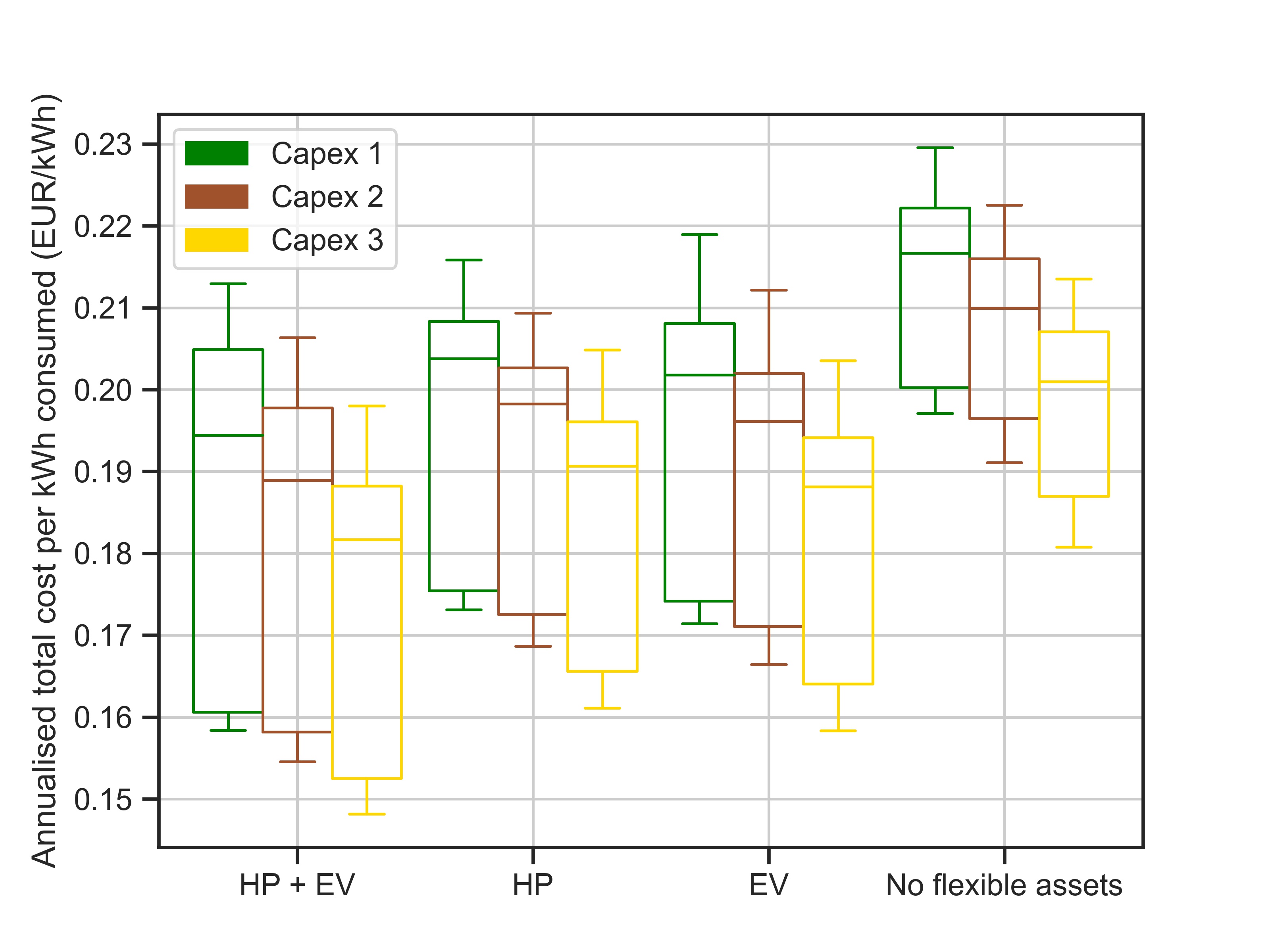
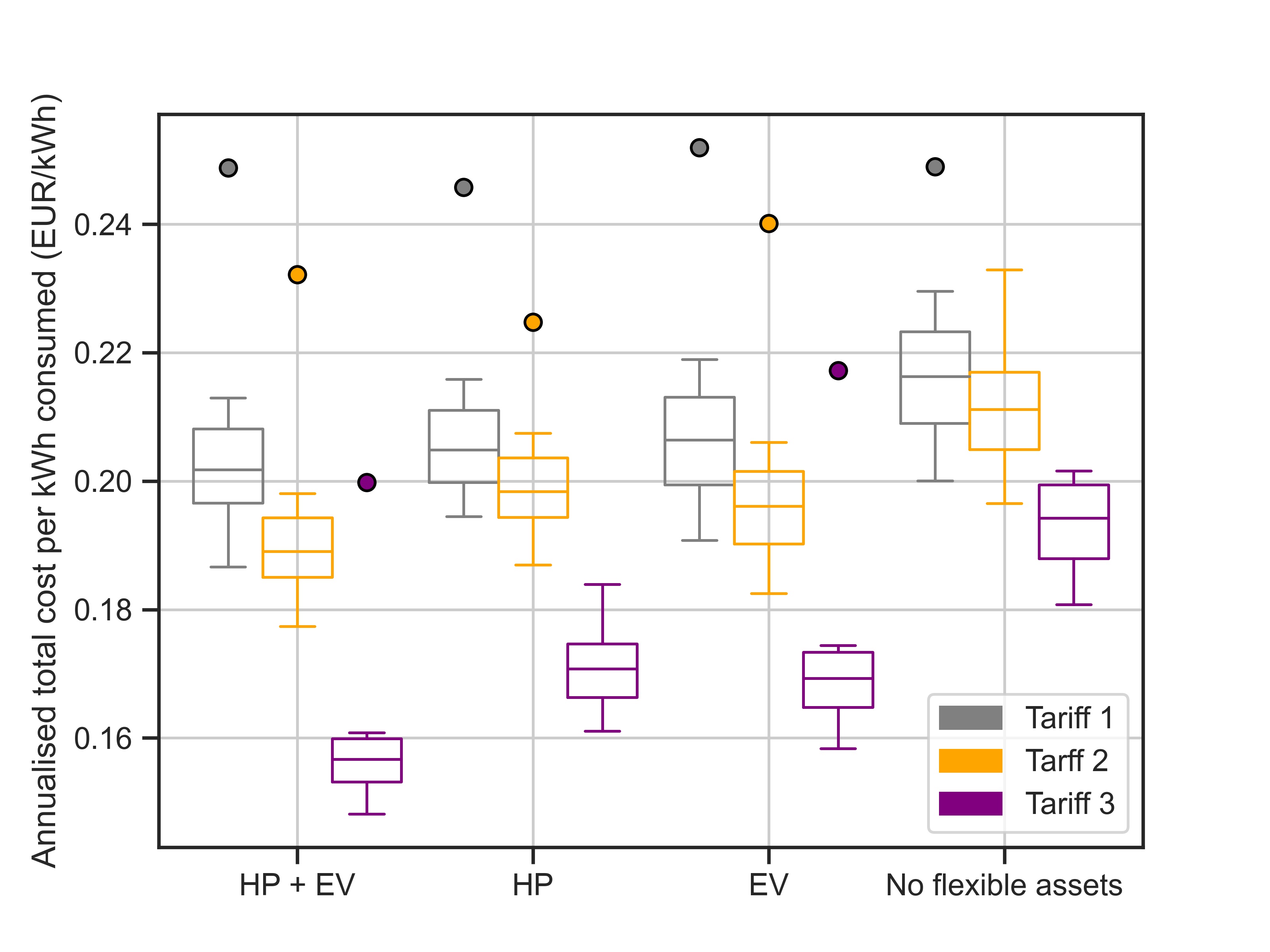
- 根据电价结构与灵活性水平,RECs相比现状情景可将年电力成本降低10%–26%。
- 在最佳情景下,RECs相较于个体智能家庭的经济优势仅限于4%–6%,表明净经济效益有限。
- 容量型电价显著提升了电池储能系统(BESS)的经济吸引力,使其在容量型电价下比在体积型电价下更具可行性。
- 供暖与交通电气化水平越高,总电力需求越大,越能提升大型光伏(PV)系统的成本效率。
- 系统灵活性可实现更优的负荷转移,降低峰值需求,从而在动态或容量型电价下显著降低总体成本。
- 监管不确定性及未计入的设置成本(行政与技术成本)可能侵蚀组建REC所估算的效益。
更好的研究,从现在开始
从阅读论文到最终审阅,大幅缩短您的研究时间。
无需绑定信用卡
本解读由 AI 生成,并经人工编辑审核。