
[论文解读] Robust instrumental variable methods using multiple candidate instruments with application to Mendelian randomization
本文使用多个候选遗传工具评估了孟德尔随机化中的稳健工具变量方法,提出了并检验了如稳健回归、权重惩罚和L1惩罚等扩展方法。研究发现,即使多达30%的工具变量无效,稳健回归和因果估计的简单中位数仍能保持准确的I类错误率,其表现优于在异质性条件下传统的MR-Egger方法。
Mendelian randomization is the use of genetic variants to make causal inferences from observational data. The field is currently undergoing a revolution fuelled by increasing numbers of genetic variants demonstrated to be associated with exposures in genome-wide association studies, and the public availability of summarized data on genetic associations with exposures and outcomes from large consortia. A Mendelian randomization analysis with many genetic variants can be performed relatively simply using summarized data. However, a causal interpretation is only assured if each genetic variant satisfies the assumptions of an instrumental variable. To provide some protection against failure of these assumptions, robust methods for instrumental variable analysis have been proposed. Here, we develop three extensions to instrumental variable methods using: i) robust regression, ii) the penalization of weights from candidate instruments with heterogeneous causal estimates, and iii) L1 penalization. Results from a wide variety of robust methods, including the recently-proposed MR-Egger and median-based methods, are compared in an extensive simulation study. We demonstrate that two methods, robust regression in an inverse-variance weighted method and a simple median of the causal estimates from the individual variants, have considerably improved Type 1 error rates compared with conventional methods in a wide variety of scenarios when up to 30% of the genetic variants are invalid instruments. While the MR-Egger method gives unbiased estimates when its assumptions are satisfied, these estimates are less efficient than those from other methods and are highly sensitive to violations of the assumptions. Methods that make different assumptions should be used routinely to assess the robustness of findings from applied Mendelian randomization investigations with multiple genetic variants.
研究动机与目标
- 为解决在使用多个遗传变异时孟德尔随机化中无效工具变量的风险。
- 在工具变量有效性与异质性不同情景下,评估稳健工具变量方法的表现。
- 将既有的MR-Egger和基于中位数的方法与新提出的使用惩罚和稳健回归的扩展方法进行比较。
- 为在工具变量假设被违反时保持统计有效性的方法选择提供实际指导。
- 使用大型联盟的汇总遗传数据评估这些方法的有效性,以实现在观察性研究中的广泛应用。
提出的方法
- 在逆方差加权框架中应用稳健回归,对候选工具变量使用惩罚权重来估计因果效应。
- 对产生异质性因果估计的工具变量的权重施加惩罚,以降低可能无效工具变量的影响。
- 采用L1惩罚(类似套索)方法,选择因果估计一致的工具变量子集,以提高效率和稳健性。
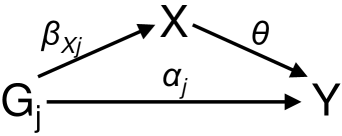
- 采用两样本孟德尔随机化框架,使用来自大型遗传联盟的汇总数据(回归系数β和标准误)。
- 通过在不同无效工具变量比例(0–30%)和不同因果效应大小下的大量模拟研究比较各方法。
- 通过I类错误率、统计功效、偏倚和均方误差在多个模拟情景下的表现来评估方法性能。
实验结果
研究问题
- RQ1当多达30%的候选工具变量无效时,稳健工具变量方法的表现如何?
- RQ2在违反工具变量假设的情况下,哪种方法能保持适当的I类错误率?
- RQ3MR-Egger方法在偏倚和效率方面与更简单的中位数方法及稳健回归方法相比表现如何?
- RQ4在工具变量存在异质性或无效时,惩罚技术能否提高因果估计的可靠性?
- RQ5在现实世界的孟德尔随机化应用中,哪种方法在稳健性、效率和准确性之间提供了最佳平衡?
主要发现
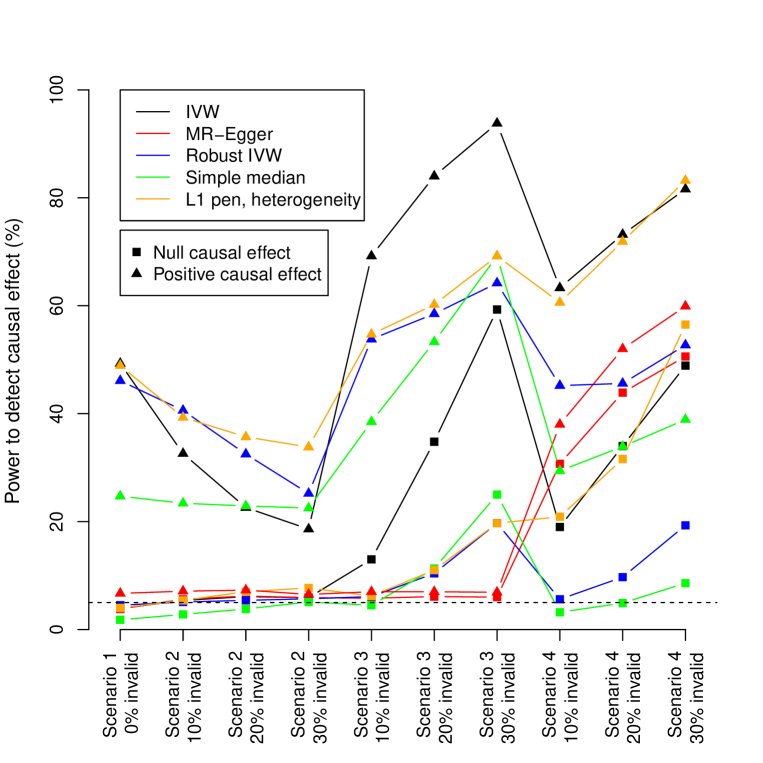
- 在逆方差加权框架中使用稳健回归,即使多达30%的工具变量无效,仍能保持准确的I类错误率(约5%)。
- 个体变异因果估计的简单中位数在模拟中表现出更优的I类错误控制(3.0–8.4%),尤其在无效工具变量比例较高时优于传统方法。
- 当假设满足时,MR-Egger可提供无偏估计,但在实践中表现出较高的I类错误率(高达20%)和较低的效率,因此可靠性较差。
- 当存在工具变量异质性时,权重惩罚或L1惩罚方法的表现优于标准逆方差加权方法。
- 加权中位数方法表现中等,但I类错误率较高(高达11.0%),统计功效低于稳健回归和中位数方法。
- 在存在正向因果效应(θ = 0.1)的情景下,稳健回归和中位数方法在无效工具变量条件下仍保持较高的统计功效(25–37%),优于传统方法(6–13%)。
更好的研究,从现在开始
从论文设计到论文写作,大幅缩短您的研究时间。
无需绑定信用卡
本解读由 AI 生成,并经人工编辑审核。