
[论文解读] Sampling random graphs with specified degree sequences
本论文提出了一种用于指定度序列随机图的配置模型中马尔可夫链蒙特卡洛(MCMC)采样的收敛性检测方法与采样间隔估计算法。通过利用度同配性来估计MCMC状态之间的有效独立性,并应用Dickey-Fuller广义最小二乘法(DFGLS)检验,该方法在所有八个配置模型图空间中均实现了准确且高效的收敛性检测,同时基于经验性缩放规则,可自动选择采样间隔而无需重新运行估计算法。
The configuration model is a standard tool for uniformly generating random graphs with a specified degree sequence, and is often used as a null model to evaluate how much of an observed network's structure can be explained by its degree structure alone. A Markov chain Monte Carlo (MCMC) algorithm, based on a degree-preserving double-edge swap, provides an asymptotic solution to sample from the configuration model. However, accurately and efficiently detecting this Markov chain's convergence on its stationary distribution remains an unsolved problem. Here, we provide a solution to detect convergence and sample from the configuration model. We develop an algorithm, based on the assortativity of the sampled graphs, for estimating the gap between effectively independent MCMC states, and a computationally efficient gap-estimation heuristic derived from analyzing a corpus of 509 empirical networks. We provide a convergence detection method based on the Dickey-Fuller Generalized Least Squares test, which we show is more accurate and efficient than three alternative Markov chain convergence tests.
研究动机与目标
- 为解决配置模型中MCMC采样缺乏可靠收敛性检测的问题,该问题在网络科学中生成有效零模型时至关重要。
- 开发一种计算高效的采样间隔估计方法,以确保在保持度不变的马尔可夫链中,MCMC状态间实现有效不相关。
- 提供一种实用且自动化的解决方案,可在不同经验网络中选择合适的采样间隔,而无需为每个网络重新运行间隔估计。
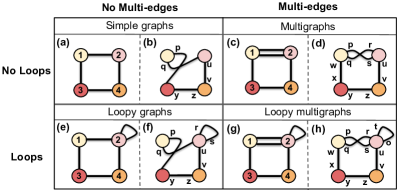
- 在所有八个配置模型图空间中验证该方法的准确性和效率,包括禁止自环和多重边的图空间。
- 建立采样间隔估计与网络规模(边数)之间的经验性缩放规则,从而实现基于启发式的间隔选择。
提出的方法
- 该方法使用度同配性作为网络结构的标量汇总统计量,以估计实现统计独立性的未相关MCMC状态之间的有效采样间隔。
- 应用Dickey-Fuller广义最小二乘法(DFGLS)检验来检测MCMC链的平稳性,其在准确性和效率方面优于三种替代收敛性检验方法。
- 设计了一种间隔估计算法(算法1),基于同配性值的自相关性,计算为实现统计独立性所需样本之间的最小步数。
- 作者分析了509个经验及半合成网络,以识别采样间隔估计值与边数之间的缩放模式,从而推导出启发式决策规则。
- 该方法在所有八个配置模型变体(包括简单图)中均得到验证,通过确认收敛性检测的准确性与混合时间的缩放行为。
- 该方法设计为计算高效,适用于现实世界网络,对于度序列方差较低的情况(此时同配性无效)也提供了备选方案。
实验结果
研究问题
- RQ1Dickey-Fuller广义最小二乘法(DFGLS)检验是否能在所有八个图空间中准确且高效地检测配置模型MCMC采样的收敛性?
- RQ2网络中边数与实现未相关MCMC状态所需的采样间隔之间存在何种关系?
- RQ3能否利用采样间隔的经验性缩放模式推导出启发式规则,从而避免为每个网络重新计算采样间隔?
- RQ4选择不同的网络统计量(如同配性与聚类系数)如何影响在度序列方差较低的网络中收敛性检测的可靠性?
- RQ5在所有八个配置模型图空间中,双边交换MCMC链的混合时间是否渐近为Θ(m),其中m为边数?
主要发现
- Dickey-Fuller广义最小二乘法(DFGLS)检验在所有八个配置模型图空间中,均优于三种替代收敛性检验方法,在准确性和计算效率方面表现更优。
- 估计的采样间隔在经验上与边数m成比例,且该缩放行为在不同图空间中保持一致,从而支持了基于启发式的间隔选择规则的建立。
- 作者识别并验证了一组基于网络规模的决策规则,使研究人员可自动选择合适的采样间隔,而无需运行间隔估计算法。
- 本研究支持一个猜想:双边交换MCMC链在所有八个配置模型变体中的混合时间均为Θ(m),表明其与边数呈线性依赖关系。
- 对于度序列方差极低的网络(如k-正则图),度同配性作为收敛性汇总统计量无效,建议使用聚类系数等替代指标,尽管其计算成本更高。
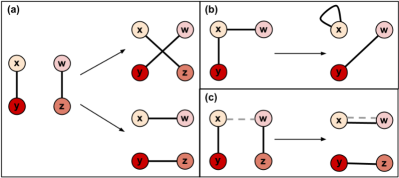
- 该方法在多样化经验网络中表现出鲁棒性,即使在目标图空间排除自环和多重边的情况下依然有效,前提是应用了正确的MCMC转移规则。
更好的研究,从现在开始
从阅读论文到最终审阅,大幅缩短您的研究时间。
无需绑定信用卡
本解读由 AI 生成,并经人工编辑审核。