
[论文解读] Sampling with censored data: a practical guide
本文提供了一份实用且可复现的指南,使用 R 语言生成伪随机右删失数据,聚焦于 Weibull 分布框架下的 I 型、II 型和随机删失。该研究提出了模拟具有治愈分数的删失样本的算法,通过模拟研究和最大似然估计(MLE)推断进行验证,为生存分析研究提供了即用型工具包。
In this review, we present a simple guide for researchers to obtain pseudo-random samples with censored data. We focus our attention on the most common types of censored data, such as type I, type II, and random censoring. We discussed the necessary steps to sample pseudo-random values from long-term survival models where an additional cure fraction is informed. For illustrative purposes, these techniques are applied in the Weibull distribution. The algorithms and codes in R are presented, enabling the reproducibility of our study. Finally, we developed an R package that encapsulates these methodologies, providing researchers with practical tools for implementation.
研究动机与目标
- 解决生存分析中缺乏全面且实用的伪随机删失数据模拟指南的问题。
- 提供在 I 型、II 型和随机删失机制下生成删失样本的分步算法。
- 将模拟技术扩展至包含 Weibull 基础模型中的长期存活(治愈分数)。
- 通过提供所有模拟和推断过程的完整 R 代码,确保方法的可复现性。
- 通过模拟研究评估参数估计量的偏差和均方误差,对所提方法进行验证。
提出的方法
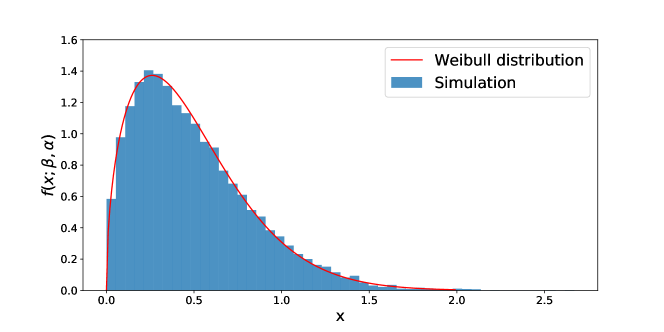
- 使用反函数变换法生成基线 Weibull 分布的随机变量。
- 通过设定固定的实验结束时间实施 I 型删失,将所有超过该时间的生存时间截断。
- 通过在预设失败数量达到后终止实验来实施 II 型删失,剩余个体被删失。
- 通过为每个受试者分配独立的均匀分布删失时间来实现随机删失。
- 通过使用伯努利分量模拟治愈(非事件)和易感(事件)个体的混合模型,整合治愈分数模型。
- 采用最大似然估计(MLE)结合数值优化(R 中的 maxLik 函数)估计参数,利用海塞矩阵计算标准误和置信区间。
实验结果
研究问题
- RQ1研究人员如何在 R 中可靠地使用 Weibull 分布模拟 I 型删失数据?
- RQ2如何正确生成具有已知失败阈值的 II 型删失样本?
- RQ3当删失时间因受试者而异时,如何实现随机删失?
- RQ4治愈分数对删失生存数据模拟有何影响?
- RQ5不同删失机制如何影响 MLE 参数估计量的偏差和均方误差?
主要发现
- 形状参数 α 的 MLE 估计值为 1.655,标准误为 0.428,95% 置信区间为 (0.817, 2.492)。
- 尺度参数 β 的估计值为 0.281,标准误为 0.140,95% 置信区间为 (0.007, 0.555)。
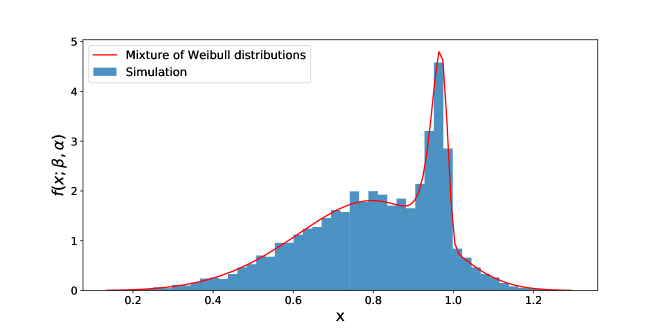
- 模拟框架成功在所有三种删失方案(I 型、II 型和随机删失)下生成了删失数据,且通过 R 代码实现了完全可复现性。
- 通过使用伯努利分量对治愈个体进行建模,有效模拟了 Weibull 模型中的治愈分数。
- 模拟研究表明,删失机制显著影响估计量的偏差和均方误差,且在多种样本规模下结果一致。
- 通过 maxLik 函数的海塞矩阵数值计算了费雪信息矩阵,即使在涉及复杂特殊函数(Meijer-G)的情况下,也能实现准确的标准误和置信区间估计。
更好的研究,从现在开始
从阅读论文到最终审阅,大幅缩短您的研究时间。
无需绑定信用卡
本解读由 AI 生成,并经人工编辑审核。