
[论文解读] Should ChatGPT and Bard Share Revenue with Their Data Providers? A New Business Model for the AI Era
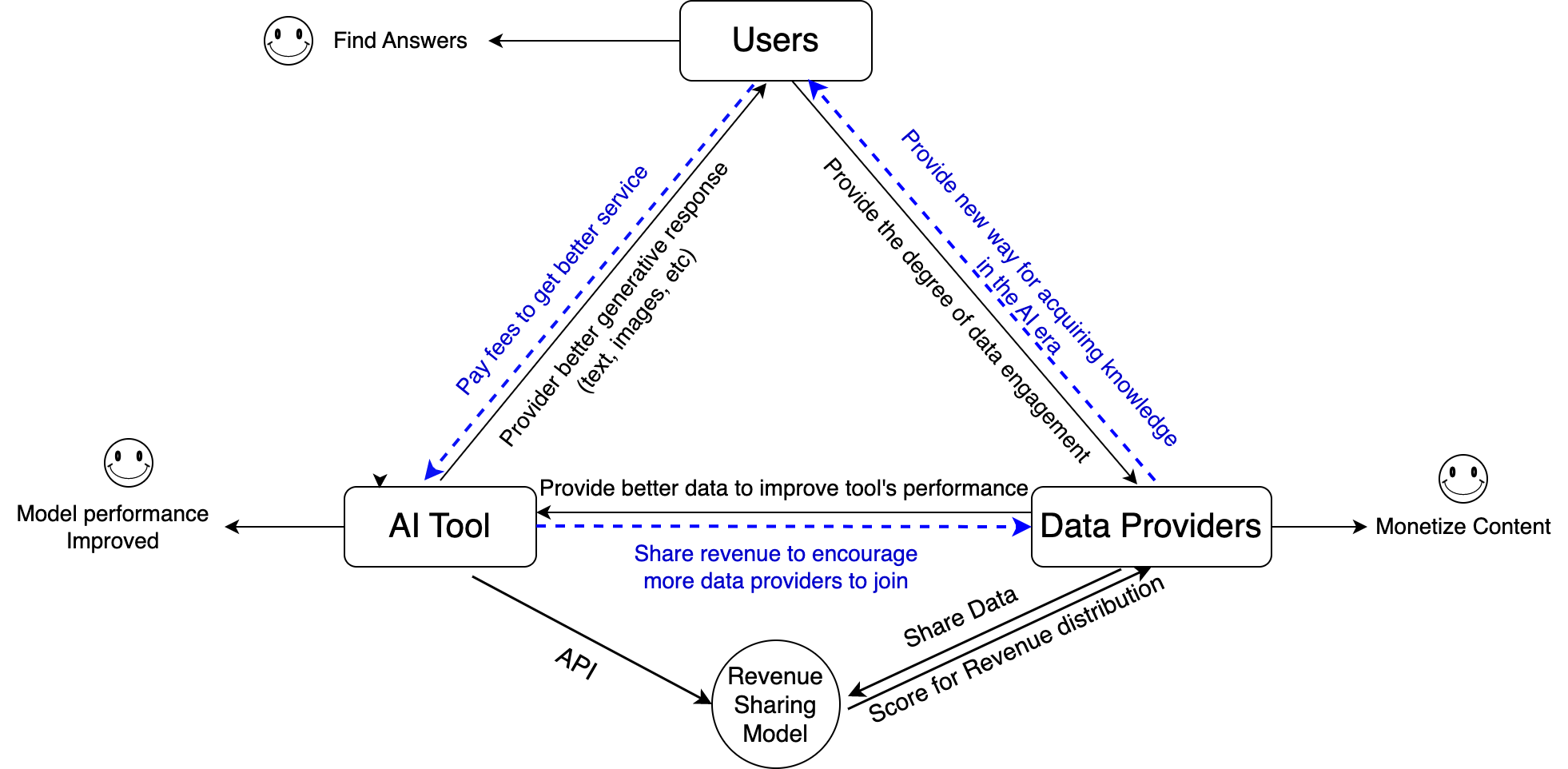
本文提出了一种新颖的收益分成模型,其中像ChatGPT和Bard这样的大型AI模型根据基于提示的评分系统,将其利润与训练数据提供方共享。通过使用文本分类和相似度模型来衡量数据参与度,该模型实现了公平、可扩展的收益分配,将原本对抗性的数据关系转变为协作性、功利性的AI生态系统。
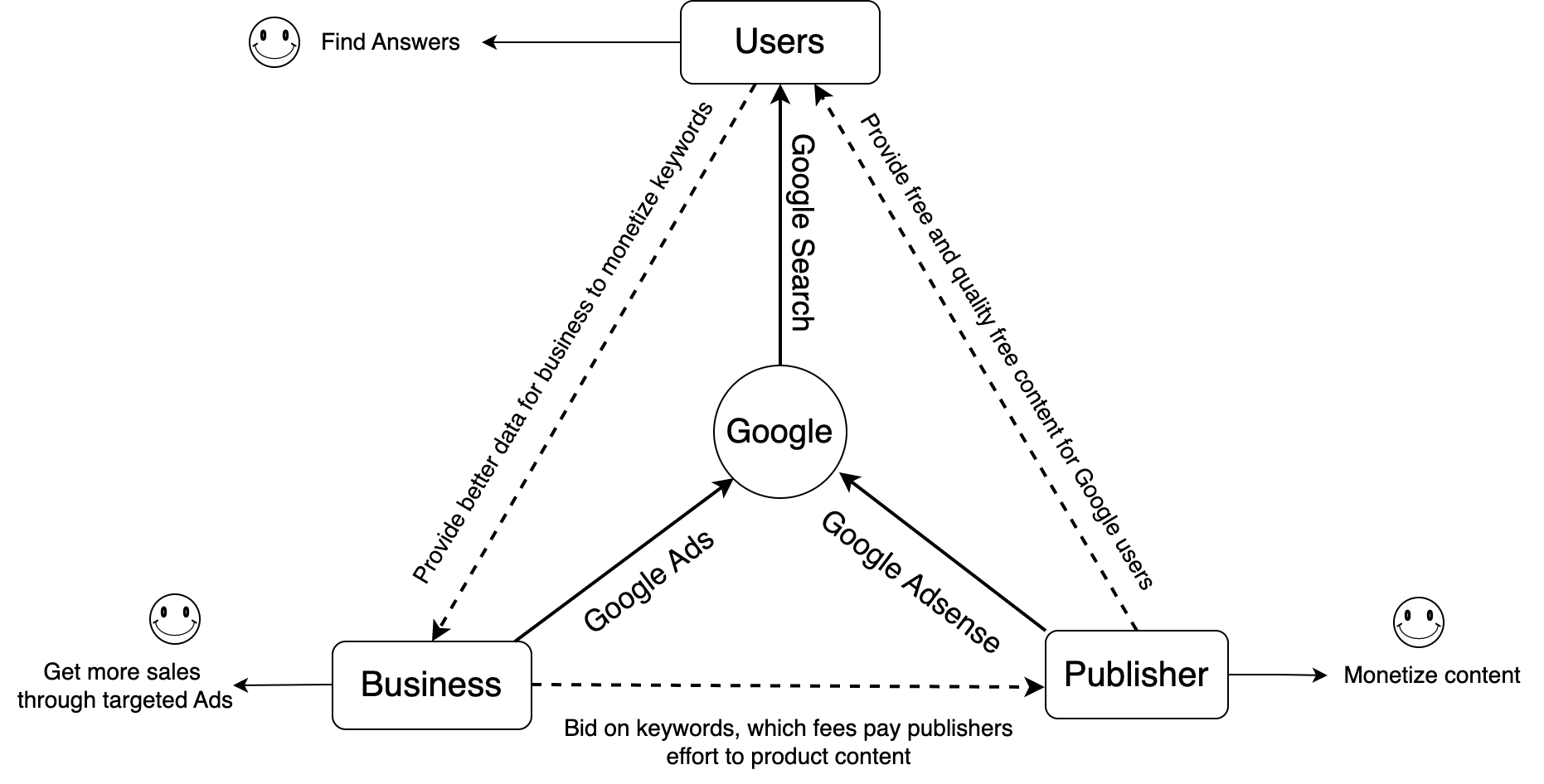
With various AI tools such as ChatGPT becoming increasingly popular, we are entering a true AI era. We can foresee that exceptional AI tools will soon reap considerable profits. A crucial question arise: should AI tools share revenue with their training data providers in additional to traditional stakeholders and shareholders? The answer is Yes. Large AI tools, such as large language models, always require more and better quality data to continuously improve, but current copyright laws limit their access to various types of data. Sharing revenue between AI tools and their data providers could transform the current hostile zero-sum game relationship between AI tools and a majority of copyrighted data owners into a collaborative and mutually beneficial one, which is necessary to facilitate the development of a virtuous cycle among AI tools, their users and data providers that drives forward AI technology and builds a healthy AI ecosystem. However, current revenue-sharing business models do not work for AI tools in the forthcoming AI era, since the most widely used metrics for website-based traffic and action, such as clicks, will be replaced by new metrics such as prompts and cost per prompt for generative AI tools. A completely new revenue-sharing business model, which must be almost independent of AI tools and be easily explained to data providers, needs to establish a prompt-based scoring system to measure data engagement of each data provider. This paper systematically discusses how to build such a scoring system for all data providers for AI tools based on classification and content similarity models, and outlines the requirements for AI tools or third parties to build it. Sharing revenue with data providers using such a scoring system would encourage more data owners to participate in the revenue-sharing program. This will be a utilitarian AI era where all parties benefit.
研究动机与目标
- 为解决AI训练中的伦理与经济失衡问题,提出AI工具应与数据提供方共享收益。
- 克服传统收益分成模型在生成式AI背景下依赖过时指标(如点击量)的局限性。
- 设计一种可扩展、技术上可行且可解释的评分系统,基于提示交互衡量数据提供方的参与度。
- 将该模型扩展至大型语言模型以外的其他AI应用,包括图像生成和医疗AI。
- 通过对齐AI开发者、用户和数据提供方的激励,推动创新的良性循环。
提出的方法
- 开发基于提示的评分系统,通过测量用户提示/生成内容与各提供方训练数据之间的文本相似度,量化数据参与度。
- 使用通用或模型特定的文本嵌入技术,将文档转换为向量以进行相似度计算。
- 应用监督分类模型对数据按提供方分组,实现可扩展的提供方级别评分。
- 通过多个提示的平均文本相似度评分,生成每个数据提供方的累计参与度评分。
- 实现计算复杂度优化的实时评分,以支持生产规模的AI系统。
- 通过为图像等其他数据类型开发特定模态的评分系统,将该框架扩展至多模态AI。
实验结果
研究问题
- RQ1如何为大型语言模型设计一种公平且可扩展的收益分成机制,以体现数据提供方的贡献?
- RQ2在生成式AI系统中,需要哪些指标和技术组件来衡量数据参与度,以替代传统的网络流量指标?
- RQ3如何在不依赖用户级追踪或集中式数据存储的前提下,基于提示交互对数据提供方进行评分?
- RQ4该框架能否适配非LLM类AI工具,如文本到图像生成器和医疗AI系统?
- RQ5在大规模实施此类系统时,面临哪些技术和经济可行性约束?
主要发现
- 基于文本相似度和分类模型的提示驱动评分系统,可有效衡量生成式AI应用中数据提供方的参与度。
- 使用文本嵌入技术可实现对数据贡献的量化,即使训练数据来源未完全公开亦可。
- 所提出的模型支持实时评分,并可扩展至多模态数据,包括图像和医疗数据。
- 对于基于图像的AI,可利用图像分类和相似度模型构建类似系统,并计算单个艺术品的参与度评分。
- 该框架支持尚未进入训练数据集的数据提供方的临时评分,使其能够提前参与收益分成计划。
- 该模型在技术上是可行的,可使用现有的NLP和计算机视觉技术实现,例如使用Pile和LIOAN-5B数据集进行基准测试。
更好的研究,从现在开始
从阅读论文到最终审阅,大幅缩短您的研究时间。
无需绑定信用卡
本解读由 AI 生成,并经人工编辑审核。