
[论文解读] Skill dependencies uncover nested human capital
本研究基于美国劳动力数据(2005–2019年),构建了一个分层技能依赖树,揭示出专业化技能建立在基础且广泛要求的能力之上。研究发现,职业晋升与薪酬溢价与这些嵌套式技能路径的进展密切相关,且在不同人口群体和地区之间,获得基础技能的机会不平等正在加剧。
Modern economies require increasingly diverse and specialized skills, many of which depend on the acquisition of other skills first. Here we analyse US survey data to reveal a nested structure within skill portfolios, where the direction of dependency is inferred from asymmetrical conditional probabilities-occupations require one skill conditional on another. This directional nature suggests that advanced, specific skills and knowledge are often built upon broader, fundamental ones. We examine 70 million job transitions to show that human capital development and career progression follow this structured pathway in which skills more aligned with the nested structure command higher wage premiums, require longer education and are less likely to be automated. These disparities are evident across genders and racial-ethnic groups, explaining long-term wage penalties. Finally, we find that this nested structure has become even more pronounced over the past two decades, indicating increased barriers to upward job mobility.
研究动机与目标
- 利用大规模调查和简历数据,实证绘制美国劳动力市场中技能依赖的分层结构。
- 区分嵌套技能(需前置条件)与非嵌套技能(无前置条件),并分析其在性别、种族/族裔及地理分布上的获取差异。
- 考察沿嵌套路径的技能进展与职业晋升及薪酬溢价随时间的相关性。
- 评估2005年至2019年间技能结构与吸收能力差距的时序变化,揭示技能发展机会日益极化的趋势。
提出的方法
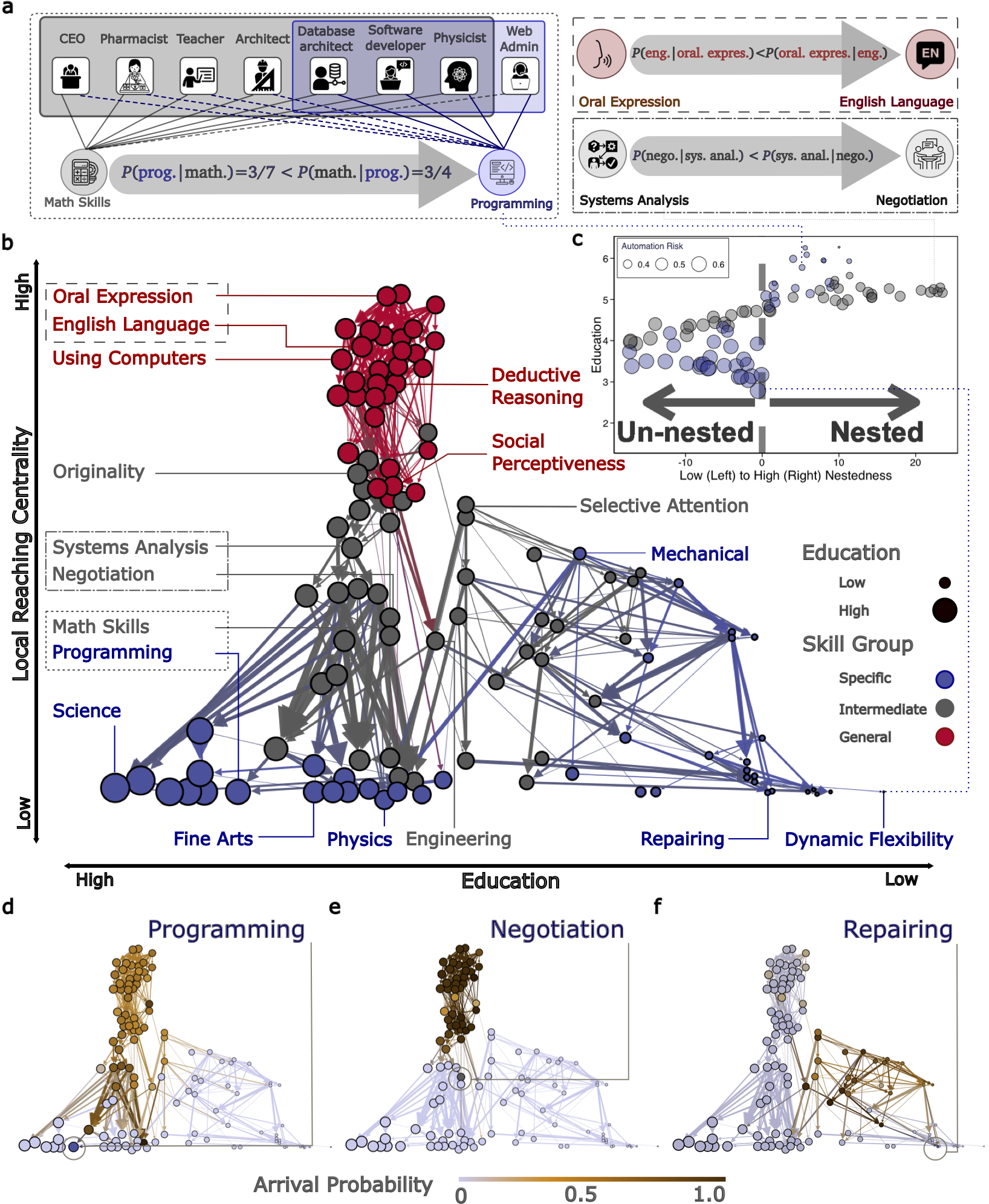
- 基于全国调查和简历中7000万次职业转换的技能共现非对称条件概率,构建技能依赖网络。
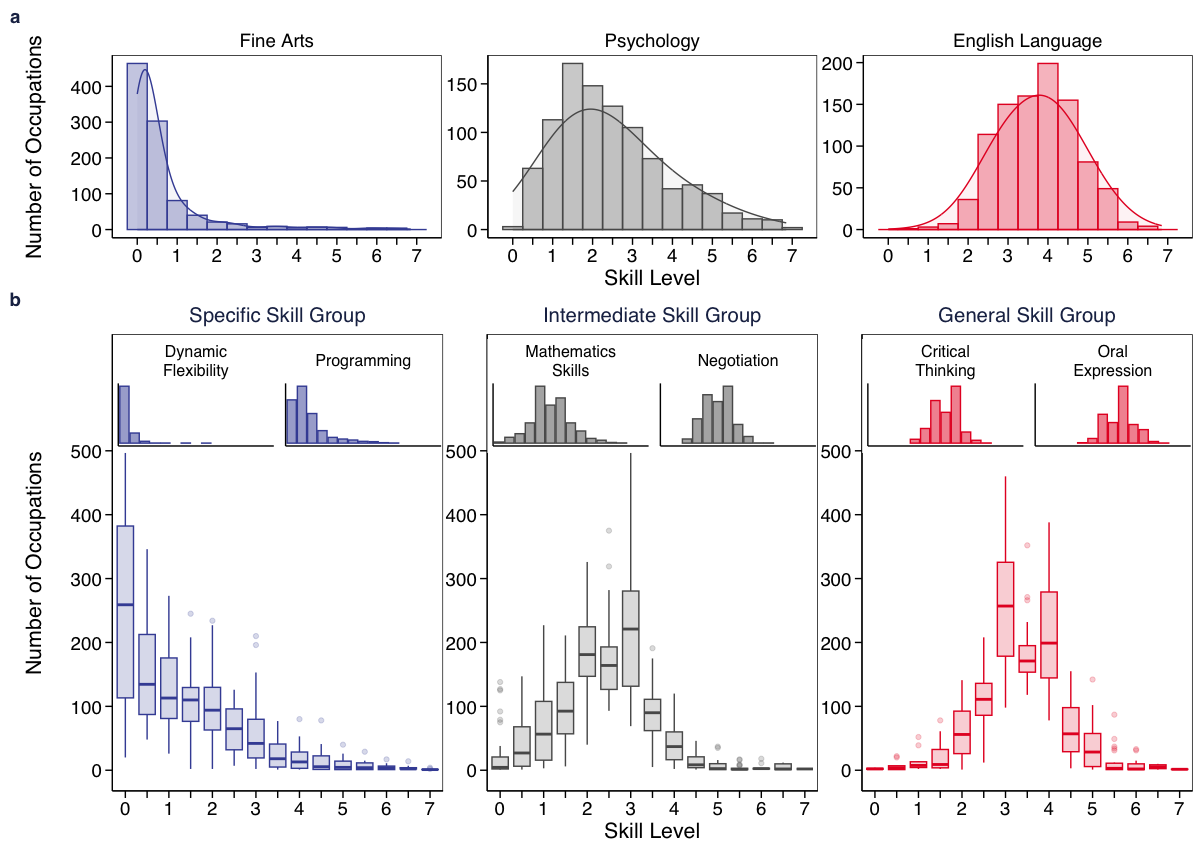
- 依据依赖方向性,构建一个分层树状结构,其中基础技能作为根节点,专业技能作为分支。
- 利用需求分布与依赖密度,将技能分类为‘嵌套’(需前置条件)与‘非嵌套’(无前置条件)。
- 通过10,000次自助抽样迭代训练并评估技能、教育与薪酬预测模型,置信区间为95%,以确保结果稳健性。
- 利用劳工统计局(BLS)职业数据与制造业强度的区位指数,绘制美国各县及大都市区的地理技能分布。
- 通过多年度职业分类对照表对齐2005年与2019年的职业分类,追踪技能结构的时序演变,实现技能网络变化的对比分析。
实验结果
研究问题
- RQ1美国劳动力市场中的技能依赖具有何种分层结构?其如何由技能共现的非对称条件概率所塑造?
- RQ2需基础前置条件的嵌套技能与无前置条件的非嵌套技能在职业发展与薪酬结果上存在哪些差异?
- RQ3对基础技能吸收能力的差异在多大程度上导致了性别、种族/族裔及地理群体间的薪酬不平等?
- RQ42005年至2019年间,技能依赖结构如何演变?这对劳动力市场极化意味着什么?
主要发现
- 技能网络呈现出部分嵌套、非对称的树状结构,基础技能位于根部,专业技能分布于外围,反映出层级式学习依赖关系。
- 沿嵌套技能路径发展的个体获得显著更高的薪酬溢价,尤其在职业生涯早期强化基础技能者受益更明显。
- 若缺乏扎实的基础技能,专业化带来的预期薪酬溢价将大幅降低,凸显前置条件的关键作用。
- 过去二十年间,嵌套技能与非嵌套技能在吸收能力上的差距持续扩大,表明技能发展机会的极化趋势日益显著。
- 地理层面的技能构成差异显著:制造业强度更高、人口更多的城市展现出更强的技能集聚效应与更高的嵌套技能水平。
- 种族与性别在技能获取上的差异依然存在,亚裔、非裔与西班牙裔工人在嵌套技能上的吸收能力低于白人及亚裔男性工人,加剧了薪酬结果的不平等。
更好的研究,从现在开始
从阅读论文到最终审阅,大幅缩短您的研究时间。
无需绑定信用卡
本解读由 AI 生成,并经人工编辑审核。