
[论文解读] Socioeconomic biases in urban mixing patterns of US metropolitan areas
本研究通过结合Foursquare签到数据与美国社区调查数据,分析了美国20个人口最多的大都市区的城市通勤中的社会经济偏见。研究揭示了强烈的向上偏见型通勤模式——个体主要访问自身社会经济阶层的场所,但偶尔也会进入更高地位的场所,表明通勤带来的隔离程度比仅从居住模式推断的更为严重。
Urban areas serve as melting pots of people with diverse socioeconomic backgrounds, who may not only be segregated but have characteristic mobility patterns in the city. While mobility is driven by individual needs and preferences, the specific choice of venues to visit is usually constrained by the socioeconomic status of people. The complex interplay between people and places they visit, given their personal attributes and homophily leaning, is a key mechanism behind the emergence of socioeconomic stratification patterns ultimately leading to urban segregation at large. Here we investigate mixing patterns of mobility in the twenty largest cities of the United States by coupling individual check-in data from the social location platform Foursquare with census information from the American Community Survey. We find strong signs of stratification indicating that people mostly visit places in their own socioeconomic class, occasionally visiting locations from higher classes. The intensity of this `upwards bias' increases with socioeconomic status and correlates with standard measures of racial residential segregation. Our results indicate an even stronger socioeconomic segregation in individual mobility than one would expect from system-level distributions, shedding further light on uneven mobility mixing patterns in cities.
研究动机与目标
- 调查社会经济地位如何影响个体在城市空间中的通勤模式与混合程度。
- 量化向上偏见型通勤的程度及其与不同美国大都市区居住隔离的相关性。
- 评估通勤模式是否揭示了比静态居住隔离指标所捕捉到的更强的社会经济分层。
- 探讨同质性偏好与空间限制在塑造不同社会经济阶层对城市场所不平等获取中的作用。
- 考察通勤偏见、居住隔离与种族聚类之间的相互作用,如何共同塑造城市不平等。
提出的方法
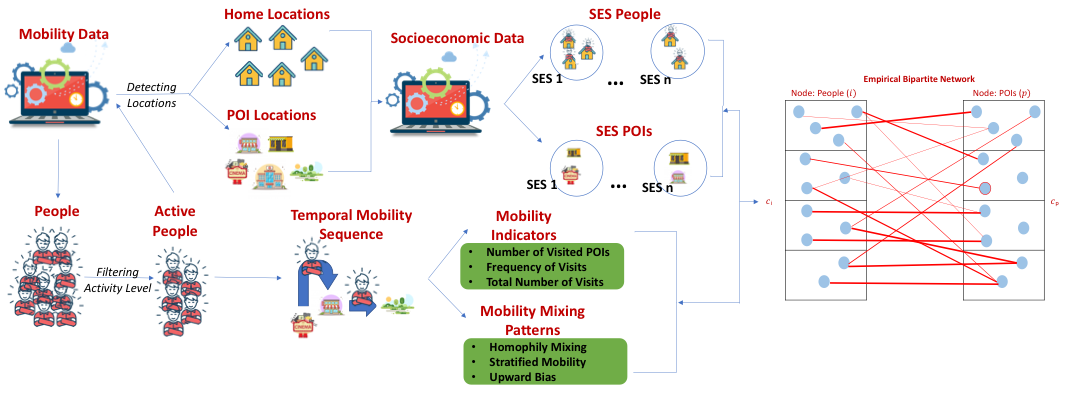
- 将匿名的Foursquare签到轨迹与美国社区调查在普查区层面提供的详细社会经济数据相结合。
- 构建分层矩阵,量化不同社会经济地位个体访问不同场所的频率。
- 计算个人与群体层面的通勤偏见得分,以衡量向上或向下访问偏好的程度。
- 通过排除个体所在普查区的访问记录,重新计算结果以控制地理距离影响,从而隔离社会经济效应与距离偏见。
- 使用z得分将个人通勤偏见与中位数无偏基线进行比较,实现不同城市间访问模式的对比。
- 可视化种族与社会经济聚类,以探索种族居住隔离与通勤分层之间的关联。
实验结果
研究问题
- RQ1美国大都市区的个体在多大程度上表现出向上偏见型通勤?即访问更高社会经济阶层场所的频率是否高于预期?
- RQ2在居住隔离程度不同的城市中,通勤偏见的强度如何变化?
- RQ3通勤隔离程度与种族居住隔离及其他社会经济指标的相关性有多大?
- RQ4排除自身普查区的访问后,通勤偏见的观察模式是否发生变化?这是否表明距离本身无法完全解释所观察到的分层现象?
- RQ5种族与收入等个体属性如何相互作用,以塑造通勤模式与城市混合动态?
主要发现
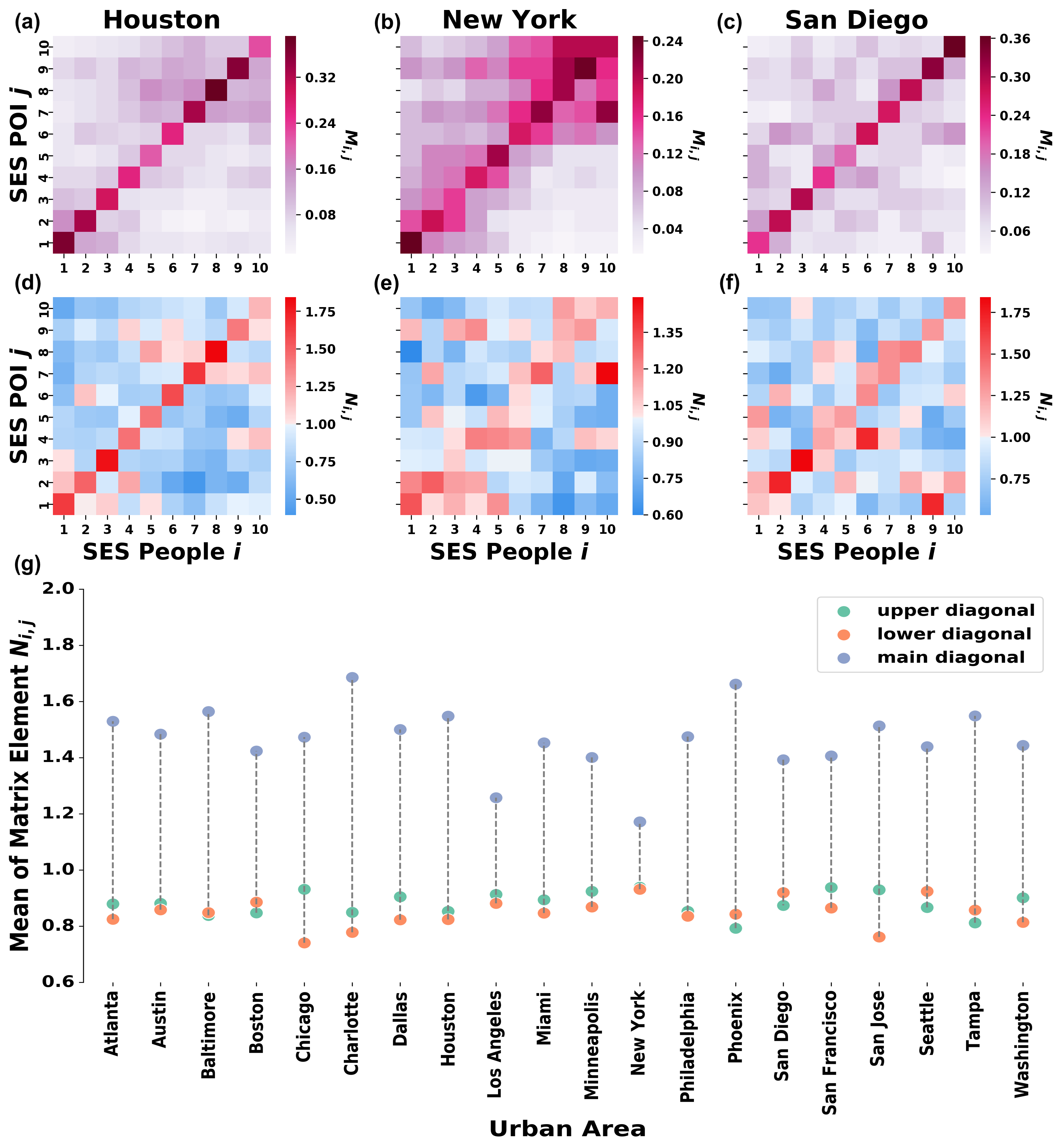
- 所有20个美国大都市区均表现出向上偏见型通勤,高社会经济地位的个体更倾向于访问富裕场所。
- 向上偏见的强度随个体自身社会经济地位的提高而增强,表明对高地位城市场所的访问存在明显的等级差异。
- 即使排除了个体所在普查区的访问,通勤偏见的z得分仍持续高于中位数,证实社会经济地位而非仅距离驱动了访问模式。
- 休斯顿和圣迭戈等城市在通勤模式中的分层程度强于纽约,后者在不同社会经济阶层之间的通勤更为融合。
- 可视化分析显示,通勤数据中的种族与社会经济聚类与居住隔离模式高度一致,表明居住与通勤分层之间存在系统性关联。
- 研究发现,通勤隔离程度比仅从居住隔离所预测的更为显著,凸显了城市不平等的动态维度。
更好的研究,从现在开始
从阅读论文到最终审阅,大幅缩短您的研究时间。
无需绑定信用卡
本解读由 AI 生成,并经人工编辑审核。