
[论文解读] Spectroscopic performance evaluation and modeling of a low background HPGe detector using GEANT4
本研究利用GEANT4蒙特卡罗模拟,在IIT Ropar对一种低本底HPGe探测器进行了评估与建模,以优化其在环境放射性测量中的光谱性能。模拟得到的全能量峰效率与实验数据偏差在7%以内(93%置信水平),从而改善了土壤和岩石样品中原始放射性核素(U/Th/K)的检测限。
Low background gamma spectrometry employing HPGe detectors is a sensitive technique for measuring low-level radioactivity in environmental applications, material screening, and for rare decay searches. This work presents spectroscopic performance evaluation and modelling of a low background measurement setup developed at IIT Ropar in Punjab, India, to measure trace natural radioactive elements, with a particular interest in studying low-level radioactivity in soil and/or rock samples to generate specific inputs for low background experiments. The performance test and characterization of a low background cryocooled HPGe detector with relative efficiency of $\sim$33% have been carried out. An effective detector model has been developed using GEANT4 Monte Carlo simulation to determine the response of the detector over an energy range of 80.9-1408 keV and compared with the experimental performance of the detector. The response of the detector obtained using Monte Carlo simulations agrees reasonably well within 93% level of confidence, indicating only 7% deviation in the comparison. The present setup offers improved detection limits of primordial radionuclides (U/Th and K) to measure radioactive contamination in environmental matrices, which has been used elsewhere [1].
研究动机与目标
- 在IIT Ropar开发一种低本底HPGe探测器装置,用于测量环境基质中痕量天然放射性。
- 表征探测器的光谱性能,包括峰效率、能量分辨率及本底贡献。
- 利用GEANT4蒙特卡罗模拟验证实验结果,实现探测器响应的精确建模。
- 提高土壤和岩石样品中原始放射性核素(238U, 232Th, 40K)的检测限,以支持稀有衰变物理研究。
- 识别本底来源,并提出屏蔽与拒爆系统升级方案,以提升未来低本底实验的灵敏度。
提出的方法
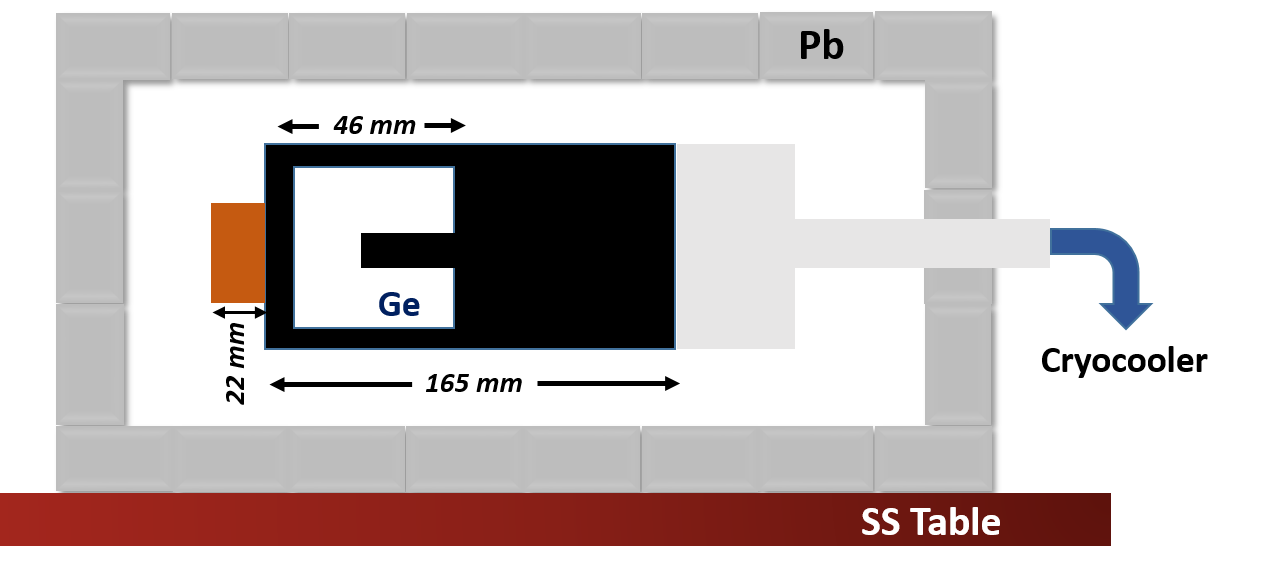
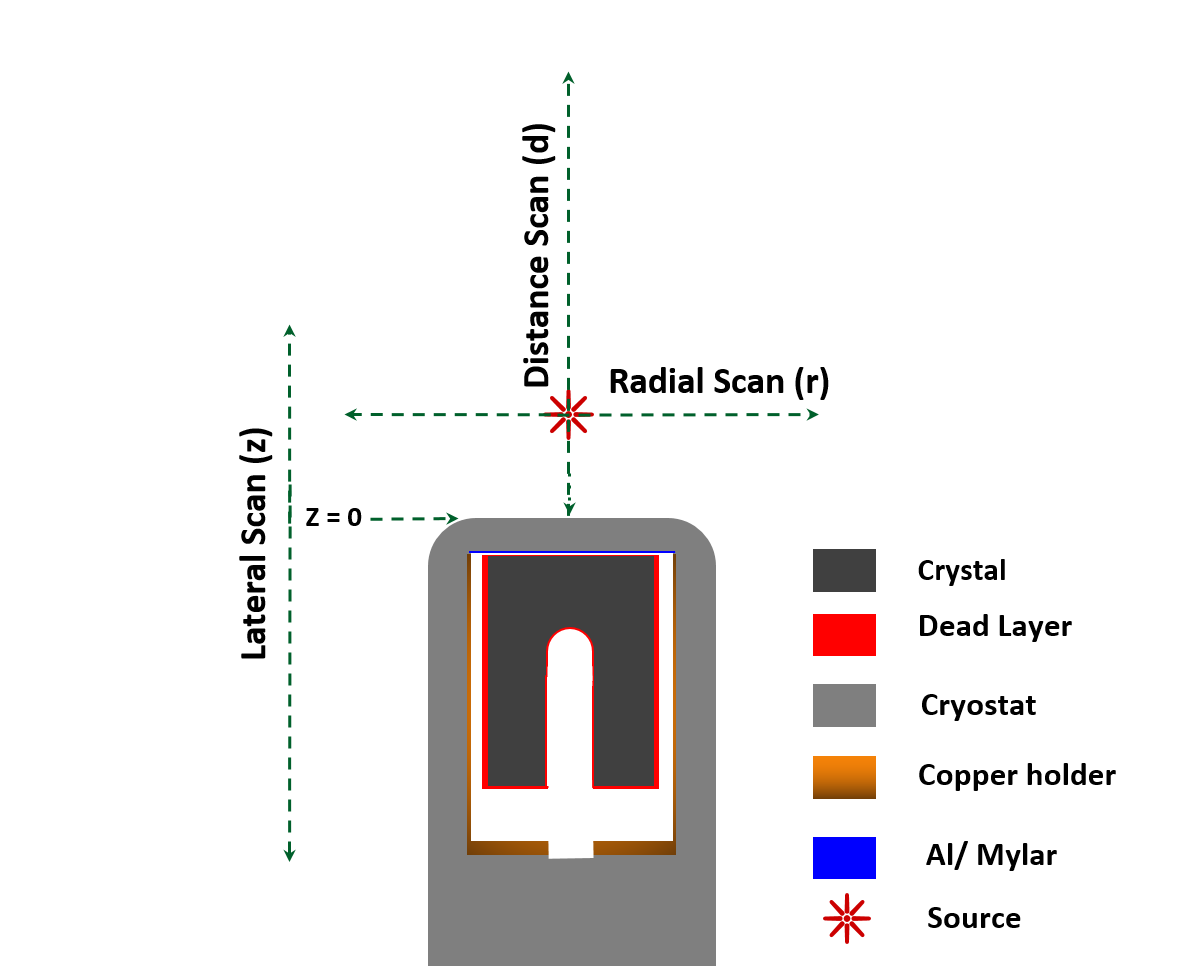
- 构建了HPGe探测器的详细GEANT4蒙特卡罗模型,包括晶体几何结构、死层及屏蔽组件。
- 使用单能伽马源对锗晶体进行横向、径向和轴向扫描,以映射内部结构并优化探测器参数。
- 利用模拟与实验数据对比,计算80.9–1408 keV能量范围内全能量峰效率(FEPE)。
- 采用公式 $ A_{\text{γ}} = \frac{N_{\text{γ}}}{I_{\text{γ}} \times m \times \rho_{\text{γ}} \times t} $ 从背景校正后的净峰计数中确定比活度。
- 开展点源测量,以评估峰形、峰-康普顿比(P/C)及品质因数(FOM)。
- 应用本底校正与效率标定,确定土壤和岩石样品中的活度浓度。
实验结果
研究问题
- RQ1GEANT4能否在宽能量范围(80.9–1408 keV)内准确模拟低本底HPGe探测器的全能量峰效率?
- RQ2在地面上方的HPGe测量中,主要的本底贡献来源是什么?它们如何影响原始放射性核素的检测限?
- RQ3探测器几何结构、晶体尺寸及死层在多大程度上影响光谱性能与效率?
- RQ4IIT Ropar现场土壤和岩石样品中238U、232Th和40K的具体活度浓度是多少?与文献值相比如何?
- RQ5为降低本底并提升稀有衰变探测的检测限,需要哪些屏蔽与拒爆系统升级?
主要发现
- GEANT4模拟得到的HPGe探测器全能量峰效率与实验测量结果偏差在7%以内,表明模型准确度达到93%置信水平。
- 在农田试验场地采集的土壤样品中,238U、232Th和40K的平均比活度分别为50、85和670 Bq/kg,U和Th的分布一致,而K的分布变异性更高。
- 在岩石样品中,238U的活度为7 (1) Bq/kg,而232Th和40K在当前装置下低于检测限。
- 当前装置需将本底降低一个数量级,才能检测岩石样品中的232Th和40K,这需要采用更厚的低本底铅和铜屏蔽。
- 宇宙射线缪子诱发的相互作用是地面上方装置中本底的主要来源,加装宇宙射线缪子拒爆系统可将本底降低约50%。
- 未来升级计划包括采用低本底屏蔽与塑料拒爆探测器,以提升稀有衰变物理实验的灵敏度。
更好的研究,从现在开始
从阅读论文到最终审阅,大幅缩短您的研究时间。
无需绑定信用卡
本解读由 AI 生成,并经人工编辑审核。