
[论文解读] Stacking disorder and thermal transport properties of $α$-RuCl$_3$
本研究揭示,即使在高质量 α-RuCl₃ 单晶中存在极轻微的堆垛 disorder,也会显著抑制其结构相变温度、磁有序温度(T_N)以及晶格热导率。尽管所有样品在振荡性热导率和热霍尔电阻率特征上表现相似,但堆垛 disorder 极少的晶体表现出更高的热导率,使热霍尔导率更接近半整数量子化值,凸显了层间耦合在此 Kitaev 量子自旋液体候选材料中的关键作用。
$α$-RuCl$_3$, a well-known candidate material for Kitaev quantum spin liquid, is prone to stacking disorder due to the weak van der Waals bonding between the honeycomb layers. After a decade of intensive experimental and theoretical studies, the detailed correlation between stacking degree of freedom, structure transition, magnetic and thermal transport properties remains unresolved. In this work, we reveal the effects of a small amount of stacking disorder inherent even in high quality $α$-RuCl$_3$ crystals. This small amount of stacking disorder results in the variation of the magnetic ordering temperature, suppresses the structure transition and thermal conductivity. Crystals with minimal amount of stacking disorder have a T$_N>$7.4\,K and exhibit a well-defined structure transition around 140\,K upon cooling. For those with more stacking faults and a T$_N$ below 7\,K, the structure transition occurs well below 140\,K upon cooling and is incomplete, manifested by the diffuse streaks and the coexistence of both high temperature and low temperature phases down to the lowest measurement temperature. Both types of crystals exhibit oscillatory field dependent thermal conductivity and a plateau-like feature in thermal Hall resistivity in the field-induced quantum spin liquid state. However, $α$-RuCl$_3$ crystals with minimal amount of stacking disorder have a higher thermal conductivity that pushes the thermal Hall conductivity to be closer to the half-integer quantized value. These findings demonstrate a strong correlation between layer stacking, structure transition, magnetic and thermal transport properties, underscoring the importance of interlayer coupling in $α$-RuCl$_3$ despite the weak van der Waals bonding.
研究动机与目标
- 研究本征堆垛 disorder 对高质量 α-RuCl₃ 单晶的结构、磁性和热输运性质的影响。
- 解决 α-RuCl₃ 中堆垛序列、结构相变、磁有序与热输运之间尚未明确的关联性问题。
- 基于可测量的物理性质,建立可靠实验标准,以识别堆垛 disorder 极少的 α-RuCl₃ 晶体。
- 阐明振荡性热导率和热霍尔效应特征是本征的还是外在的,以及堆垛 disorder 如何影响这些特征。
- 评估弱层间耦合在决定宏观输运和磁行为中的作用,尽管存在范德华键合。
提出的方法
- 合成并表征具有不同堆垛 disorder 程度的高质量 α-RuCl₃ 单晶。
- 测量温度依赖的磁化率,以识别磁有序温度(T_N)并检测多重异常现象。
- 利用 X 射线和中子衍射监测结构相变并检测堆垛缺陷的信号。
- 对热导率施加磁场进行定量分析,以识别振荡特征和场依赖行为。
- 测量热霍尔电阻率,以评估量子自旋液体态下的量子化行为及磁场演化特性。
- 将 T_N、结构相变温度与热导率与堆垛 disorder 水平进行关联,以推导选择标准。
实验结果
研究问题
- RQ1α-RuCl₃ 中极少量堆垛 disorder 对冷却过程中的结构相变温度有何影响?
- RQ2堆垛 disorder 与 α-RuCl₃ 中磁有序温度(T_N)的抑制之间存在何种关系?
- RQ3堆垛 disorder 如何影响 α-RuCl₃ 单晶中的晶格热导率?
- RQ4为何不同样品的热霍尔导率值存在差异,这与堆垛 disorder 有何关联?
- RQ5能否建立明确的实验标准,以识别堆垛 disorder 极少的 α-RuCl₃ 晶体?
主要发现
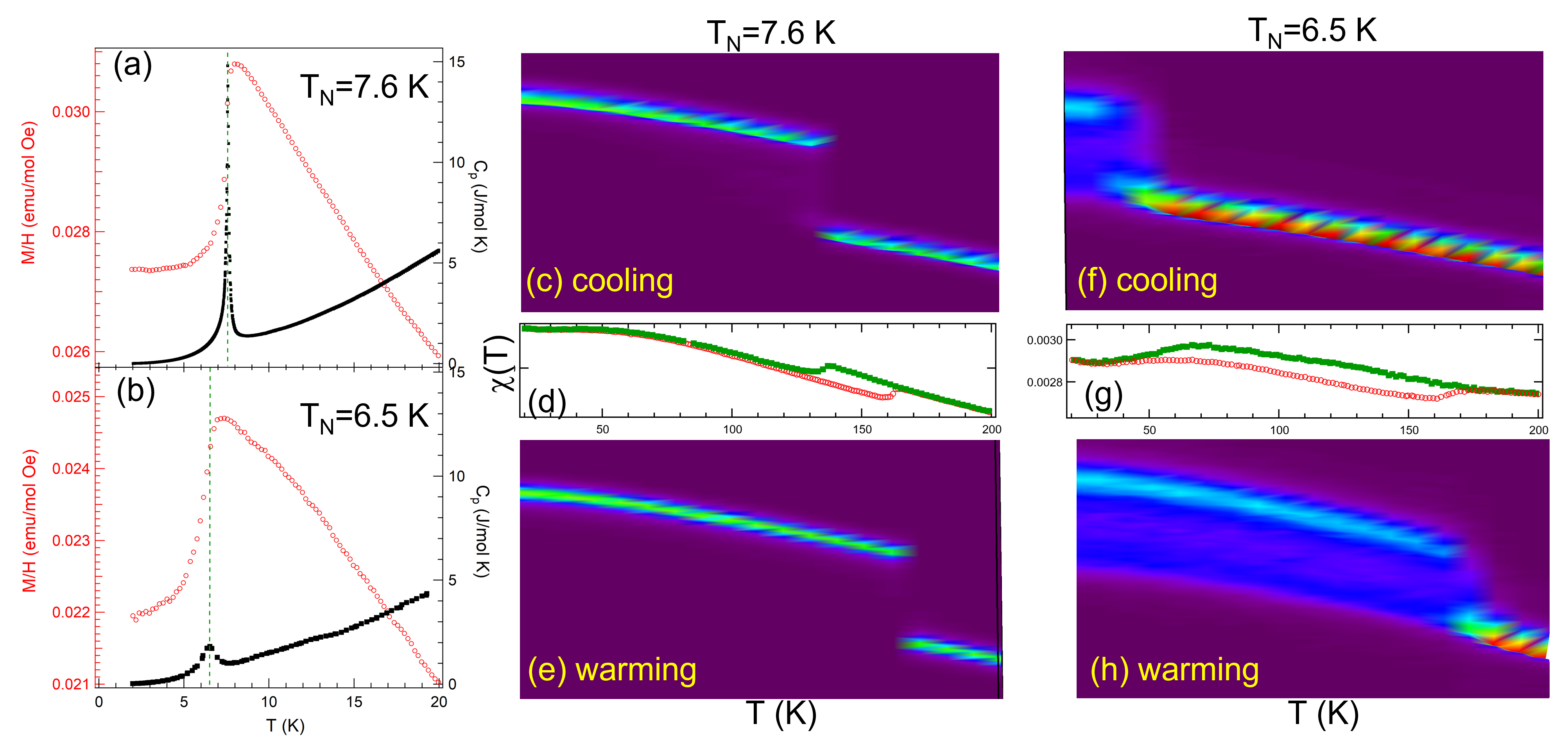
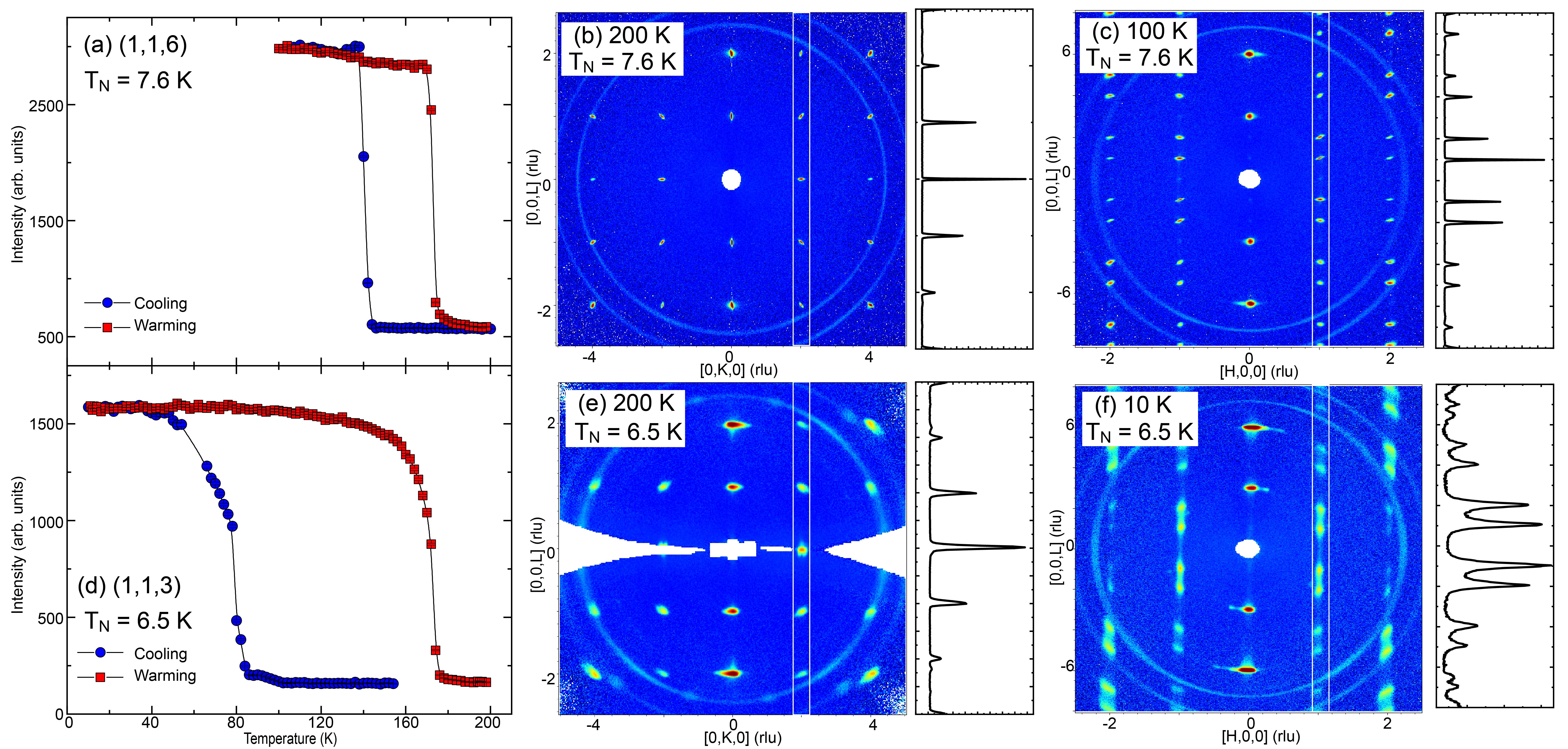
- 堆垛 disorder 极少的 α-RuCl₃ 晶体在冷却过程中于约 140 K 处表现出明确的结构相变,而堆垛 disorder 较高的样品在 140 K 以下则表现出抑制且不完全的相变。
- 磁有序温度 T_N 与堆垛 disorder 密切相关:堆垛 disorder 极少的晶体 T_N > 7.4 K,而堆垛 disorder 较多的晶体 T_N < 7 K。
- 堆垛 disorder 抑制了结构相变温度和晶格热导率,堆垛 disorder 极少的晶体表现出更高的热导率。
- 尽管 T_N 和热导率存在差异,所有样品在磁场诱导的量子自旋液体态下均表现出相似的振荡性场依赖热导率,以及热霍尔电阻率的平台状特征。
- 由于纵向热导率更高,堆垛 disorder 极少的晶体实现了更接近半整数量子化值的热霍尔导率。
- 本研究确立,冷却过程中在约 140 K 附近出现的结构相变,以及在比热中约 7.6 K 处出现的单一磁异常,是 α-RuCl₃ 中堆垛 disorder 极少的可靠指标。
更好的研究,从现在开始
从阅读论文到最终审阅,大幅缩短您的研究时间。
无需绑定信用卡
本解读由 AI 生成,并经人工编辑审核。