
[论文解读] Status Report on the Chicago-Carnegie Hubble Program (CCHP): Measurement of the Hubble Constant Using the Hubble and James Webb Space Telescopes
本论文报道了三种独立的基于 JWST 的哈勃常数(H0)确定方法(TRGB、JAGB、Cepheids),以及以 NGC 4258 为几何锚定的联合 H0,结果显示 TRGB 与 JAGB 约为 1% 一致,而 Cepheids 相差 2.5–4%。
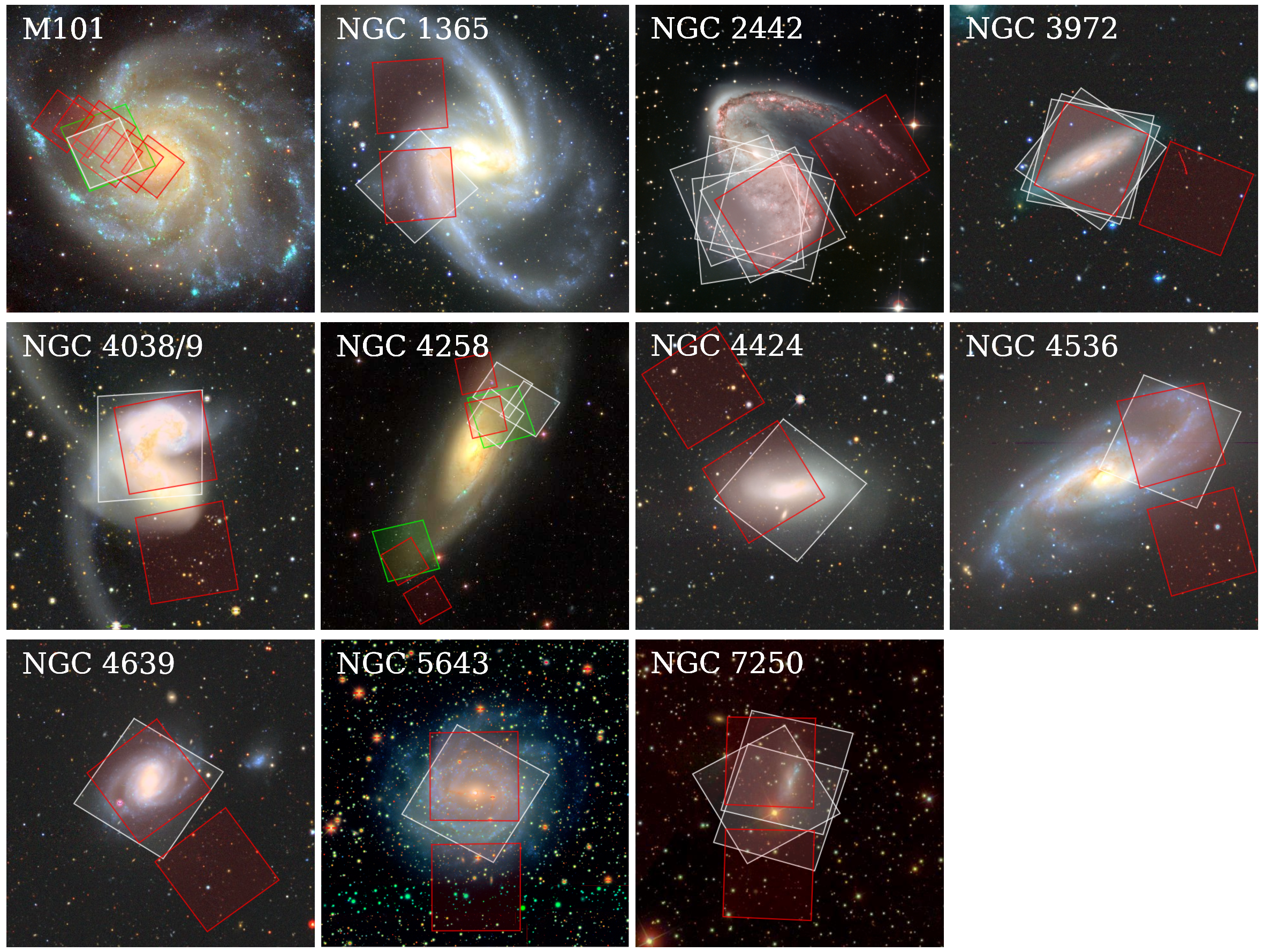
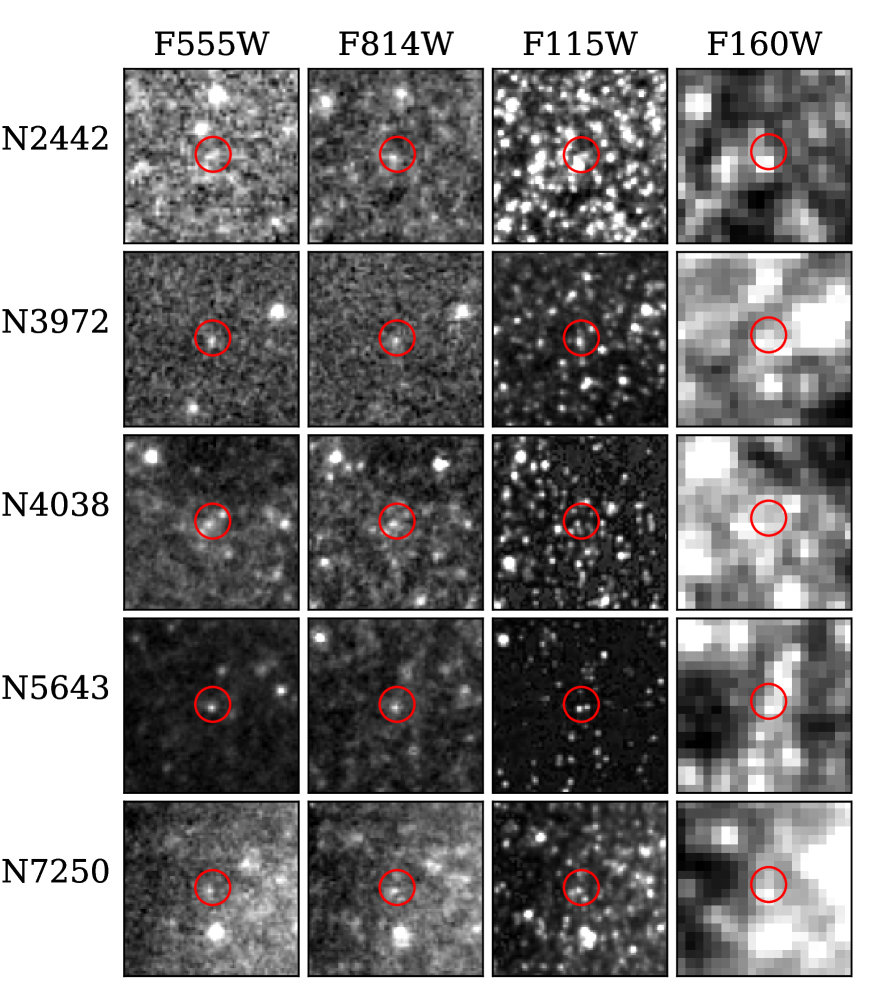
We present the latest results from the Chicago-Carnegie Hubble Program (\cchp) to measure the Hubble constant, using data from the James Webb Space Telescope (JWST). The overall program aims to calibrate three independent methods: (1) Tip of the Red Giant Branch (TRGB) stars, (2) JAGB (J-Region Asymptotic Giant Branch) stars, and (3) Cepheids. To date, our program includes 10 nearby galaxies, hosting 11 Type Ia supernovae (SNe Ia) suitable for measuring the Hubble constant ($H_0$). It also includes the galaxy NGC 4258, whose geometric distance provides the zero-point calibration. In this paper we discuss our results from the TRGB and JAGB methods. Our current best (highest precision) estimate is $H_0$ = 70.39 $\pm$ 1.22 (stat) $\pm$ 1.33 (sys) $\pm$ 0.70 ($σ_{SN}$), based on the TRGB method alone, with a total of 24 SN Ia calibrators from both HST and JWST data. Based on our new JWST data only, and tying into SNe Ia, we find values of $H_0$ = 68.81 $\pm$ 1.79 (stat) $\pm$ 1.32 (sys) for the TRGB, and $H_0$ = 67.80 $\pm$ 2.17 (stat) $\pm$ 1.64 (sys) km/s/Mpc for the JAGB method. The distances measured using the TRGB and the JAGB method agree, on average, at a level better than 1%, and with the SH0ES Cepheid distances at just over the 1% level. Our results are consistent with the current standard LambdaCDM model, without the need for the inclusion of additional new physics. Future JWST data will be required to increase the precision and accuracy of the local distance scale.
研究动机与目标
- 降低局部距离尺度的系统误差,以提升 H0 的精度。
- 为 Ia 型超新星标定提供三种独立的距离测定(TRGB、JAGB、Cepheids)。
- 利用 JWST 的更高分辨率和红外能力,以尽量减小拥挤和消光效应。
- 以 NGC 4258 作为几何锚点来标定距离。
- 评估不同方法之间的一致性及潜在的金属量效应或尘埃效应。
提出的方法
- 使用 JWST NIRCam 成像(F115W、F356W、F444W)对 10 个 Ia 型超新星宿主星系以及 NGC 4258,基于 TRGB、JAGB 与 Cepheids 获得距离。
- 应用统一的光度测量框架(DOLPHOT、DAOPHOT),并采用 warmstart 的源提取方法。
- 实施人工星测试以量化拥挤校正,特别是在 Cepheid 区域;比较不同软件的降线结果。
- 采用盲法程序以防止距离测定中的偏差,特别是对 JAGB 和 TRGB(Cepheids 部分盲化)。
- 使用 NGC 4258 的磁星几何距离来校准绝对距离尺度;通过 [O/H] 传播金属丰度的考虑。
- 在与 SN Ia 校准器联系并采用平坦先验后,组合三种距离指示器以推断 H0。
实验结果
研究问题
- RQ1在 JWST 时代,TRGB、JAGB 和 Cepheids 独立得到的 H0 值是多少?
- RQ2基于 JWST 的距离在三种方法中的统计与系统误差如何比较?
- RQ3TRGB 与 JAGB 的一致性在多大程度上,以及 Cepheid 基于的距离有何差异?
- RQ4在使用 JWST 数据时,金属丰度和尘埃校正对距离指示器有何影响?
- RQ5当将三种 JWST 指标与 SN Ia 校准器以平坦先验联系时,得到的 H0 是多少?
主要发现
- H0(TRGB) = 69.85 ± 1.75 (stat) ± 1.54 (sys) km s−1 Mpc−1.
- H0(JAGB) = 67.96 ± 1.85 (stat) ± 1.90 (sys) km s−1 Mpc−1.
- H0(Cepheids) = 72.05 ± 1.86 (stat) ± 3.10 (sys) km s−1 Mpc−1.
- Combined H0 (three methods with flat prior) = 69.96 ± 1.05 (stat) ± 1.12 (sys) km s−1 Mpc−1.
- TRGB and JAGB distances agree at the ~1% level; Cepheid distances differ from these by ~2.5–4%.
- H0 values from JWST-only two-method (TRGB/JAGB) data = 69.03 ± 1.75 total (km s−1 Mpc−1).
- Results are consistent with the standard ΛCDM model without new physics; future JWST data needed for higher precision.
更好的研究,从现在开始
从论文设计到论文写作,大幅缩短您的研究时间。
无需绑定信用卡
本解读由 AI 生成,并经人工编辑审核。