
[论文解读] Superconductor-ferromagnet hybrids for non-reciprocal electronics and detectors
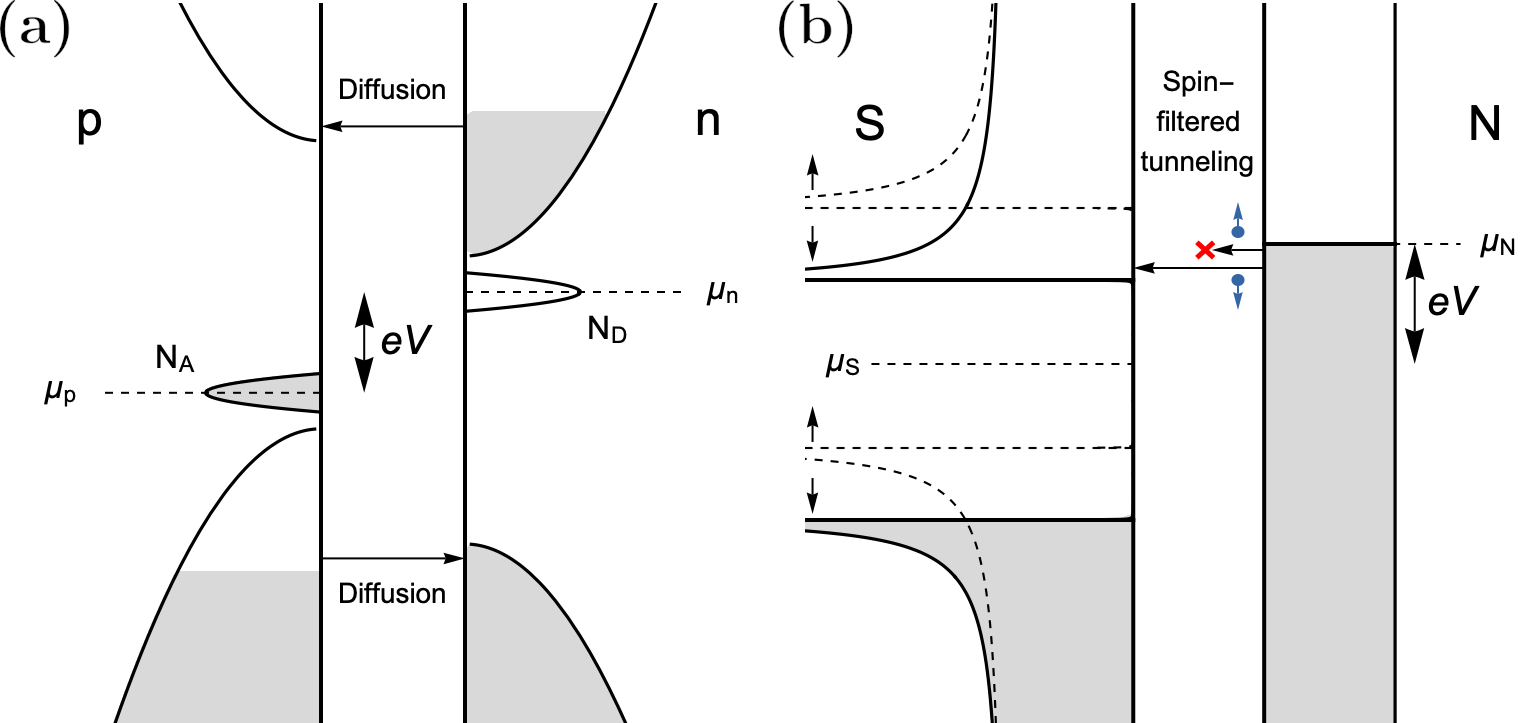
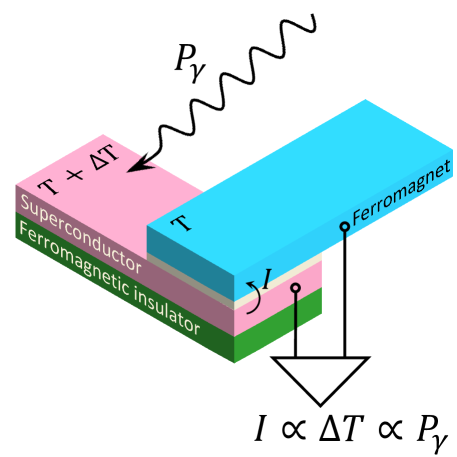
本文提出超导体-铁磁体异质结构,特别是Al/EuS/Cu和EuS/Al/Co基器件,作为自偏置、非互易的X射线与太赫兹辐射探测器。通过利用磁近邻效应和自旋选择性隧穿,这些器件在无外部偏置条件下产生热电电压,实现高灵敏度、低温辐射探测,具有多路复用读出和集成于非互易电子学的潜力。
# Data for the manuscript "Superconductor-ferromagnet hybrids for non-reciprocal electronics and detectors", submitted to Superconductor Science and Technology, arXiv:2302.12732. This archive contains the data for all plots of numerical data in the manuscript. ## Fig. 4 <br> Data of Fig. 4 in the WDX (Wolfram Data Exchange) format (unzip to extract the files). Contains critical exchange fields and critical thicknesses as functions of the temperature. Can be opened with Wolfram Mathematica with the command: Import[FileNameJoin[{NotebookDirectory[],"filename.wdx"}]] ## Fig. 5<br> Data of Fig. 5 in the WDX (Wolfram Data Exchange) format (unzip to extract the files). Contains theoretically calculated I(V) curves and the rectification coefficient R of N/FI/S junctions. Can be opened with Wolfram Mathematica with the command Import[FileNameJoin[{NotebookDirectory[],"filename.wdx"}]]. ## Fig. 7a<br> Data of Fig. 7a in the ascii format. Contains G in uS as a function of B in mT and V in mV. ## Fig. 7c<br> Data of Fig. 7c in the ascii format. Contains G in uS as a function of B in mT and V in mV. ## Fig. 7e<br> Data of Fig. 7e in the ascii format. Contains G in uS as a function of B in mT and V in mV. The plots 7b, d, and f are taken from the plots a, c and e as indicated in the caption of the figure. ## Fig. 8<br> Data of Fig. 8 in the ascii format. Contains G in uS as a function V in mV for several values of B in mT. ## Fig. 8 inset<br> Data of Fig. 8 inset in the ascii format. Contains G_0/G_N as a function of B in mT. ## Fig9a_b First raw Magnetic field values in T, first column voltage drop in V, <br> rest of the columns differential conductance in S ## Fig9b_FIT First raw Magnetic field values in T, first column voltage drop in V, <br> rest of the columns differential conductance in S ## Fig9c First raw Magnetic field values in T, first column voltage drop in V, <br> rest of the columns R (real number) ## Fig9c inset First raw Magnetic field values in T, odd columns voltage drop in V, <br> even columns injected current in A ## Fog9d Foist column magnetic field in T, second column conductance ration (real <br> number), sample name in the file name. ## Fig. 12<br> Data of Fig. 12 in the ascii format. Contains energy resolution as functions of temperature and tunnel resistance with current and voltage readout. ## Fig. 13<br> Data of Fig. 13 in the ascii format. Contains energy resolution as functions of (a) exchange field, (b) polarization, (c) dynes, and (d) absorber volume with different amplifier noises. ## Fig. 14<br> Data of Fig. 14 in the ascii format. Contains detector pulse current as functions of (a) temperature change (b) time with different detector parameters. <br> ## Fig. 17<br> Data of Fig. 17 in the ascii format. Contains dIdV curves as function of the voltage for different THz illumination frequency and polarization. ## Fig. 18<br> Data of Fig. 18 in the ascii format. Contains the current flowing throughout the junction as function time (arbitrary units) for ON and OFF illumination at 150 GHz for InPol and CrossPol polarization. ## Fig. 21<br> Data of Fig. 21c in the ascii format. Contains the magnitude of readout line S43 as frequency.<br> Data of Fig. 21d in the ascii format. Contains the magnitude of iKID line S21 as frequency.
研究动机与目标
- 开发基于超导体-铁磁体异质结构的非互易电子元件和自偏置辐射探测器。
- 通过磁近邻效应打破电子-空穴对称性,解决超导电子学中固有的非互易元件缺失问题。
- 实现适用于X射线和太赫兹辐射的实用型自供电探测器,具备高能量分辨率和低噪声特性。
- 利用平面超感抗和三维集总元件电容,实现此类探测器的多路复用读出,构建可扩展的传感器阵列。
- 探索S/FI双异质结中自旋选择性输运和热电效应的基本物理机制,为新型量子器件提供新途径。
提出的方法
- 采用超导体-铁磁绝缘体(S/FI)双异质结,特别是Al/EuS/Cu和EuS/Al/Co,通过磁近邻效应打破电子-空穴对称性,诱导非互易输运。
- 采用原位遮蔽蒸发和真空完整制备工艺,实现高质量、大面积结,且磁近邻效应可控。
- 通过谱分析和噪声测量表征交换能级分裂和隧穿特性,以优化结质量并最小化次能隙态。
- 设计具有纳米结构吸收体和结的平面天线,以提高太赫兹探测效率并减少热串扰。
- 应用纳米线读出和三维集总元件电容等多路复用技术,实现可扩展、高密度探测器阵列。
- 利用自旋选择性隧穿结模型和近邻效应与自旋电子学的理论框架,分析热电响应和非互易电流-电压特性。
实验结果
研究问题
- RQ1如何通过磁近邻效应在超导体-铁磁体异质结中工程化非互易输运?
- RQ2哪些材料和制备工艺可实现最优的自旋选择性隧穿并最小化次能隙态,以提升探测器灵敏度?
- RQ3能否实现自偏置、零偏置的X射线和太赫兹辐射探测器,其能量分辨率可与现有技术相媲美?
- RQ4如何在不降低信噪比的前提下实现此类自供电探测器的多路复用读出?
- RQ5这些异质系统中热电响应和非互易性的基本极限是什么?如何将其用于新型量子器件?
主要发现
- Al/EuS/Cu和基于EuS/Al/Co的探测器由于磁近邻效应导致超导态密度自旋分裂,表现出强烈的非互易电流-电压特性。
- 器件在吸收辐射后可直接产生热电电压,实现无外部偏置电流或电压的自偏置工作。
- 噪声分析表明,次能隙态密度低(Γ ≲ 10⁻²Δ)的结对高能量分辨率至关重要,尤其在X射线探测中。
- X射线能量分辨率受限于吸收体中的声子弛豫时间,通过悬挂吸收体可减少声子过早逃逸,从而提升分辨率。
- 平面超感抗和三维集总元件电容可有效实现探测器阵列的多路复用,具备可扩展的低温读出潜力。
- 理论与实验结果证实,这些系统支持相干卡洛里特ronics、热逻辑和自旋流混频等新现象,为下一代量子电子学开辟新路径。
更好的研究,从现在开始
从阅读论文到最终审阅,大幅缩短您的研究时间。
无需绑定信用卡
本解读由 AI 生成,并经人工编辑审核。