
[论文解读] Task-Specific Normalization for Continual Learning of Blind Image Quality Models
本文提出 TSN-IQA,一种用于无参考图像质量评估的持续学习方法,通过冻结预训练的卷积滤波器以保证稳定性,并学习任务特定的批归一化参数以实现可塑性。通过使用轻量级 K-means 门控机制组合多个任务特定头的预测结果,该方法在仅增加极少参数的情况下,实现了卓越的准确性、对任务顺序和长度的鲁棒性,以及在六个 IQA 数据集上的最小遗忘。
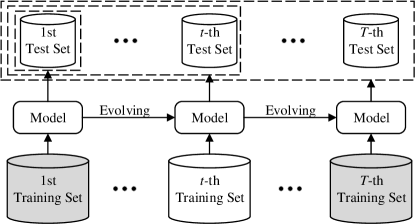
In this paper, we present a simple yet effective continual learning method for blind image quality assessment (BIQA) with improved quality prediction accuracy, plasticity-stability trade-off, and task-order/-length robustness. The key step in our approach is to freeze all convolution filters of a pre-trained deep neural network (DNN) for an explicit promise of stability, and learn task-specific normalization parameters for plasticity. We assign each new IQA dataset (i.e., task) a prediction head, and load the corresponding normalization parameters to produce a quality score. The final quality estimate is computed by black a weighted summation of predictions from all heads with a lightweight $K$-means gating mechanism. Extensive experiments on six IQA datasets demonstrate the advantages of the proposed method in comparison to previous training techniques for BIQA.
研究动机与目标
- 为解决在无参考图像质量评估(BIQA)持续学习中灾难性遗忘的问题,即模型需适应新失真类型而不损失对先前数据的性能。
- 通过将特征提取与任务特定适应解耦,改善 BIQA 持续学习中的可塑性-稳定性权衡。
- 实现对不同任务顺序和长度的鲁棒性能,克服基于正则化方法(如 LwF)的局限性。
- 设计一种轻量级推理机制,避免依赖测试时的“oracle”或额外深度网络进行头权重分配。
- 验证该方法在训练任务之外未见数据集上的泛化能力,证明其对真实世界分布偏移的适应能力。
提出的方法
- 冻结预训练深度神经网络的所有卷积滤波器,以保留学习到的特征并确保跨任务的稳定性。
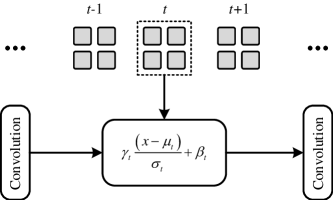
- 为每个新任务引入任务特定的批归一化(BN)参数,使模型能无须更新主干网络即可实现对新失真类型的可塑性适应。
- 为每个任务附加一个独立的全连接预测头,使用对应的任务特定 BN 参数生成质量评分。
- 使用轻量级 K-means 门控(KG)机制组合所有头的预测结果,该机制基于失真感知的 BN 统计信息计算动态权重。
- 在推理过程中使用 KG 模块,计算所有头预测结果的加权平均,实现对输入失真特征的动态适应。
- 以端到端方式训练模型,对每个新任务使用标准损失函数,同时保持特征提取器冻结,仅更新 BN 和头参数。
实验结果
研究问题
- RQ1任务特定归一化是否能有效防止持续 BIQA 中的灾难性遗忘,同时保持高预测准确性?
- RQ2与现有持续学习基线相比,该方法在不同任务顺序和序列长度下的表现如何?
- RQ3K-means 门控机制是否能在不增加额外模型组件的前提下,基于输入失真特征有效分配有意义的权重给预测头?
- RQ4该方法是否能泛化到训练序列中未包含的未见 IQA 数据集?
- RQ5计算复杂度如何随任务数量增长?是否可高效加速?
主要发现
- TSN-IQA 在六个基准 IQA 数据集上达到最先进性能,相比先前方法(如 LwF-KG)展现出更优的质量预测准确性。
- 该方法对任务顺序和长度具有强鲁棒性,在不同训练序列中性能下降极小。
- K-means 门控机制分配了具有感知意义的权重:在 TID2013 上,训练于合成数据集(如 LIVE、CSIQ)的头获得更高权重;在 SPAQ 上,训练于真实失真(如 KonIQ-10K)的头更受青睐。
- BN 参数的 KL 散度与预测准确性之间存在强相关性(SROCC = -0.776),表明相似失真类型可带来更准确的跨数据集泛化。
- 该方法在任务数量上的计算复杂度保持线性,且硬分配变体将推理成本降低 T 倍,同时仍优于 LwF-KG 在相同复杂度下的表现。
- TSN-IQA 对未见数据集具有良好的泛化能力,在未训练过的 TID2013 和 SPAQ 上仍取得合理 SROCC,证实其泛化能力。
更好的研究,从现在开始
从阅读论文到最终审阅,大幅缩短您的研究时间。
无需绑定信用卡
本解读由 AI 生成,并经人工编辑审核。