
QUICK REVIEW
[论文解读] The Cosmos in its Infancy: JADES Galaxy Candidates at z > 8 in GOODS-S and GOODS-N
Kevin Hainline, Benjamin D. Johnson|arXiv (Cornell University)|Jun 4, 2023
Astronomy and Astrophysical Research被引用 18
一句话总结
本文在 JWST/NIRCam 成像的 125 平方角分区(作为 JADES 一部分)中,提出了 z > 8 的 717 个星系候选对象的目录,进行了广泛的光度红移分析和光谱学验证。
ABSTRACT
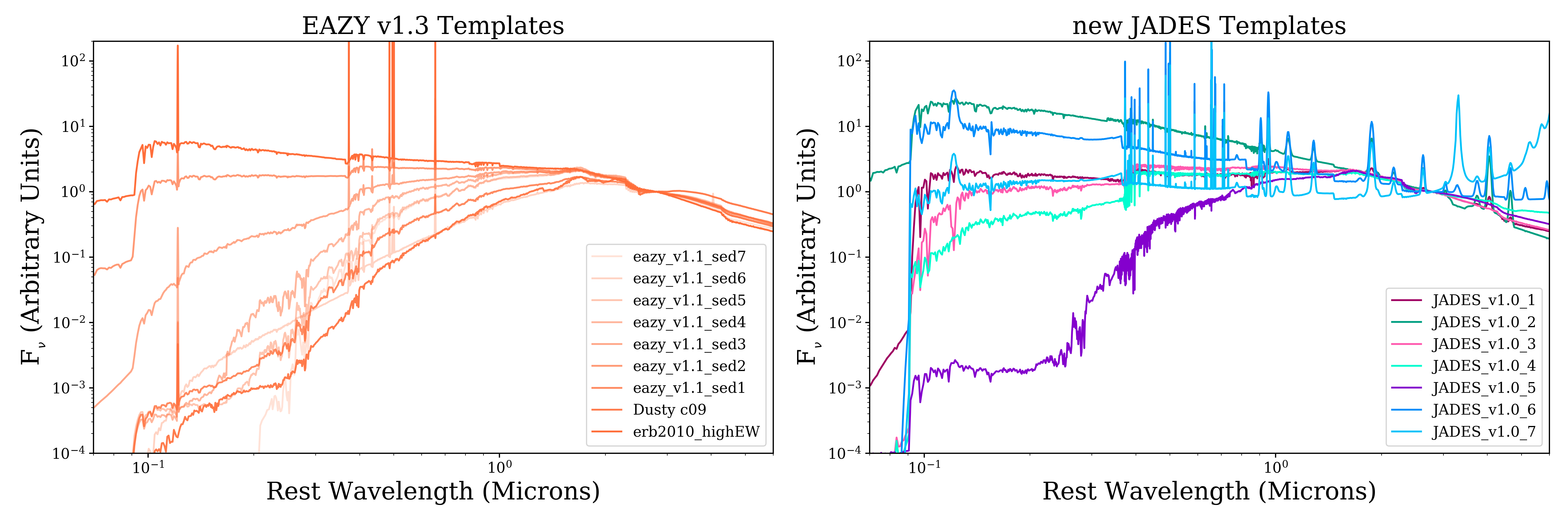
The JADES dataset of z > 8 galaxies (from the JADES-Deep public region) and galaxy candidates accompanying the paper "The Cosmos in its Infancy: JADES Galaxy Candidates at z > 8 in GOODS-S and GOODS-N" (Hainline et al.). We also include the EAZY template set used for these fits. Please see the README files for descriptions of the datasets. The full dataset, which will be released on paper acceptance, can be found at this link.
研究动机与目标
- 推动在大爆炸后第一十亿年内研究最早星系形成。
- 利用深层多滤镜 JWST 数据及辅助的 HST 数据构建一个稳健的 z>8 星系候选样本。
- 通过光谱学确认评估光度红移的可靠性,并评估潜在的低质量恒星污染。
- 突出值得注意的高红移源并理解高红移星系识别中的选择效应、深度与模板选择。
提出的方法
- 结合 JADES 的 JWST/NIRCam 成像、JEMS 和 FRESCO 的数据,以及深度 HST/ACS 成像,构建一个包含 15 过滤器的 JWST + 5 过滤器的 HST 光度测量集合。
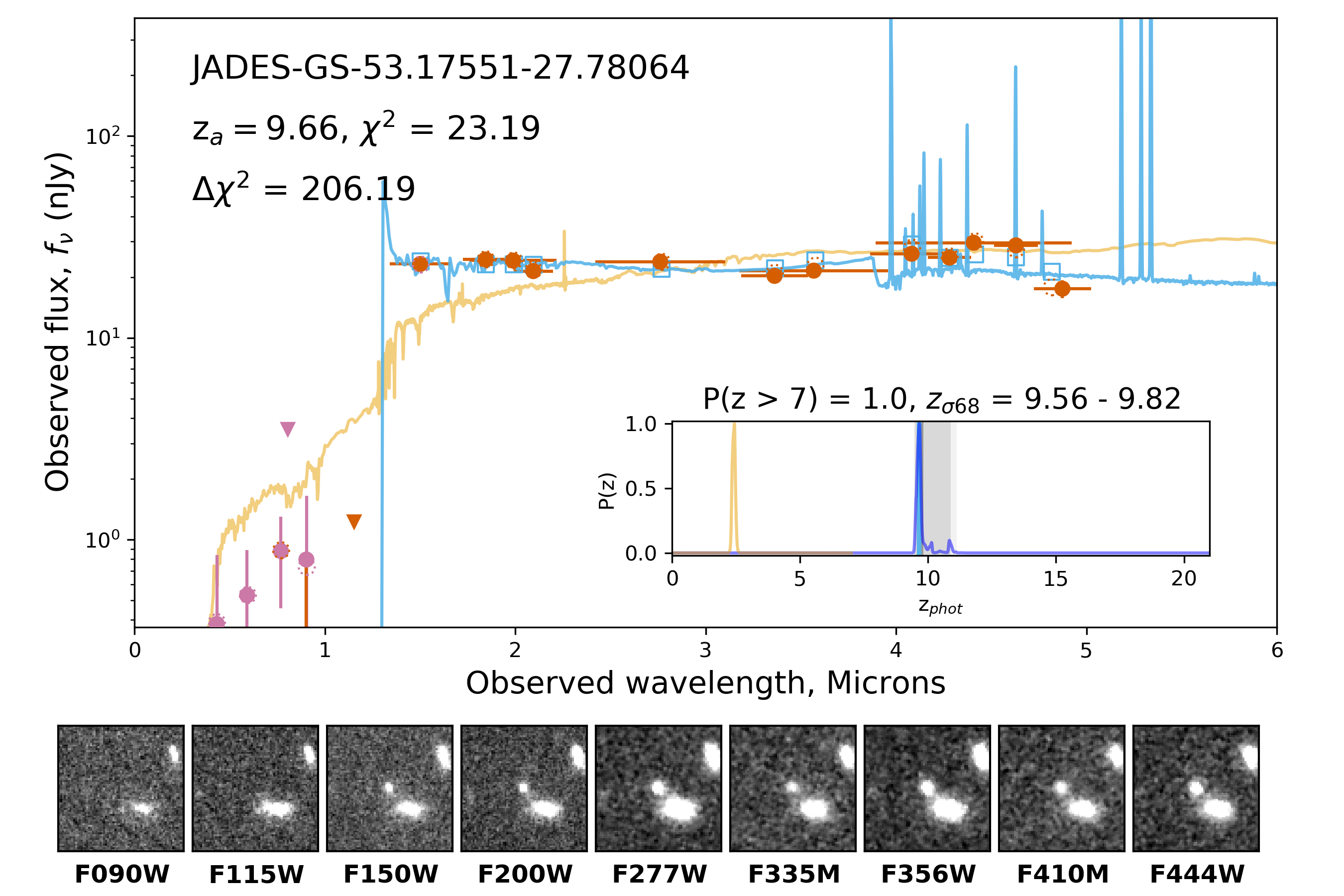
- 使用 EAZY 进行模板拟合,在 z = 0.01–22 范围内估计光度红移,纳入星云发射模板和 IGM 衰减。
- 对光度测量使用 5% 的误差下限,并使用模板误差文件来考虑校准和模板不确定性。
- 对直径为 0.2 arcsecond 的孔径应用强制光度测量,以获取通量并推导光度红移。
- 与 FRESCO 和 NIRSpec 光谱学结果进行交叉匹配,以验证红shift 估计并评估污染情况。
实验结果
研究问题
- RQ1在将 JADES、JEMS、FRESCO 和深度 HST 数据结合后,GOODS-S 与 GOODS-N 中存在多少个可信的 z>8 星系候选对象?
- RQ2当以 NIRSpec 和 FRESCO 的光谱红移进行验证时,z>8 星系的光度红移有多准确?
- RQ3z>8 候选样本中低质量恒星或其他错位对象的污染水平如何?
- RQ4高红移星系在 z=8–10、z=10–12 和 z>12 的分布,以及它们的显著特征是什么?
- RQ5不同模板集合如何影响推导的光度红移和候选对象的选择?
主要发现
- 目录在 125 square arcminutes 的 NIRCam 成像范围内识别出 z>8 的 717 个候选星系。
- 超过 93% 的源来自深度 JADES 成像的新识别,包括 31 个新的 z_phot > 12 的星系候选。
- 在候选对象中,最高的光度红移扩展至 z_phot ~ 18。
- 使用具有光谱红移的 42 个源(NIRSpec 和 FRESCO),光度红移与光谱红移高度一致,未出现灾难性离群,平均 Δz = z_phot − z_spec = 0.26。
- 候选对象包括对分辨清晰或扩展源的分析以及非常红的长波斜率,由深度多滤波数据实现了稳健采样。
- 该样本提供了一个稳健的数据集,用于探测宇宙在最初几亿年内星系的早期积累。
更好的研究,从现在开始
从论文设计到论文写作,大幅缩短您的研究时间。
无需绑定信用卡
本解读由 AI 生成,并经人工编辑审核。