
[论文解读] The field theoretical ABC of epidemic dynamics
本文提出了一种统一的场论框架,通过时间膨胀对称性将渗透模型、基于分室的SIR型模型以及重整化群(eRG)方法联系起来,以建立流行病动力学的理论模型。该框架自然地展现出临界性、时间重标度下的自相似性以及多波传播动力学,为描述现实世界中的大流行病(如COVID-19)提供了强大而对称的理论工具。
Infectious diseases are a threat for human health with tremendous impact on our society at large. The recent COVID-19 pandemic, caused by the SARS-CoV-2, is the latest example of a highly infectious disease ravaging the world, since late 2019. It is therefore imperative to develop efficient mathematical models, able to substantially curb the damages of a pandemic by unveiling disease spreading dynamics and symmetries. This will help inform (non)-pharmaceutical prevention strategies. For the reasons above we wrote this report that goes at the heart of mathematical modelling of infectious disease diffusion by simultaneously investigating the underlying microscopic dynamics in terms of percolation models, effective description via compartmental models and the employment of temporal symmetries naturally encoded in the mathematical language of critical phenomena. Our report reviews these approaches and determines their common denominators, relevant for theoretical epidemiology and its link to important concepts in theoretical physics. We show that the different frameworks exhibit common features such as criticality and self-similarity under time rescaling. These features are naturally encoded within the unifying field theoretical approach. The latter leads to an efficient description of the time evolution of the disease via a framework in which (near) time-dilation invariance is explicitly realised. As important test of the relevance of symmetries we show how to mathematically account for observed phenomena such as multi-wave dynamics. The models presented here are of immediate relevance for different realms of scientific enquiry from medical applications to the understanding of human behaviour. Our review offers novel perspectives on how to model, capture, organise and understand epidemiological data and disease dynamics for modelling real-world phenomena.
研究动机与目标
- 在统一的场论框架下整合不同类型的流行病传播数学模型——包括渗透模型、分室模型(SIR)以及重整化群方法。
- 识别并利用时间膨胀不变性作为流行病动力学的基本对称性,尤其在临界点附近。
- 展示该对称性如何解释多波大流行等观测现象以及线性增长阶段。
- 为建模现实世界流行病数据提供系统性、受物理学启发的框架,具备预测能力与政策相关性。
- 将这些模型的应用范围从人类传染病扩展至更广泛的复杂系统,包括信息传播与网络动力学。
提出的方法
- 构建一个场论中的主作用量,编码来自微观渗透过程的疾病传播动力学。
- 通过粗粒化与平均场近似,从格点渗透模型推导出有效分室模型(如SIR)。
- 将SIR模型重新解释为一组具有控制时间演化的beta函数的重整化群(RG)方程。
- 引入流行病重整化群(eRG)框架,其中固定点代表无病状态或地方性流行状态,其间的流动描述了流行病的进程。
- 利用时间重标度对称性识别自相似解以及相变附近的临界行为。
- 通过引入复固定点与非平凡流动轨迹,将eRG框架扩展以建模多波动力学。
实验结果
研究问题
- RQ1场论如何为包括渗透模型与分室模型在内的多种流行病建模方法提供统一描述?
- RQ2时间膨胀不变性在组织疾病传播动力学中扮演何种角色?它如何反映在临界行为与自相似性中?
- RQ3流行病重整化群(eRG)框架能否解释真实数据中观测到的多波大流行模式,如COVID-19大流行中的情况?
- RQ4eRG框架中的时间重标度对称性与固定点如何与可观察的流行病学特征(如线性增长或持续传播)相关联?
- RQ5该场论框架在多大程度上可推广以建模非药物干预措施、疫苗接种以及病原体演化?
主要发现
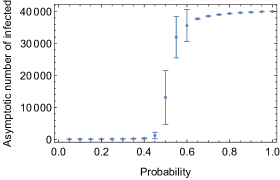
- 场论方法表明,临界性与时间重标度下的自相似性是流行病动力学的普遍特征,自然源于其底层对称性。
- 通过粗粒化与平均场平均,可从微观渗透模型导出SIR等分室模型,建立起微观与宏观描述之间的桥梁。
- SIR模型被证明等价于一组具有明确定义beta函数的重整化群方程,从而实现了动力系统解释。
- eRG框架通过引入复固定点与非平凡流动轨迹,成功建模了多波动力学,与观测到的大流行波形一致。
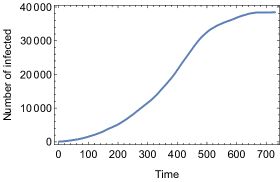
- 该形式化方法在直线增长阶段解释了时间重标度不变性,此时活跃感染人数近似恒定,系统表现出近似尺度不变性。
- 该框架在真实世界COVID-19大流行数据上得到验证,表明非药物干预措施与移动模式可通过eRG方法中的时间依赖参数有效建模。
更好的研究,从现在开始
从阅读论文到最终审阅,大幅缩短您的研究时间。
无需绑定信用卡
本解读由 AI 生成,并经人工编辑审核。