
[论文解读] The hot circumgalactic medium in the eROSITA All-Sky Survey I. X-ray surface brightness profiles
本文利用对 eROSITA eRASS:4 数据的叠加,探测并表征到银河系质量及更大中心星系的热围星系际介质(hot circum-galactic medium,CGM),延伸至 virial 半径,同时对 AGN/XRB 污染进行建模与扣除。
The circumgalactic medium (CGM) provides the material needed for galaxy formation and influences galaxy evolution. The hot ($T>10^6K$) CGM is poorly detected around galaxies with stellar masses ($M_*$) lower than $3 imes10^{11}M_\odot$ due to the low surface brightness. We used the X-ray data from the first four SRG/eROSITA All-Sky Surveys (eRASS:4). Based on the SDSS spectroscopic survey and halo-based group finder algorithm, we selected central galaxies with spectroscopic redshifts of $z_{ m spec}<0.2$ and stellar masses of $10.0<\log(M_*/M_\odot)<11.5$ (85,222 galaxies) -- or halo masses of $11.5<\log(M_{ m 200m}/M_\odot)<14.0$ (125,512 galaxies). By stacking the X-ray emission around galaxies, masking the detected X-ray point sources and carefully modeling the X-ray emission from the unresolved active galactic nuclei (AGN) and X-ray binaries (XRB), we obtain the X-ray emission from the hot CGM. We detected the X-ray emission around MW-mass and more massive central galaxies extending up to the virial radius ($R_{ m vir}$). We used a $β$ model to describe the X-ray surface brightness profile and found $β=0.43^{+0.10}_{-0.06}\,(0.37^{+0.04}_{-0.02})$ for MW-mass (M31-mass) galaxies.We estimated the baryon budget of the hot CGM and obtained a value that is lower than the prediction of $Λ$CDM cosmology, indicating significant gas depletion in these halos. We extrapolated the hot CGM profile measured within $R_{ m vir}$ to larger radii and found that within $\approx 3 R_{ m vir}$, the baryon budget is close to the $Λ$CDM cosmology prediction. Our results set a firm footing for the presence of the hot CGM around such galaxies. These measurements constitute a new benchmark for galaxy evolution models and possible implementations of feedback processes therein.
研究动机与目标
- 作为主要重子储存库之一的热 CGM 的研究动机及其在星系演化中的作用
- 使用 eROSITA 全天空 survey 数据,测量 MW 质量及更大中心星系周围热 CGM 的 X 射线表面亮度剖面
- 开发并验证一个健壮的叠加与掩蔽框架,以将 CGM 发射与 AGN 和 X 射线星之间的污染分离
- Construct carefully defined central and isolated galaxy samples to minimize satellite contamination in stacking analyses.
提出的方法
- 对前四次 eROSITA 全天空 survey (eRASS:4) 的 0.5–2 keV 带的 X 射线数据进行叠加
- 为每个星系构建物理距离立方体,掩蔽探测到的 X 射线源,并纠正掩蔽面积和吸收
- 对无法分辨的 AGN 与 X 射线双星的残留发射进行建模,以提取热 CGM 发射
- 用 β 模型拟合得到的表面亮度剖面,卷积于 eROSITA 的 PSF,使用 MCMC 估计参数(S_X,0, β, r_c)
- 通过泊松统计和叠加的 Jackknife 重采样来估计不确定性
实验结果
研究问题
- RQ1MW-质量及更大中心星系在 virial 半径处的热 CGM 的平均 X 射线表面亮度剖面是什么?
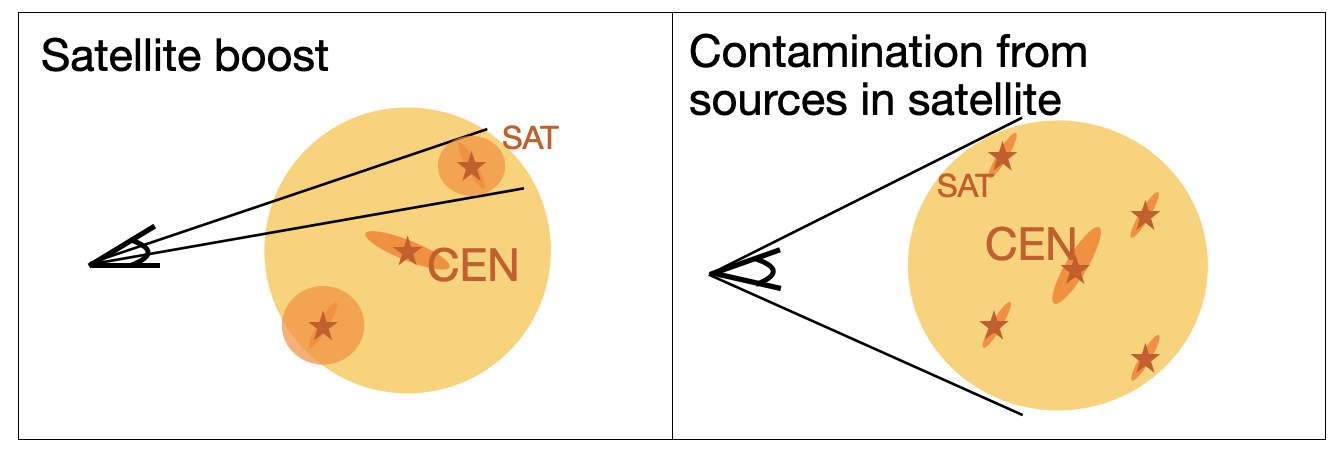
- RQ2未分辨的 AGN/XRB 污染和卫星星系如何偏倚叠加测量,如何加以缓解?
- RQ3描述热 CGM 的最佳拟合 β 模型参数是什么,它们对其结构有何含义?
- RQ4MW-质量及更大系统的热 CGM 推断的重子预算是多少,它与 ΛCDM 预测有何对比?
主要发现
- 在 MW 质量及更大中心星系的热 CGM 中,扩展的 X 射线发射在 virial 半径处可显著检测到(R_vir)。
- MW 质量星系:S_X,0 ≈ 3.1×10^35 erg s^-1 kpc^-2,β ≈ 0.42;M31-质量星系:S_X,0 ≈ 1.3×10^36 erg s^-1 kpc^-2,β ≈ 0.37;更高质量区间(log M_* = 11.25–11.50):S_X,0 ≈ 6.3×10^36 erg s^-1 kpc^-2,β ≈ 0.35。
- 统计显著性水平:MW-质量约 ≈12.3σ,M31-质量约 ≈8.1σ 在 R_vir 内;在 0.5–1 R_vir 内分别约 ≈4.5σ(MW)与 ≈3.1σ(M31)。
- 在 R_vir 处检测到扩展发射,为 MW-质量及更大星系的热 CGM 的存在提供坚定基础。
- 孤立星系在考虑环境因素后,与中心星系的表面亮度剖面没有显著差异。

更好的研究,从现在开始
从论文设计到论文写作,大幅缩短您的研究时间。
无需绑定信用卡
本解读由 AI 生成,并经人工编辑审核。