
[论文解读] The James Webb Space Telescope Mission: Optical Telescope Element Design, Development, and Performance
本文详细描述了詹姆斯·韦布空间望远镜光学望远镜组件(OTE)的设计、研制及在轨性能,重点介绍了其技术进步、严格测试以及成功部署情况。OTE性能超出设计要求,实现了卓越的波前稳定性和灵敏度,使变革性科学观测成为可能。
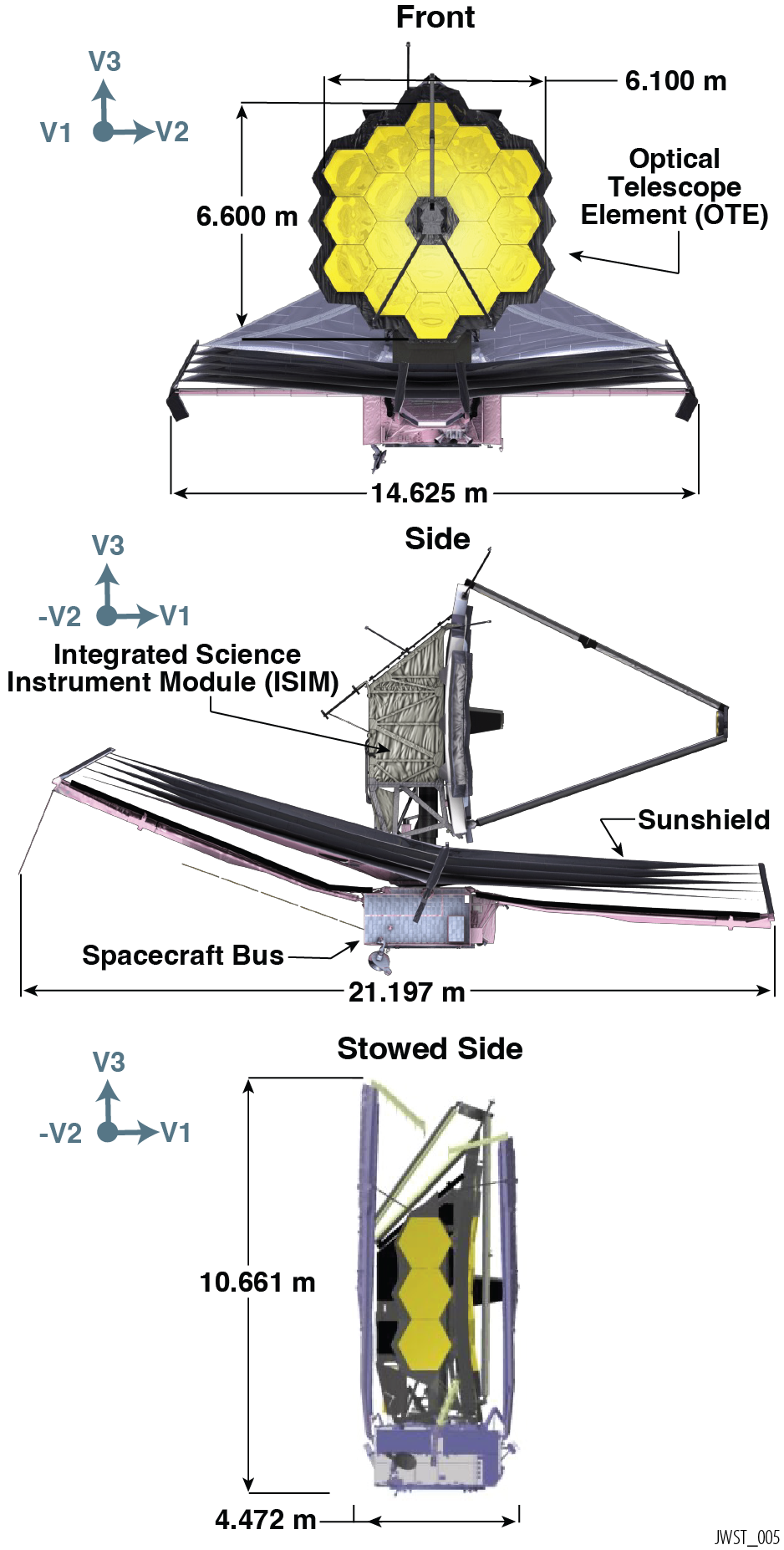
The James Webb Space Telescope (JWST) is a large, infrared space telescope that has recently started its science program which will enable breakthroughs in astrophysics and planetary science. Notably, JWST will provide the very first observations of the earliest luminous objects in the Universe and start a new era of exoplanet atmospheric characterization. This transformative science is enabled by a 6.6 m telescope that is passively cooled with a 5-layer sunshield. The primary mirror is comprised of 18 controllable, low areal density hexagonal segments, that were aligned and phased relative to each other in orbit using innovative image-based wavefront sensing and control algorithms. This revolutionary telescope took more than two decades to develop with a widely distributed team across engineering disciplines. We present an overview of the telescope requirements, architecture, development, superb on-orbit performance, and lessons learned. JWST successfully demonstrates a segmented aperture space telescope and establishes a path to building even larger space telescopes.
研究动机与目标
- 记录詹姆斯·韦布空间望远镜光学望远镜组件(OTE)的端到端设计、集成与测试,以确保任务成功。
- 在系统研制过程中应对光学建模、杂散光以及微陨石撞击风险等挑战。
- 验证OTE性能是否符合深空红外天文对波前和稳定性要求的严格标准。
- 从在轨异常(如异常路径杂散光)中总结经验教训,以改进未来大口径空间望远镜的设计。
- 展示先进技术(包括可展开遮阳板和低温光学系统)在飞行任务中的成功集成。
提出的方法
- 采用由美国宇航局戈达德空间飞行中心主导的分布式开发模式,主要贡献方包括诺斯罗普·格鲁曼公司、巴尔航空航天公司、L3哈里斯公司以及哈勃空间望远镜科学研究所。
- 对OTE开展了广泛的地面测试,包括热真空测试和低温光学测试,以验证其在飞行条件下的性能。
- 为望远镜和科学仪器分别建立了独立的光学与光学机械模型,并通过接口验证确保兼容性。
- 实施了详细的杂散光建模,以预测并减轻光学路径污染,后经在轨数据进一步优化。
- 应用统计与机械模型评估微陨石撞击风险,并制定操作约束以降低暴露风险。
- 通过将观测到的杂散光效应与更新后的光学和结构模型进行关联,开展在轨后分析。
实验结果
研究问题
- RQ1詹姆斯·韦布空间望远镜的光学望远镜组件(OTE)在低温、太空环境中,如何设计并测试以满足严格的波前和稳定性要求?
- RQ2在轨时出现的意外杂散光是由什么引起的,其根源如何追溯至结构特征和掠射角散射?
- RQ3微陨石撞击在多大程度上影响了OTE的性能,以及实施了何种操作约束以减轻风险?
- RQ4为何初始光学模型未能预测异常路径杂散光,未来任务需要何种建模改进?
- RQ5系统级集成挑战(特别是光学与机械接口之间)在多大程度上影响了性能与风险?
主要发现
- 詹姆斯·韦布空间望远镜OTE的波前误差性能显著优于设计要求,实现了高于最初预期的灵敏度和稳定性。
- 在轨杂散光被追溯至科学仪器拾取镜支架和内部结构的掠射角散射,初始模型未预测到此现象。
- 异常路径杂散光现象局限于天空的极小部分区域,可通过精心的目标调度实现有效缓解。
- 微陨石撞击建模揭示了因缺乏高速、低温测试数据而导致损伤预测存在不确定性,促使实施视场范围限制。
- 在轨后分析证实,完整系统建模必须包含详细的光学机械结构,而不仅仅是光学处方,才能防止意外杂散光的出现。
- OTE性能超出设计目标,证明了可展开遮阳板和低温镜面组件等先进技术的成功应用。
更好的研究,从现在开始
从阅读论文到最终审阅,大幅缩短您的研究时间。
无需绑定信用卡
本解读由 AI 生成,并经人工编辑审核。