
[论文解读] The Near Infrared Imager and Slitless Spectrograph for the James Webb Space Telescope -- I. Instrument Overview and in-Flight Performance
本文展示了詹姆斯·韦布空间望远镜上近红外像仪与无狭缝光谱仪(NIRISS)在轨性能,证明其四种观测模式——成像、宽场无狭缝光谱、单目标无狭缝光谱和孔径遮蔽干涉测量——均超过发射前预测。关键成果包括首次在太空中利用孔径遮蔽干涉测量探测到恒星伴星,即在CPD-66-562周围150 mas处探测到1.8等星等对比度的伴星,且所有模式的灵敏度均得到提升,尤其在短波段近红外波段表现更优。
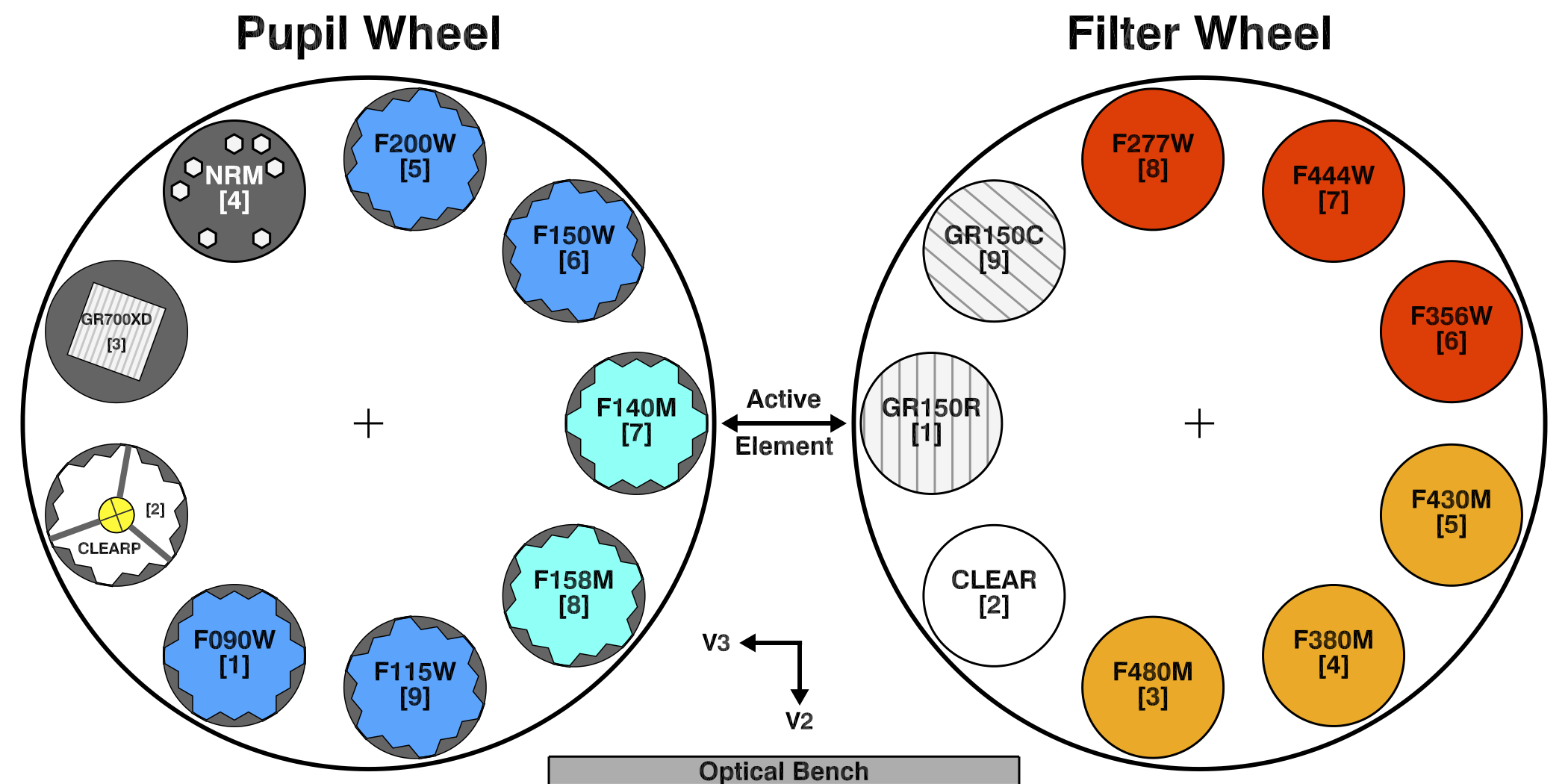
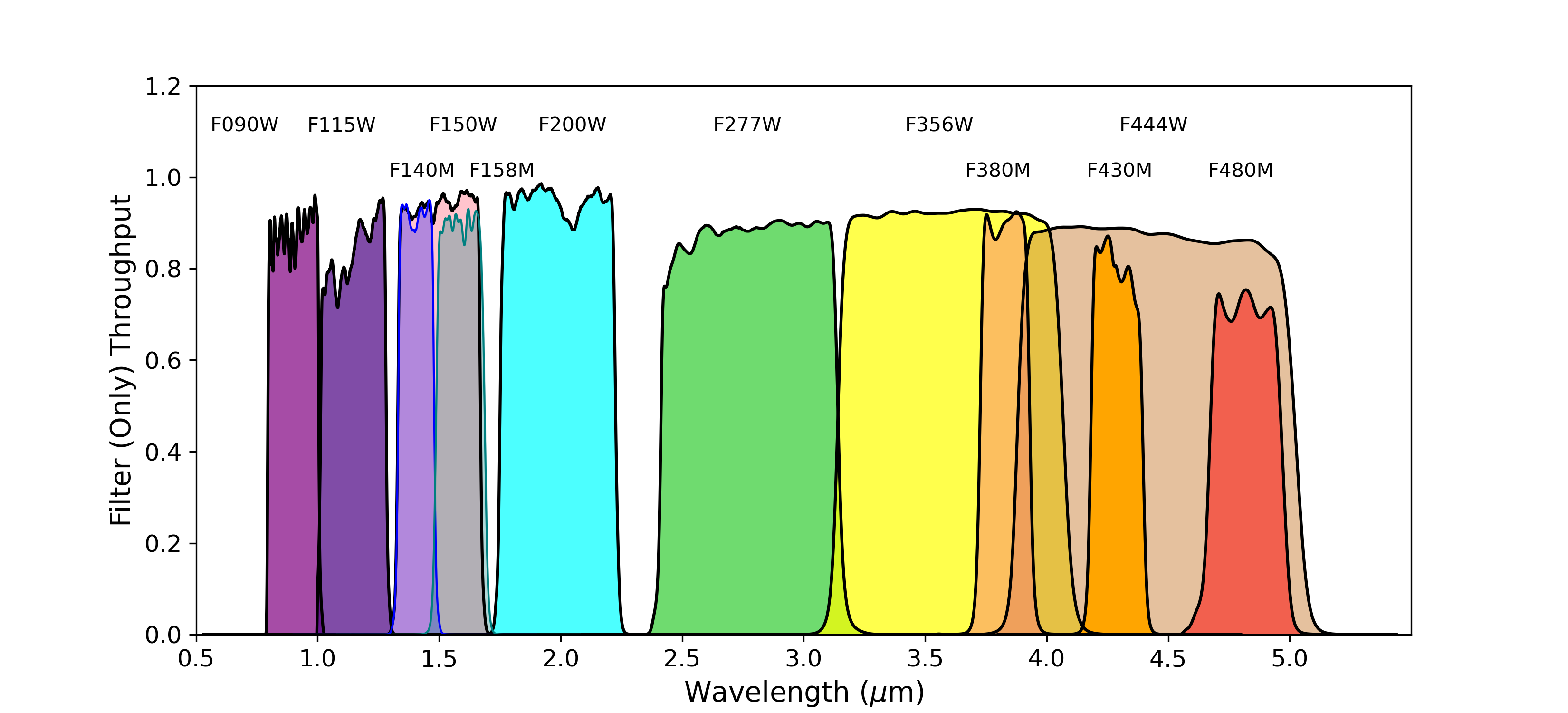
The Near-Infrared Imager and Slitless Spectrograph (NIRISS) is the science module of the Canadian-built Fine Guidance Sensor (FGS) onboard the James Webb Space Telescope (JWST). NIRISS has four observing modes: 1) broadband imaging featuring seven of the eight NIRCam broadband filters, 2) wide-field slitless spectroscopy (WFSS) at a resolving power of $\sim$150 between 0.8 and 2.2 $μ$m, 3) single-object cross-dispersed slitless spectroscopy (SOSS) enabling simultaneous wavelength coverage between 0.6 and 2.8 $μ$m at R$\sim$700, a mode optimized for exoplanet spectroscopy of relatively bright ($J<6.3$) stars and 4) aperture masking interferometry (AMI) between 2.8 and 4.8 $μ$m enabling high-contrast ($\sim10^{-3}-10^{-4}$) imaging at angular separations between 70 and 400 milliarcsec for relatively bright ($M<8$) sources. This paper presents an overview of the NIRISS instrument, its design, its scientific capabilities, and a summary of in-flight performance. NIRISS shows significantly better response shortward of $\sim2.5\,μ$m resulting in 10-40% sensitivity improvement for broadband and low-resolution spectroscopy compared to pre-flight predictions. Two time-series observations performed during instrument commissioning in the SOSS mode yield very stable spectro-photometry performance within $\sim$10% of the expected noise. The first space-based companion detection of the tight binary star AB Dor AC through AMI was demonstrated.
研究动机与目标
- 记录詹姆斯·韦布空间望远镜上近红外像仪与无狭缝光谱仪(NIRISS)在轨性能。
- 将四种观测模式——成像、宽场无狭缝光谱、单目标无狭缝光谱和孔径遮蔽干涉测量——的性能与发射前预期进行验证。
- 展示该仪器在短波段近红外波段的灵敏度提升,这对关键科学项目至关重要。
- 建立探测极限,并在真实观测条件下验证点源探测算法(如KPI)的可靠性。
- 确认首次在太空中成功利用孔径遮蔽干涉测量实现伴星探测。
提出的方法
- 利用NIRISS在轨数据,评估其在四种观测模式下的性能:成像、宽场无狭缝光谱(WFSS)、单目标无狭缝光谱(SOSS)和孔径遮蔽干涉测量(AMI)。
- 应用KPI(柯尔莫哥洛夫-彼得罗夫斯基-伊林)点源探测算法,识别高灵敏度观测中的微弱伴星。
- 使用fouriever软件进行闭合相位和可见度振幅分析,以建模并验证伴星探测结果。
- 将已知伴星(如AB Dor C)的观测对比度和天体测量结果与理论及动力学模型预测进行比较。
- 通过时间序列SOSS观测测量仪器透过率和光度稳定性,以评估光谱测光性能。
- 使用多个校准星,测试不同目标下干涉测量与光度测量的可靠性。
实验结果
研究问题
- RQ1NIRISS在四种观测模式下的在轨性能与发射前预测相比如何?
- RQ2在太空中利用孔径遮蔽干涉测量探测微弱伴星时,NIRISS的灵敏度和探测极限是多少?
- RQ3NIRISS在短波段近红外波段(1–2.4 µm)的性能在多大程度上优于理论预测?
- RQ4KPI算法能否在高对比度、高灵敏度观测中可靠地探测点源?
- RQ5NIRISS在探测伴星时的天体测量和光度测量精度如何?其结果是否经由AB Dor C等已知系统验证?
主要发现
- NIRISS的四种观测模式——成像、WFSS、SOSS和AMI——在轨性能均超过发射前预测。
- 成像和WFSS模式在短波段近红外波段灵敏度提升10%–40%,对系外行星和高红移研究尤为关键。
- SOSS模式在二级衍射级次的透过率提高了60%,显著提升了光谱效率。
- 时间序列SOSS观测的光谱测光稳定性在预期噪声水平的10%–20%以内,证实了仪器的可靠性。
- 首次成功在太空中利用孔径遮蔽干涉测量探测到恒星伴星,NIRISS实现了该突破。
- 利用KPI算法在CPD-66-562周围150 mas处探测到1.8等星等对比度的伴星,5-σ探测极限在200 mas处约为6.5等,在400 mas处约为7等。
更好的研究,从现在开始
从阅读论文到最终审阅,大幅缩短您的研究时间。
无需绑定信用卡
本解读由 AI 生成,并经人工编辑审核。