
[论文解读] The Participatory Turn in AI Design: Theoretical Foundations and the Current State of Practice
论文构建一个框架来评估参与式人工智能,并显示当前实践在很大程度上是咨询性的,相关方往往局限于对用户界面的输入,而不是核心设计决策,凸显赋权与实际约束之间的紧张关系。
Despite the growing consensus that stakeholders affected by AI systems should participate in their design, enormous variation and implicit disagreements exist among current approaches. For researchers and practitioners who are interested in taking a participatory approach to AI design and development, it remains challenging to assess the extent to which any participatory approach grants substantive agency to stakeholders. This article thus aims to ground what we dub the "participatory turn" in AI design by synthesizing existing theoretical literature on participation and through empirical investigation and critique of its current practices. Specifically, we derive a conceptual framework through synthesis of literature across technology design, political theory, and the social sciences that researchers and practitioners can leverage to evaluate approaches to participation in AI design. Additionally, we articulate empirical findings concerning the current state of participatory practice in AI design based on an analysis of recently published research and semi-structured interviews with 12 AI researchers and practitioners. We use these empirical findings to understand the current state of participatory practice and subsequently provide guidance to better align participatory goals and methods in a way that accounts for practical constraints.
研究动机与目标
- 综合技术设计、政治理论和社会科学中的参与理论,创建一个用于评估参与式AI的框架。
- 通过分析80篇论文语料并对研究者/从业者进行12次访谈,经验性映射当前参与式AI的格局。
- 识别参与式AI实践中的动机、挑战和张力。
- 提供经实证基础的机会,以改进参与目标与AI设计方法之间的一致性。
提出的方法
- 综合九个参与传统的文献以推导参与参数框架。
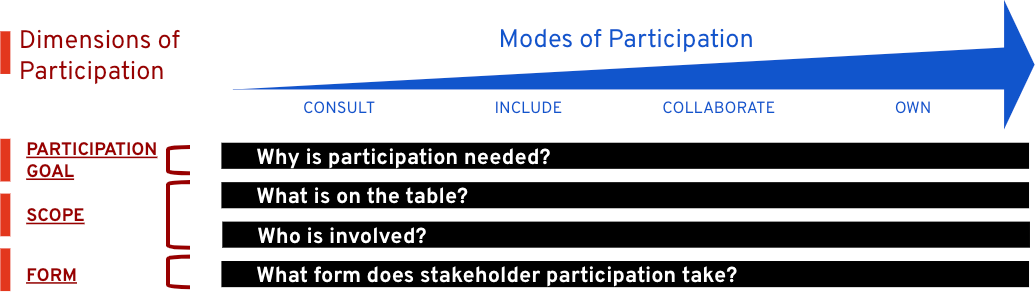
- 对声称采用参与式方法的80个AI研究语料按框架的参与维度和模式进行编码。
- 对语料论文的作者进行12次半结构化访谈,以对动机、挑战和愿望进行三角验证。
- 使用亲和力图示法和主题分析来得出关于当前实践和张力的发现。
实验结果
研究问题
- RQ1什么概念框架可以可靠地评估AI设计中参与如何实施以及它实际赋予相关方的代理权?
- RQ2当前的参与式AI实践在多大程度上赋予相关方权力,相对于服务于咨询需求?
- RQ3塑造参与式AI实现的主要张力和约束是什么,如何改进实践?
- RQ4存在哪些经验证的机会以更好地将参与目标与AI设计方法对齐?
主要发现
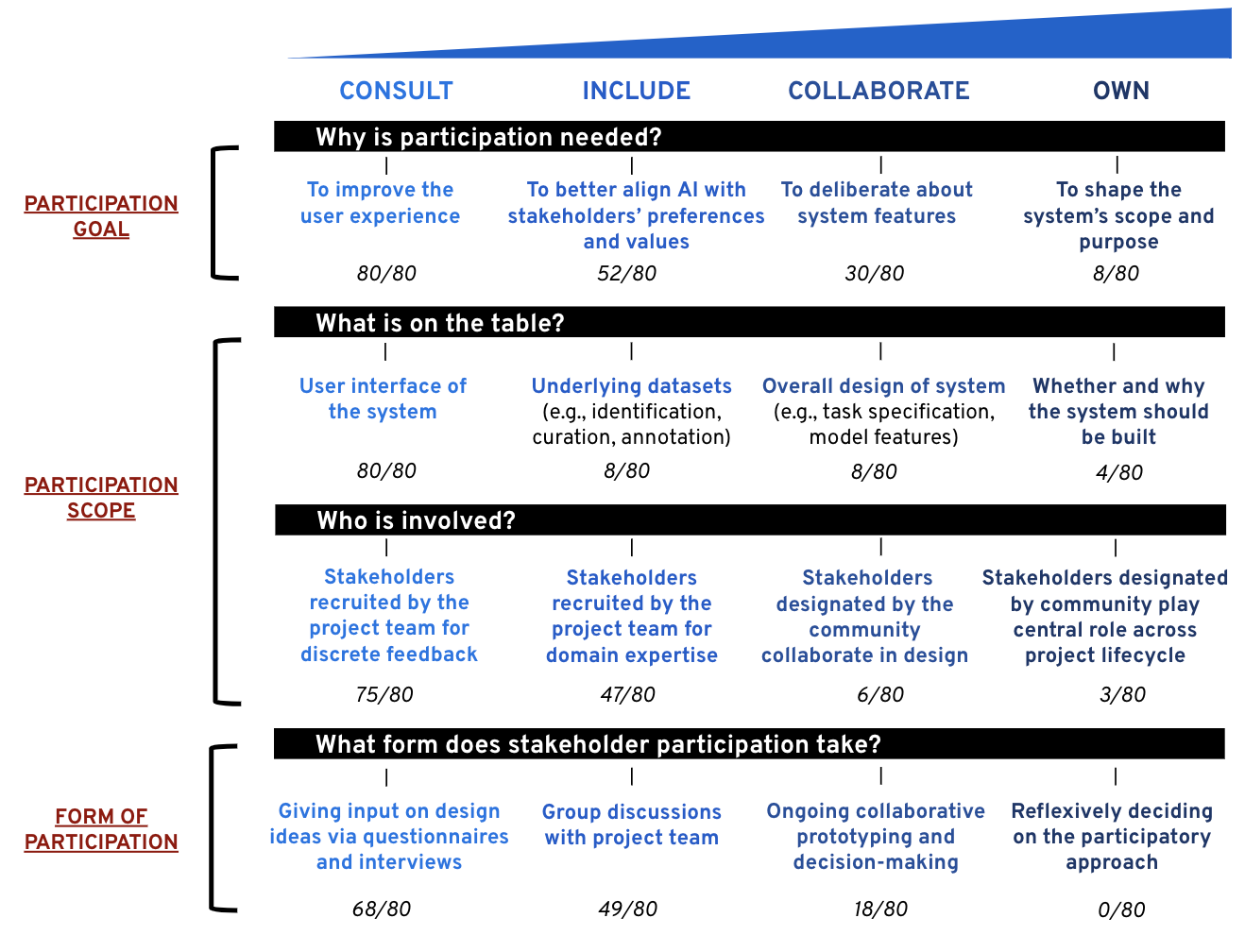
- 大多数参与式AI项目(80/80)旨在改善用户体验,且52/80追求与相关方偏好和价值观的一致性。
- 一小部分(8/80,10%)让相关方参与形成系统的范围和目标。
- 参与主要是咨询性的,涉及的是面向UI的参与而非核心模型设计的参与。
- 当直接参与有限时,从业者依赖代理(人为或算法代理)来代表相关方输入。
- 在赋权愿望与资源、时间表等实际约束之间存在紧张关系。
- 研究指出通过重新配置参与情境来增强相关方在AI设计中的代理权的途径。
更好的研究,从现在开始
从论文设计到论文写作,大幅缩短您的研究时间。
无需绑定信用卡
本解读由 AI 生成,并经人工编辑审核。