
[论文解读] The wave operator representation of quantum and classical dynamics
本文引入波算符形式化方法,作为量子与经典动力学的统一表示,利用密度矩阵的平方根,自然地连接了希尔伯特空间、相空间(Wigner函数)与库普曼-冯诺依曼经典动力学。该形式化方法展示了其在实时间与虚时间动力学中实现新颖半经典的近似,并提供清晰的经典极限,同时保持正定性,即使在非线性密度矩阵动力学中也能实现类似幺正的演化。
The choice of mathematical representation when describing physical systems is of great consequence, and this choice is usually determined by the properties of the problem at hand. Here we examine the little-known wave operator representation of quantum dynamics, and explore its connection to standard methods of quantum dynamics. This method takes as its central object the square root of the density matrix, and consequently enjoys several unusual advantages over standard representations. By combining this with purification techniques imported from quantum information, we are able to obtain a number of results. Not only is this formalism able to provide a natural bridge between phase and Hilbert space representations of both quantum and classical dynamics, we also find the waveoperator representation leads to novel semiclassical approximations of both real and imaginary time dynamics, as well as a transparent correspondence to the classical limit. This is demonstrated via the example of quadratic and quartic Hamiltonians, while the potential extensions of the waveoperator and its application to quantum-classical hybrids is discussed. We argue that the wave operator provides a new perspective that links previously unrelated representations, and is a natural candidate model for scenarios (such as hybrids) in which positivity cannot be otherwise guaranteed.
研究动机与目标
- 解决混合态Wigner函数的诠释挑战,因其可为负值,故不具备概率意义。
- 通过密度矩阵的平方根,提供一个统一框架,连接希尔伯特空间、相空间与经典动力学。
- 利用波算符形式化方法,建立量子与经典动力学之间的清晰对应关系。
- 开发一种正定性保持的表示方法,适用于标准密度矩阵方法可能失效的混合量子-经典系统。
- 为实时间与虚时间动力学开发新颖的半经典近似,尤其适用于热化与基态计算。
提出的方法
- 利用波算符作为密度矩阵的平方根,通过量子信息技术实现纯化表示。
- 将Bopp算符引入波算符形式化方法,将其映射到相空间,直接关联至Wigner准概率分布。
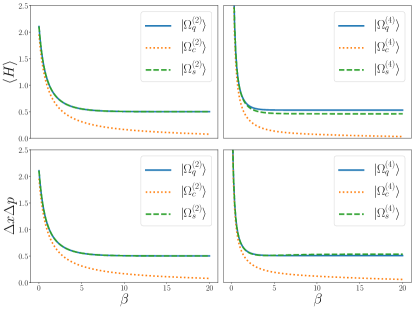
- 应用该形式化方法推导经典极限,表明对于二次哈密顿量,其经典极限在ħ → 0极限之前即精确对应于库普曼-冯诺依曼动力学。
- 将波算符应用于虚时间演化(如Bloch方程),推导出平衡态的半经典修正,包含O(ħ²)项。
- 证明虚时间演化可映射为幺正实时间演化,即使密度矩阵演化为非线性时亦成立。
- 利用该形式化方法表明,线性波算符动力学可生成非线性密度矩阵动力学,反之亦然,揭示了同一物理演化过程的双重表示。
实验结果
研究问题
- RQ1波算符形式化方法能否为混合态Wigner函数提供一致且保持正定性的诠释?
- RQ2波算符形式化方法如何实现与经典极限的清晰对应,特别是在库普曼-冯诺依曼力学的背景下?
- RQ3波算符形式化方法对实时间与虚时间量子动力学中的半经典近似有何影响?
- RQ4在开放系统中,虚时间演化能否通过波算符映射为幺正实时间演化?这对热化过程意味着什么?
- RQ5波算符形式化方法如何促进构建混合量子-经典模型,其中标准方法无法保证密度矩阵的正定性?
主要发现
- 波算符形式化方法在希尔伯特空间、相空间(Wigner函数)与库普曼-冯诺依曼经典动力学之间建立了自然桥梁,统一了此前相互脱节的表示形式。
- 对于二次哈密顿量,波算符形式化方法的经典极限在未取ħ → 0极限前即精确还原为库普曼-冯诺依曼表示。
- 该形式化方法导出了虚时间动力学的新半经典展开,对经典哈密顿量有O(ħ²)的修正项,类似于开放量子系统中的“平均力哈密顿量”。
- 即使密度矩阵演化为非线性,虚时间演化仍可映射为幺正实时间演化,揭示了热化过程中隐藏的幺正结构。
- 波算符形式化方法天然保持正定性,使其成为混合量子-经典建模的有力候选,而标准方法可能违反物理性。
- 该方法为隧穿率与平衡态提供了新的半经典近似,对谐振子与四次谐振子系统推导出显式的修正项。
更好的研究,从现在开始
从阅读论文到最终审阅,大幅缩短您的研究时间。
无需绑定信用卡
本解读由 AI 生成,并经人工编辑审核。