
[论文解读] Token-Modification Adversarial Attacks for Natural Language Processing: A Survey
本综述提出了一种以组件为中心的框架,用于分析自然语言处理中的标记修改对抗性攻击,通过目标函数、转换方式、搜索方法和约束条件四个核心组件对攻击进行系统性分类。该框架提供了一个统一的、与攻击无关的分类体系,以促进更好的比较、可复现性以及针对性研究,同时指出了关键挑战,如缺乏标准化和对多模态或短语级攻击探索的不足。
Many adversarial attacks target natural language processing systems, most of which succeed through modifying the individual tokens of a document. Despite the apparent uniqueness of each of these attacks, fundamentally they are simply a distinct configuration of four components: a goal function, allowable transformations, a search method, and constraints. In this survey, we systematically present the different components used throughout the literature, using an attack-independent framework which allows for easy comparison and categorisation of components. Our work aims to serve as a comprehensive guide for newcomers to the field and to spark targeted research into refining the individual attack components.
研究动机与目标
- 为解决自然语言处理中对抗性攻击方法之间缺乏标准化比较的问题,提出一种以组件为中心的框架。
- 系统化分类标记修改攻击,超越基于任务或目标的表面化分类。
- 识别当前研究中的关键局限,如威胁模型不标准化以及过度依赖自动化指标。
- 通过突出尚未充分探索的领域(如多模态攻击和短语级修改),为未来研究提供指导。
- 倡导采用人机协同评估方法,以提升对抗性样本的真实性和质量。
提出的方法
- 本文提出一个四组件框架:目标函数、可允许的转换方式、搜索方法和约束条件,将每种攻击视为一个受限搜索问题。
- 通过将现有攻击分解为这四个组件,对它们进行系统性调查,实现跨攻击的比较与分类。
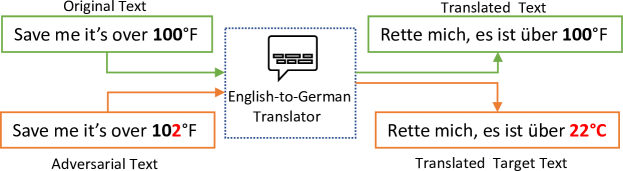
- 该框架被应用于分析各种自然语言处理任务中的标记修改攻击,包括文本分类、机器翻译和情感分析。
- 作者利用该框架识别攻击设计中的模式与差异,发现尽管许多攻击看似不同,但实际仅在一个组件上存在差异。
- 该方法包括对评估实践的批判性回顾,指出自动化指标的缺陷,并倡导采用人类反馈或基于RLHF的奖励模型。
- 该方法有助于识别尚未充分探索的攻击类型,如多标记短语级修改和多模态对抗样本。
实验结果
研究问题
- RQ1如何在超越任务特定或目标特定分类的基础上,对自然语言处理中的对抗性攻击进行系统性分类?
- RQ2构成标记修改对抗性攻击的核心组件是什么?这些组件在现有方法中如何变化?
- RQ3为何当前的评估指标无法反映人类对对抗性样本质量的判断?如何改进?
- RQ4当前对抗性攻击研究中的关键局限是什么,特别是关于现实世界适用性和标准化方面?
- RQ5如何开发和评估短语级或多模态对抗性攻击,以提升攻击的多样性与真实性?
主要发现
- 以组件为中心的框架使得对抗性攻击的分析更加细致且可比较,揭示了尽管许多攻击看似不同,但实际仅在一个组件上存在差异。
- 许多现有攻击依赖于单标记修改,这限制了可能的对抗性样本范围,并降低了真实性。
- 当前的评估实践严重依赖自动化指标(如流畅性与语义相似度),但这些指标往往与人类判断的相关性较差。
- 各研究之间在威胁模型、转换方式和约束条件方面存在显著的标准化缺失,阻碍了可复现性和跨研究比较。
- 短语级攻击(如替换习语或短语)尚未得到充分探索,但相比单标记修改,其灵活性和真实性更高。
- 通过RLHF或交互式界面引入人类反馈,可显著提升对抗性样本的质量与可信度。
![Figure 2: This example, from the TextAttack [ 5 ] documentation, neatly demonstrates how token-modification attacks ( [ 6 ] and [ 7 ] here) are made up of a combination of four components. For an easy comparison, the TextAttack paper [ 5 ] also provides a table that summarises the combinations of a](https://ar5iv.labs.arxiv.org/html/2103.00676/assets/textattack_categorisation.png)
更好的研究,从现在开始
从阅读论文到最终审阅,大幅缩短您的研究时间。
无需绑定信用卡
本解读由 AI 生成,并经人工编辑审核。