
[论文解读] Topological holography for fermions
扩展对称性TFT框架到费米系统,推导费米对称TFT,分析1+1D费米SPT、边缘模态和玻色化,并提出一种新的本质上无隙的费米SPT。
Topological holography is a conjectured correspondence between the symmetry charges and defects of a $D$-dimensional system with the anyons in a $(D+1)$-dimensional topological order: the symmetry topological field theory (SymTFT). Topological holography is conjectured to capture the topological aspects of symmetry in gapped and gapless systems, with different phases corresponding to different gapped boundaries (anyon condensations) of the SymTFT. This correspondence was previously considered primarily for bosonic systems, excluding many phases of condensed matter systems involving fermionic electrons. In this work, we extend the SymTFT framework to establish a topological holography correspondence for fermionic systems. We demonstrate that this fermionic SymTFT framework captures the known properties of $1+1D$ fermion gapped phases and critical points, including the classification, edge-modes, and stacking rules of fermionic symmetry-protected topological phases (SPTs), and computation of partition functions of fermionic conformal field theories (CFTs). Beyond merely reproducing known properties, we show that the SymTFT approach can additionally serve as a practical tool for discovering new physics, and use this framework to construct a new example of a fermionic intrinsically gapless SPT phase characterized by an emergent fermionic anomaly.
研究动机与目标
- 将对称性丰富化的费米系统的 SymTFT/拓扑全息程序推广到费米系统。
- 证明费米 SymTFT 能够捕捉已知的1+1D费米 SPT性质(分类、边缘模态、叠加)。
- 展示该框架在发现新物理中的实际用途,包括本质上无隙的费米SPT。
提出的方法
- 为含 Z2^F 的对称性 G^F 的1+1D系统构建费米的SymTFT。
- 通过凝聚费米子的任意子实现费米参考边界,在边界引入局部费米子。
- 证明自旋结构对费米参考边界的依赖,并提取 G^F-自旋结构数据。
- 展示玻色化作为 SymTFT 中对参考边界的改变。
- 将该框架应用于恢复 Kitaev 链、Majorana CFT,以及多种费米 SPT;构建具有涌现费米子异常的费米 igSPT。
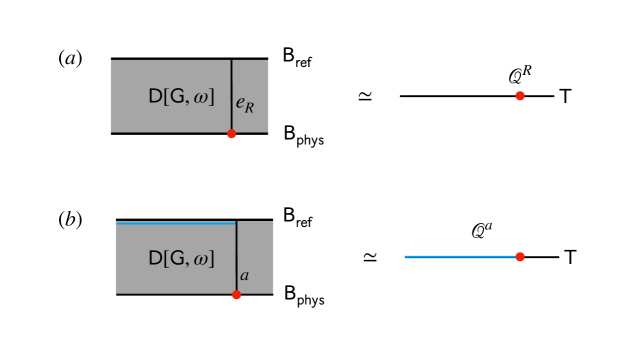
![Figure 1: The SymTFT setup. (a). The SymTFT for a general symmetry category $\mathcal{A}$ is the Drinfeld center $\sf{Z}[\mathcal{A}]$ . The sandwich (left) reduces to the original system $\sf{T}$ (right) when viewed as an effective $1+1D$ system. (b). A non-trivial topological defect line near the](https://ar5iv.labs.arxiv.org/html/2404.19004/assets/x1.png)
实验结果
研究问题
- RQ1费米 SymTFT 是否能够重现并分类1+1D费米 SPT相及其叠加规则?
- RQ2自旋结构(G^F-自旋结构)如何影响费米 SymTFT 和边缘物理?
- RQ3在编码费米相与异常时,费米 Condensation 在参考边界上的作用是什么?
- RQ4玻色化如何在费米 SymTFT 中表现为边界的改变?
- RQ5是否可以在该框架内实现本质上费米的和本质上无隙的 SPT?
主要发现
- 费米 SymTFT 框架给出1+1D费米 SPT及其叠加规则的完整分类。
- 边缘模态和费米相的自旋结构依赖性通过参考边界构造自然被捕捉。
- 玻色化/不可逆对偶性映射到 SymTFT 内参考边界的改变。
- 该方法在统一的拓扑框架内再现了诸如 Kitaev 链和 Majorana CFT 等已知相。
- 该框架能够构建具有涌现异常费米对称性的本质上费米、本质上无隙的 SPT。
- 它提供了一种实用的场论途径,通过 SymTFT 得到费米系统的玻色化描述。
更好的研究,从现在开始
从论文设计到论文写作,大幅缩短您的研究时间。
无需绑定信用卡
本解读由 AI 生成,并经人工编辑审核。