
[论文解读] Toward a Theory of Causation for Interpreting Neural Code Models
本文提出 do code,一种基于因果推断的后 hoc 可解释性框架,用于神经代码模型(NCMs),通过将代码语法和结构建模为因果变量来解释模型预测。通过应用结构因果模型(SCM)和反事实干预,do code 揭示了 NCM 对语法变化敏感,并学会以减少混淆偏差的方式预测代码块(如大括号、分号),从而提供一种稳健的方法来检测模型偏差和局限性。
Neural Language Models of Code, or Neural Code Models (NCMs), are rapidly progressing from research prototypes to commercial developer tools. As such, understanding the capabilities and limitations of such models is becoming critical. However, the abilities of these models are typically measured using automated metrics that often only reveal a portion of their real-world performance. While, in general, the performance of NCMs appears promising, currently much is unknown about how such models arrive at decisions. To this end, this paper introduces $do_{code}$, a post hoc interpretability method specific to NCMs that is capable of explaining model predictions. $do_{code}$ is based upon causal inference to enable programming language-oriented explanations. While the theoretical underpinnings of $do_{code}$ are extensible to exploring different model properties, we provide a concrete instantiation that aims to mitigate the impact of spurious correlations by grounding explanations of model behavior in properties of programming languages. To demonstrate the practical benefit of $do_{code}$, we illustrate the insights that our framework can provide by performing a case study on two popular deep learning architectures and ten NCMs. The results of this case study illustrate that our studied NCMs are sensitive to changes in code syntax. All our NCMs, except for the BERT-like model, statistically learn to predict tokens related to blocks of code (\eg brackets, parenthesis, semicolon) with less confounding bias as compared to other programming language constructs. These insights demonstrate the potential of $do_{code}$ as a useful method to detect and facilitate the elimination of confounding bias in NCMs.
研究动机与目标
- 为解决日益广泛应用于商业工具中的神经代码模型(NCMs)缺乏可解释性的问题,这些模型仍是黑箱系统。
- 超越 BLEU 和 ROUGE 等自动化指标,这些指标无法捕捉模型的局限性和偏差。
- 开发一种系统性、基于因果推断的方法,解释 NCM 如何基于代码的语言和语法特性做出预测。
- 提供一种调试工具,通过反事实推理识别 NCM 中的虚假相关性和混淆偏差。
- 建立一个可重用的框架,用于深度学习在软件工程应用中的因果可解释性。
提出的方法
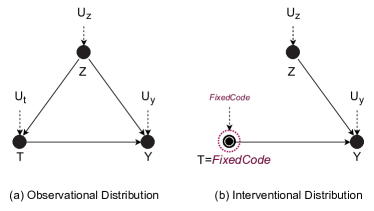
- 该方法基于 Pearl 的结构因果模型(SCM)框架,将代码结构建模为处理变量,模型预测建模为结果变量,共享的代码模式建模为混杂因子。
- 应用 do 算子模拟干预——例如替换代码块或改变语法——同时观察模型预测的变化。
- 该框架使用平均处理效应(ATE)量化语法和结构变化对模型行为的因果影响。
- 引入验证方法以验证因果估计的稳健性并检测虚假关联。
- 该方法基于大规模收集的真实世界代码分布实现,避免使用对抗性或合成扰动。
- 五步检查清单指导研究人员构建可解释性函数、定义 SCMs、收集数据、估计因果效应并验证假设。
实验结果
研究问题
- RQ1神经代码模型如何响应代码语法和结构的受控变化?这些变化引发了何种因果效应?
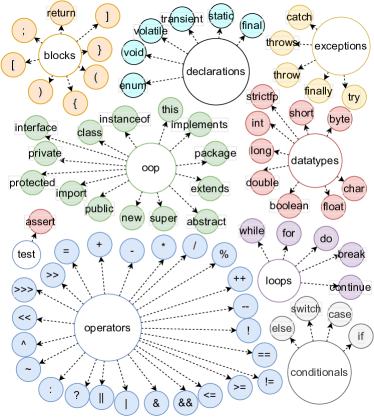
- RQ2NCMs 在其预测中在多大程度上依赖于语法标记(如大括号、分号)而非语义结构(如条件语句、循环)?
- RQ3因果推断方法能否检测并量化 NCM 在预测代码标记时的混淆偏差?
- RQ4不同架构(如 RNN、Transformer)在对语法扰动的敏感性上存在何种差异?
- RQ5基于 SCMs 的反事实解释能否揭示标准指标未暴露的 NCM 中隐藏的偏差或局限性?
主要发现
- NCMs 对代码语法的变化表现出显著敏感性,特别是在预测括号、括号和分号等语法标记时。
- 当学习预测代码块时,模型表现出更低的混淆偏差,表明其对结构模式有更稳健的理解。
- 通过平均处理效应,do code 量化出语法扰动会导致模型预测产生可测量的偏移,揭示了其潜在偏差。
- 验证方法成功检测出虚假相关性,验证了该框架生成的因果估计的可靠性。
- 对 RNN、GRU 和 Transformer 的案例研究证实,do code 能够揭示错误的代码概念预测,尤其是在条件语句和循环中。
- 该框架通过隔离特定代码结构的因果影响,实现了对 NCM 的系统性调试,为实现更可靠、可解释的代码生成提供了路径。
更好的研究,从现在开始
从阅读论文到最终审阅,大幅缩短您的研究时间。
无需绑定信用卡
本解读由 AI 生成,并经人工编辑审核。