
[论文解读] Toward Autonomous Cooperation in Heterogeneous Nanosatellite Constellations Using Dynamic Graph Neural Networks
本文提出一种基于动态图神经网络(DGNN)的方法,以在大规模异构纳卫星星座中自主优化通信计划。通过将卫星网络建模为动态图,并利用DGNN预测网络延迟(平均绝对误差为3.6分钟),该方法使目标函数评估速度比传统接触图路由(CGR)快20倍,同时将平均最佳交付时间改善29.1%。
The upcoming landscape of Earth Observation missions will defined by networked heterogeneous nanosatellite constellations required to meet strict mission requirements, such as revisit times and spatial resolution. However, scheduling satellite communications in these satellite networks through efficiently creating a global satellite Contact Plan (CP) is a complex task, with current solutions requiring ground-based coordination or being limited by onboard computational resources. The paper proposes a novel approach to overcome these challenges by modeling the constellations and CP as dynamic networks and employing graph-based techniques. The proposed method utilizes a state-of-the-art dynamic graph neural network to evaluate the performance of a given CP and update it using a heuristic algorithm based on simulated annealing. The trained neural network can predict the network delay with a mean absolute error of 3.6 minutes. Simulation results show that the proposed method can successfully design a contact plan for large satellite networks, improving the delay by 29.1%, similar to a traditional approach, while performing the objective evaluations 20x faster.
研究动机与目标
- 解决在具有动态拓扑的大规模异构纳卫星星座中调度卫星通信的挑战。
- 克服现有通信计划设计(CPD)方法中地面协调的局限性以及计算成本过高的问题。
- 在资源和连通性约束下,实现在轨自主决策的通信计划优化。
- 提升大规模地球观测任务中实时数据传输的可扩展性和计算效率。
- 开发一种基于学习的框架,能够在不假设周期性或同质性的前提下,泛化于多种网络配置。
提出的方法
- 将卫星星座及其通信计划建模为动态图,捕捉卫星间链路的空间与时间演化特性。
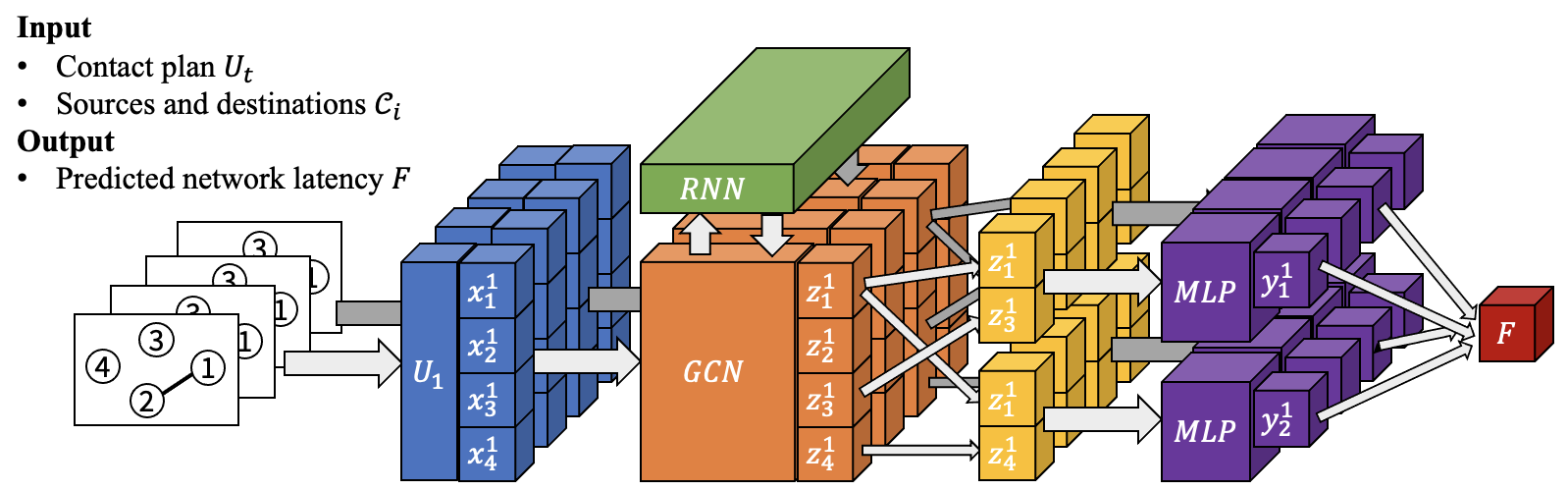
- 采用混合DGNN架构,结合图卷积层与循环神经网络,以编码时间动态与网络结构。
- 通过模拟的通信计划作为标签,训练DGNN以预测网络中数据传输的平均最佳交付时间(BDT)。
- 将训练好的DGNN集成到模拟退火元启发式算法中,通过快速评估候选解来迭代优化通信计划。
- 将DGNN用作计算成本高昂的接触图路由(CGR)算法的代理模型,以快速评估目标函数值。
- 在每个时间步,以时变卫星连接的邻接矩阵作为DGNN的输入,实现对实时变化的适应。
实验结果
研究问题
- RQ1动态图神经网络能否有效近似具有演化拓扑的大规模异构纳卫星星座中的网络延迟(BDT)?
- RQ2与基于路由的传统评估方法相比,学习得到的DGNN代理在多大程度上降低了通信计划优化的计算成本?
- RQ3在不预先假设周期性的前提下,DGNN在多样化卫星配置和网络状态下的泛化能力如何?
- RQ4将DGNN与模拟退火结合,能否在显著更快的速度下实现与精确CGR优化相当的性能?
- RQ5在基于深度学习的自主通信计划设计中,预测精度与计算速度之间的权衡如何?
主要发现
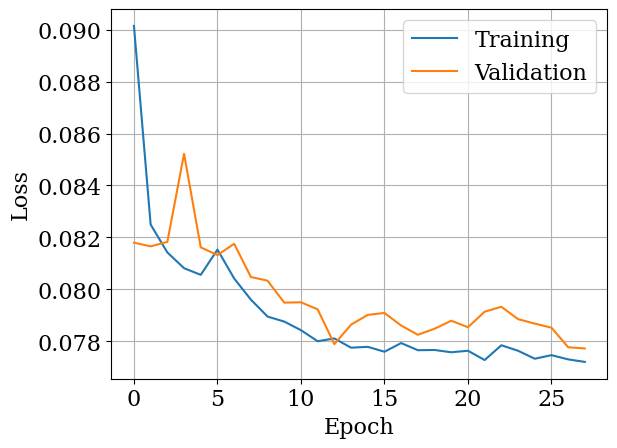
- 所提出的DGNN在预测网络平均最佳交付时间(BDT)时,平均绝对误差为3.6分钟。
- 基于DGNN的优化方法相比初始通信计划将BDT改善了29.1%,性能与传统接触图路由(CGR)相当。
- 使用DGNN进行目标函数评估的速度比使用CGR算法快20倍,显著提升了计算效率。
- 尽管在全部延迟值范围内的泛化能力有限,DGNN仍提供了可靠的近似,使模拟退火能够实现有效优化。
- 该方法成功扩展至大规模卫星网络,并支持在无集中协调的情况下实现自主、在轨的通信计划更新。
- 该方法在典型地球观测星座中延迟/中断容忍网络的实时分布式决策中具有可行性。
更好的研究,从现在开始
从阅读论文到最终审阅,大幅缩短您的研究时间。
无需绑定信用卡
本解读由 AI 生成,并经人工编辑审核。