
[论文解读] TrackNet: A Deep Learning Network for Tracking High-speed and Tiny Objects in Sports Applications
TrackNet 是一种基于深度学习的热力图网络,通过使用多帧连续图像,在广播视频中追踪网球和羽毛球等高速、微小的运动物体。它在网球追踪任务中达到 98.5% 的 F1 分数,在羽毛球追踪任务中达到 68.7% 的 F1 分数,通过轨迹感知的特征学习和反卷积上采样技术,实现了精确的定位,显著优于传统图像处理方法。
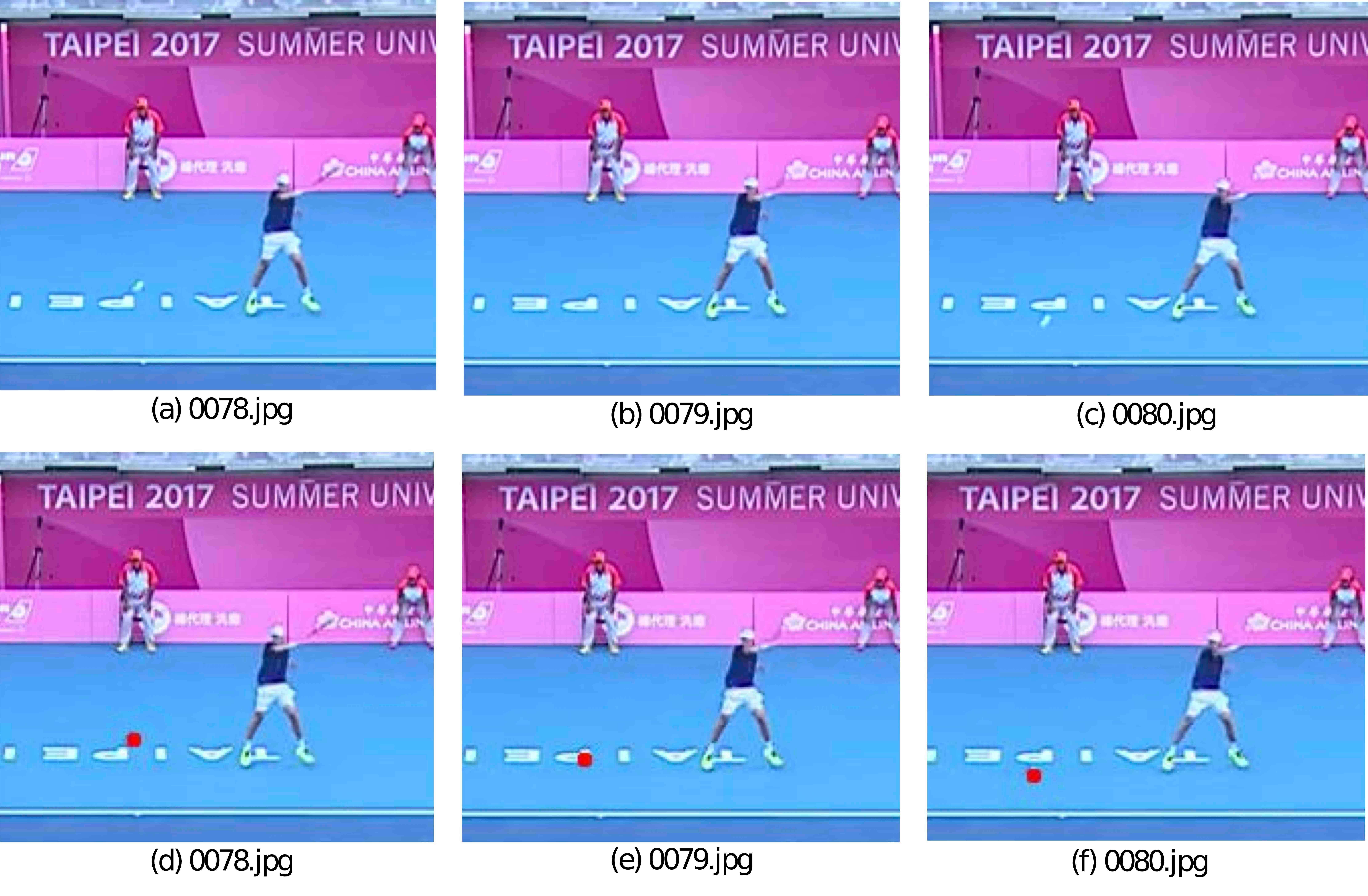
Ball trajectory data are one of the most fundamental and useful information in the evaluation of players' performance and analysis of game strategies. Although vision-based object tracking techniques have been developed to analyze sport competition videos, it is still challenging to recognize and position a high-speed and tiny ball accurately. In this paper, we develop a deep learning network, called TrackNet, to track the tennis ball from broadcast videos in which the ball images are small, blurry, and sometimes with afterimage tracks or even invisible. The proposed heatmap-based deep learning network is trained to not only recognize the ball image from a single frame but also learn flying patterns from consecutive frames. TrackNet takes images with a size of $640 imes360$ to generate a detection heatmap from either a single frame or several consecutive frames to position the ball and can achieve high precision even on public domain videos. The network is evaluated on the video of the men's singles final at the 2017 Summer Universiade, which is available on YouTube. The precision, recall, and F1-measure of TrackNet reach $99.7\%$, $97.3\%$, and $98.5\%$, respectively. To prevent overfitting, 9 additional videos are partially labeled together with a subset from the previous dataset to implement 10-fold cross-validation, and the precision, recall, and F1-measure are $95.3\%$, $75.7\%$, and $84.3\%$, respectively. A conventional image processing algorithm is also implemented to compare with TrackNet. Our experiments indicate that TrackNet outperforms conventional method by a big margin and achieves exceptional ball tracking performance. The dataset and demo video are available at https://nol.cs.nctu.edu.tw/ndo3je6av9/.
研究动机与目标
- 解决在低分辨率广播视频中追踪高速、微小且模糊的体育运动球体的挑战。
- 通过利用连续帧中的时间上下文信息,借助深度学习提升追踪精度,超越传统图像处理方法。
- 为业余和专业体育应用中的球体轨迹数据采集,开发一种可扩展、低成本的解决方案。
- 在具有不同物体速度和视觉质量的现实世界网球和羽毛球视频上,评估模型的性能。
- 探索在相似运动(网球与羽毛球)之间迁移学习的可行性,并识别因速度和视觉差异导致的性能局限。
提出的方法
- TrackNet 使用 VGG-16 主干网络从输入图像中提取特征,处理单帧或连续多帧图像。
- 网络采用全卷积神经网络(FCN)架构,结合反卷积层对特征图进行上采样,生成用于目标定位的热力图。
- 输入图像被缩放至 640×360 像素,并输入网络,预测热力图,其中峰值位置对应球体的位置。
- 模型通过热力图回归损失进行端到端训练,以最小化预测坐标与真实坐标之间的距离。
- 为实现时间建模,使用连续多帧作为输入,以学习运动模式,提升对模糊和遮挡的鲁棒性。
- 通过在羽毛球数据上微调已训练的网球模型,应用迁移学习,以评估跨运动的泛化能力。
实验结果
研究问题
- RQ1在不依赖高帧率或高分辨率视频的情况下,深度学习模型能否有效追踪标准广播视频中的高速、微小且模糊的体育运动球体?
- RQ2与单帧推理相比,使用多帧连续图像在精度、召回率和 F1 分数方面如何提升追踪性能?
- RQ3考虑到球速、尺寸和运动轨迹动力学的差异,基于网球数据训练的模型在羽毛球追踪任务中的泛化能力如何?
- RQ4当应用于像羽毛球这样极高运动速度的物体时,模型的性能局限是什么?哪些因素导致了较高的假阴性率?
- RQ5在复杂的真实体育视频环境中,基于热力图的深度学习方法能否超越传统的基于规则的图像处理技术?
主要发现
- 在使用单帧输入并进行 10 折交叉验证的网球视频数据集上,TrackNet 实现了 99.7% 的精确率、97.3% 的召回率和 98.5% 的 F1 分数。
- 在更具挑战性、部分标注的数据集上进行 10 折交叉验证时,TrackNet 仍保持 95.3% 的精确率、75.7% 的召回率和 84.3% 的 F1 分数。
- 在羽毛球数据上表现不佳的网球训练模型(TrackNet-Tennis)仅获得 35.2% 的 F1 分数,表明其泛化能力差,主要由于高假阴性率。
- 在羽毛球数据上微调后的模型(TrackNet-Badminton)实现了 85.0% 的精确率、57.7% 的召回率和 68.7% 的 F1 分数,表明领域特定训练能显著提升性能。
- 网球与羽毛球追踪性能差距的成因在于羽毛球的平均速度更高(417 km/h vs. 253 km/h)以及速度变化更大,导致视觉质量下降并影响模型泛化能力。
- TrackNet 显著优于传统图像处理算法,证明了结合时间上下文的深度学习在追踪高速、微小物体方面的优越性。
更好的研究,从现在开始
从阅读论文到最终审阅,大幅缩短您的研究时间。
无需绑定信用卡
本解读由 AI 生成,并经人工编辑审核。