
[论文解读] Trapped in Transformative Agreements? A Multifaceted Analysis of >1,000 Contracts
这项研究分析来自 ESAC 注册库的 1,075 项转化性协议,以评估学术界是否实际上陷入混合开放获取系统,强化出版商权力并提高成本。
Transformative agreements between academic publishers and research institutions are ubiquitous. The 'Efficiency and Standards for Article Charges' (ESAC) Initiative lists more than 1,000 contracts in its database. We make use of this unique dataset by web-scraping the details of every contract to substantially expand the overview spreadsheet provided by the ESAC Initiative. Based on that hitherto unused data source, we combine qualitative and quantitative methods to conduct an in-depth analysis of the contract characteristics and the TA landscape. Our analysis demonstrates that research institutions seem to be 'trapped' in transformative agreements. Instead of being a bridge towards a fully Open Access world, academia is stuck in the hybrid system. This endows the legacy (non-Open Access) publishing houses with substantial market power. It raises entry barriers, lowers competition, and increases costs for libraries and universities.
研究动机与目标
- 使用 ESAC 注册库在机构与出版商之间协商的 Transformative Agreements (TAs) 的景观进行评估。
- 评估 TAs 是否作为通往完全 Open Access 的桥梁,还是形成长期混合系统。
- 分析合同特征(规模、期限、续约)以及地理/出版商模式以理解市场动态。
- 检视来自 ESAC 参与者评论的定性反馈,以识别感知的利益与挑战。
提出的方法
- 数据:抓取 Transformative Agreements Registry(ESAC),截至 2024-08-09 包含 1,075 项 TA,并从 ESAC 合同页面补充合同细节。
- 定量分析:描述性统计、横截面和固定效应回归,将 TA 规模与持续时间联系起来,含出版商、起始年份和国家的固定效应。
- 定性分析:使用混合演绎-归纳编码方案对 ESAC 自由文本评论进行主题编码,以识别重复出现的主题。
- 回归规格示例包括将 log TA size 与年份指示变量和 TA 持续时间相关联的方程(Eq. 1 和 Eq. 2)。
- 续约分析: probit/OLS 模型,检验 TA 规模和长度是否影响后续合同的概率(Eq. 3 和 Eq. 4)。
- 跨出版商比较(Big 3:Elsevier、Springer Nature、Wiley 与其他出版商)以及地理差异的比较。
实验结果
研究问题
- RQ1Transformative Agreements 是否导致完全 Open Access 转型,还是加剧混合系统的存在?
- RQ2合同规模与持续时间之间有何关系,较大规模的合同是否在 Big 3 出版商中具有更高的续约概率(马太效应)?
- RQ3TA 采用与长度的地理和出版商驱动因素是什么?
- RQ4机构关于 TA 工作流程、透明度与可持续性报告的定性主题有哪些?
主要发现
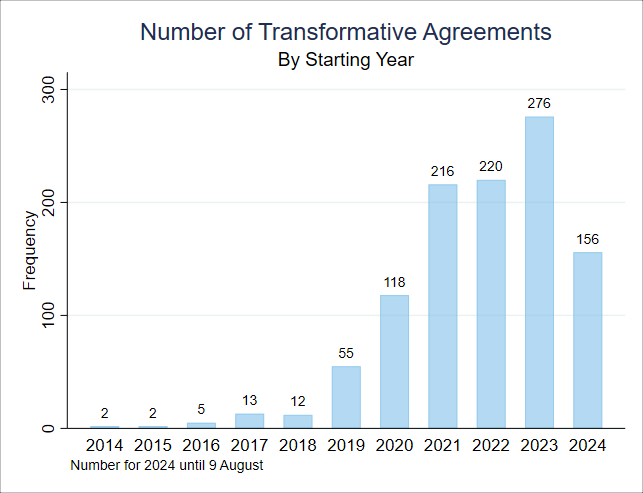
- 自2019年以来,TA 采用迅速增长,截至2024年8月跟踪到1,075项TA,其中包括续约和终止。
- 较大规模的合同往往更长,TA 规模与合同持续时间呈正相关,即使在控制出版商、年份和国家固定效应后仍然如此。
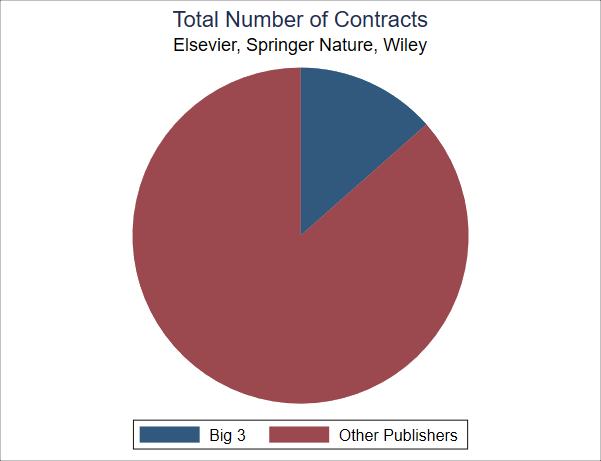
- Big 3 出版商(Elsevier、Springer Nature、Wiley)在 TA 活动中占比过大,且平均合同长度高于非 Big 3 出版商。
- 各国与联盟显示出地理集中特征(如德国、英国、荷兰、美国),以及 TA 活动和规模的欧洲中心化动态。
- 续约可能性随 TA 规模增加而提高,指示潜在的马太效应,即较大合同更可能续约。
- 定性反馈强调既有好处(可预测成本、对 OA 出版的支持)也有顾虑(成本、透明度和工作流程复杂性)。
更好的研究,从现在开始
从论文设计到论文写作,大幅缩短您的研究时间。
无需绑定信用卡
本解读由 AI 生成,并经人工编辑审核。