
[论文解读] Understanding Blockchain Governance: Analyzing Decentralized Voting to Amend DeFi Smart Contracts
本文分析 Compound 与 Uniswap 的链上治理,揭示投票权集中、对小股东成本高,以及可能的联盟威胁去中心化。
Smart contracts are contractual agreements between participants of a blockchain, who cannot implicitly trust one another. They are software programs that run on top of a blockchain, and we may need to change them from time to time (e.g., to fix bugs or address new use cases). Governance protocols define the means for amending or changing these smart contracts without any centralized authority. They distribute the decision-making power to every user of the smart contract: Users vote on accepting or rejecting every change. In this work, we review and characterize decentralized governance in practice, using Compound and Uniswap -- two widely used governance protocols -- as a case study. We reveal a high concentration of voting power in both Compound and Uniswap: 10 voters hold together 57.86% and 44.72% of the voting power, respectively. Although proposals to change or amend the protocol receive, on average, a substantial number of votes (i.e., 89.39%) in favor within the Compound protocol, they require fewer than three voters to obtain 50% or more votes. We show that voting on Compound proposals can be unfairly expensive for small token holders, and we discover voting coalitions that can further marginalize these users.
研究动机与目标
- 评估治理协议如何在 DeFi 协议中在代币持有者之间分配投票权。
- 量化参与度、成本和链上治理中的授权模式。
- 识别代币分布和联盟如何影响去中心化和治理公平性。
提出的方法
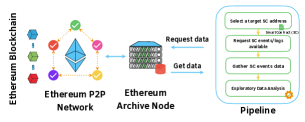
- 收集并分析来自 Compound 和 Uniswap 的链上治理数据(投票、提案、授权、代币分布)。
- 通过 Etherscan 和 Sybil-List 将钱包所有权映射为按实体分组。
- 衡量对提案的投票参与度、法定人数达到情况以及执行时间线。
- 使用区块时代 ETH-USD 汇率以美元计算投票成本,并分析每个投票单位的成本。
- 描述代币授权动态以及顶层持有者和代理的集中程度。
- 比较链上和链下投票方式及其对治理执行的影响。
实验结果
研究问题
- RQ1在代币分布和被授权投票权方面,Compound 和 Uniswap 治理的去中心化程度是多少?
- RQ2投票成本、参与度和提案动态如何影响治理结果和公平性?
- RQ3顶级投票者是否形成联盟,边缘化较小的代币持有者,这可能如何影响协议安全性和去中心化?
主要发现
| 事件名称 | Compound | Uniswap | 描述 |
|---|---|---|---|
| ProposalCanceled | 17 | 6 | 提案被取消时发出。 |
| ProposalCreated | 133 | 29 | 当创建新提案时发出。 |
| ProposalExecuted | 101 | 14 | 在 TimeLock 中执行提案时发出。 |
| ProposalQueued | 105 | 14 | 在 TimeLock 的队列中添加提案时发出。 |
| VoteCast | 9500 | 18084 | 在对提案进行投票时发出:0 表反对,1 表赞成,2 表弃权。 |
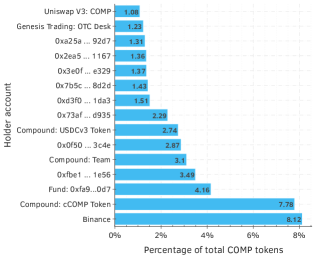
- 一小组共10名投票者掌握了 Compound 投票权的 57.86% 和 Uniswap 投票权的 44.72%。
- Compound 的提案获得多数赞成平均为 89.39%,但通常少于三名投票者就足以达到 50% 的投票数。
- 投票成本因提案而异,范围从 0.03 美元到 294.02 美元,平均每个提案 7.88 美元,每个投票单位 358.54 美元(按每名投票者计算)。
- 大约只有一半的流通代币被授权;顶级被授权代币持有者占据授权权力的多数(例如前 50 位持有者占 99.23% 的授权 COMP)。
- 顶级投票者和代理高度集中;前 50 名代理持有大多数授权代币(如 Uniswap 中为 94.73%)。
- 有证据表明顶级投票者之间可能存在投票联盟,这可能加剧集中化并边缘化较小的持有者。
更好的研究,从现在开始
从论文设计到论文写作,大幅缩短您的研究时间。
无需绑定信用卡
本解读由 AI 生成,并经人工编辑审核。