
[论文解读] Unveiling the Potential of AI for Nanomaterial Morphology Prediction
本研究提出了一项新颖的多模态数据集,包含215种基于碳酸钙的纳米材料合成实验,附带标注的SEM图像和合成参数,并评估了经典机器学习与大语言模型(LLMs)在预测纳米颗粒形貌方面的表现。该研究利用GPT-4实现0.81的平均准确率进行形貌预测,并原型化了一套文本到图像的生成系统,展示了人工智能在减少纳米材料设计中实验性试错方面的潜力,尽管面临数据限制。
Creation of nanomaterials with specific morphology remains a complex experimental process, even though there is a growing demand for these materials in various industry sectors. This study explores the potential of AI to predict the morphology of nanoparticles within the data availability constraints. For that, we first generated a new multi-modal dataset that is double the size of analogous studies. Then, we systematically evaluated performance of classical machine learning and large language models in prediction of nanomaterial shapes and sizes. Finally, we prototyped a text-to-image system, discussed the obtained empirical results, as well as the limitations and promises of existing approaches.
研究动机与目标
- 为解决合成特定形貌纳米材料所需的高实验成本和时间,开发基于人工智能的预测模型。
- 构建一个全新、大规模、多模态的数据集,整合合成参数、SEM图像以及专家标注的形貌标签,用于碳酸钙纳米颗粒。
- 在现实数据约束条件下,评估经典机器学习与最先进的大语言模型(LLMs)在预测纳米颗粒形貌与尺寸方面的表现。
- 原型化一种文本到图像的生成系统,能够根据合成过程描述生成纳米颗粒图像。
- 识别数据质量和数量是人工智能驱动纳米材料设计中的主要瓶颈,并倡导建立统一、经过整理的数据库。
提出的方法
- 生成了215项碳酸钙纳米颗粒的实验合成,参数可控,包括温度、试剂浓度和反应时间。
- 收集并人工标注了SEM图像,对单个纳米颗粒进行分割,并标注其形貌(如球形、棒状、片状)和尺寸。
- 在表格化的合成参数上训练经典机器学习模型(如XGBoost、随机森林),用于预测形貌,对尺寸和形貌的预测准确率分别达到0.77和0.80。
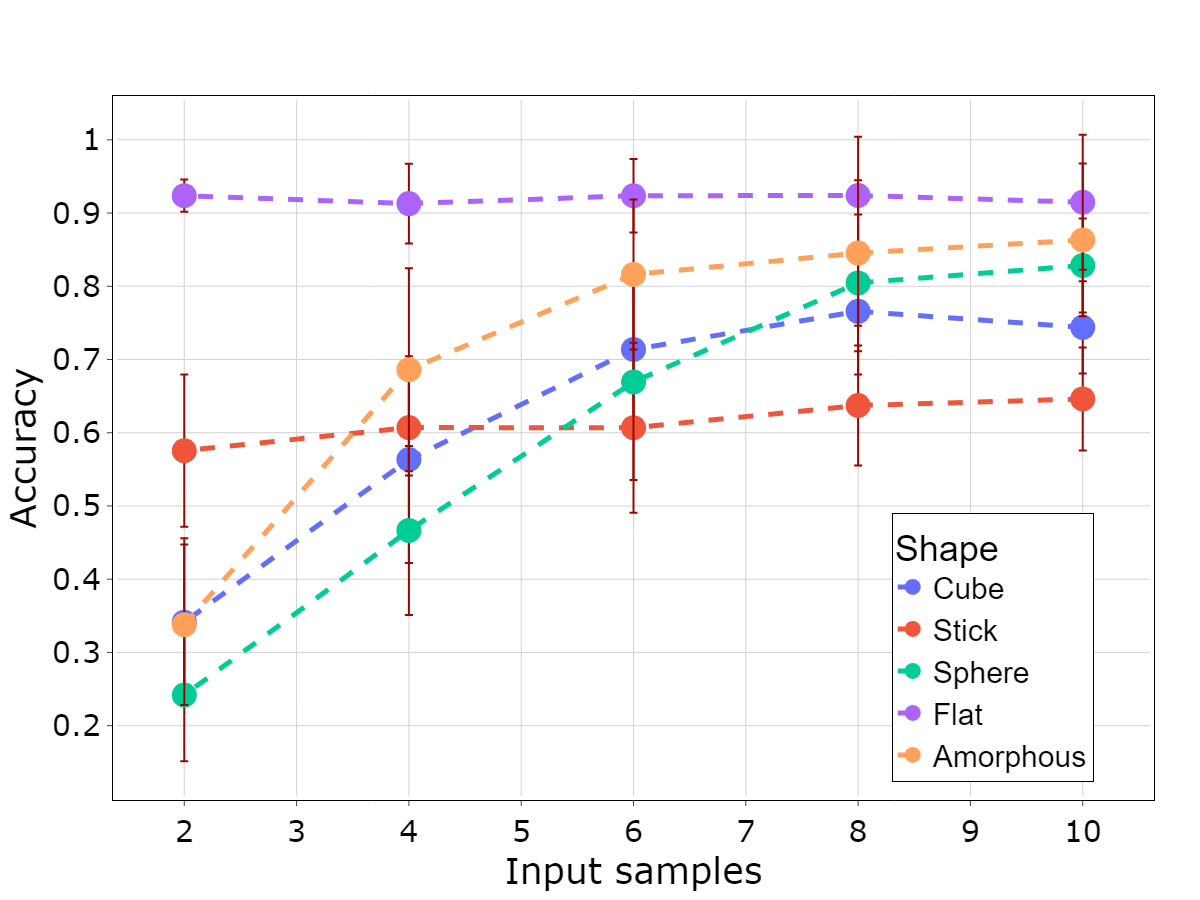
- 使用少量示例提示(few-shot prompting)对GPT-4进行微调,以根据合成描述预测纳米颗粒形貌,实现0.81的平均准确率。
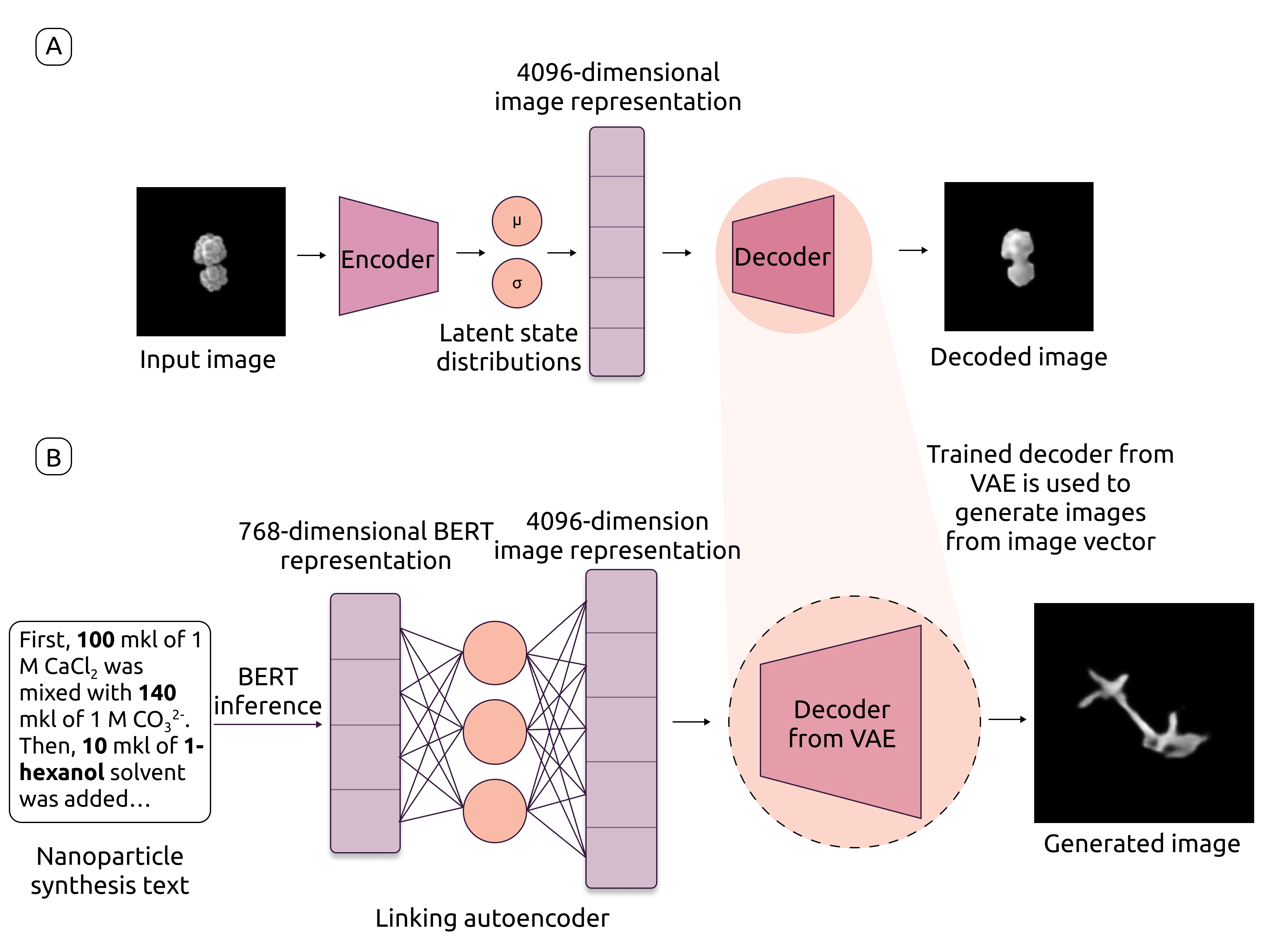
- 开发了一种具有“连接”结构的变分自编码器(VAE),用于学习来自BERT的文本嵌入与图像特征之间的联合表征,从而实现文本到图像的生成。
- 使用UMAP对VAE学习到的潜在空间进行可视化,识别出对应于不同形貌类别的聚类,并分析特征之间的依赖关系。
实验结果
研究问题
- RQ1在训练数据有限的情况下,像GPT-4这样的大语言模型能否有效从合成过程描述中预测纳米颗粒的形貌?
- RQ2经典机器学习模型在从实验参数预测纳米颗粒尺寸与形貌方面的表现,与大语言模型相比如何?
- RQ3文本到图像的生成模型在多大程度上能够基于合成描述生成逼真的纳米颗粒图像?其局限性是什么?
- RQ4在合成参数中,哪些关键特征对预测纳米颗粒形貌最具预测力?它们与观察到的形貌之间存在怎样的相关性?
- RQ5在人工智能驱动的纳米材料形貌预测中,主要的数据相关障碍是什么?如何加以解决?
主要发现
- 本研究构建了一个包含215个基于碳酸钙的纳米材料合成实验的新型多模态数据集,其规模是现有可比数据集的两倍。
- 经典机器学习模型在基于合成参数预测纳米颗粒尺寸和形貌方面,分别实现了0.77和0.80的平均准确率。
- 大语言模型(GPT-4)在使用少量示例提示进行微调后,实现了0.81的平均形貌预测准确率,优于经典模型,并展现出强大的零样本泛化潜力。
- 文本到图像的原型系统成功从合成描述中生成了合理的纳米颗粒图像,但由于数据稀缺,其多样性与质量仍有限。
- 使用UMAP对潜在空间的可视化揭示了与不同形貌类别相对应的清晰聚类,且合成温度与聚类分布之间存在显著相关性。
- 本研究识别出数据不足、未经整理以及缺乏统一性是人工智能在纳米材料设计中应用的主要瓶颈,呼吁建立一个集中化、标准化的数据库。
更好的研究,从现在开始
从阅读论文到最终审阅,大幅缩短您的研究时间。
无需绑定信用卡
本解读由 AI 生成,并经人工编辑审核。